Newsletter Published August 14, 2026 · 7 minute read
On the Grid: Trust Issues
Hi Friend!
Welcome back to On the Grid, Third Way’s bi-weekly newsletter, where we’ll recap how we’re working to deploy every clean energy technology as quickly and affordably as possible.
We’re excited to have you join us!
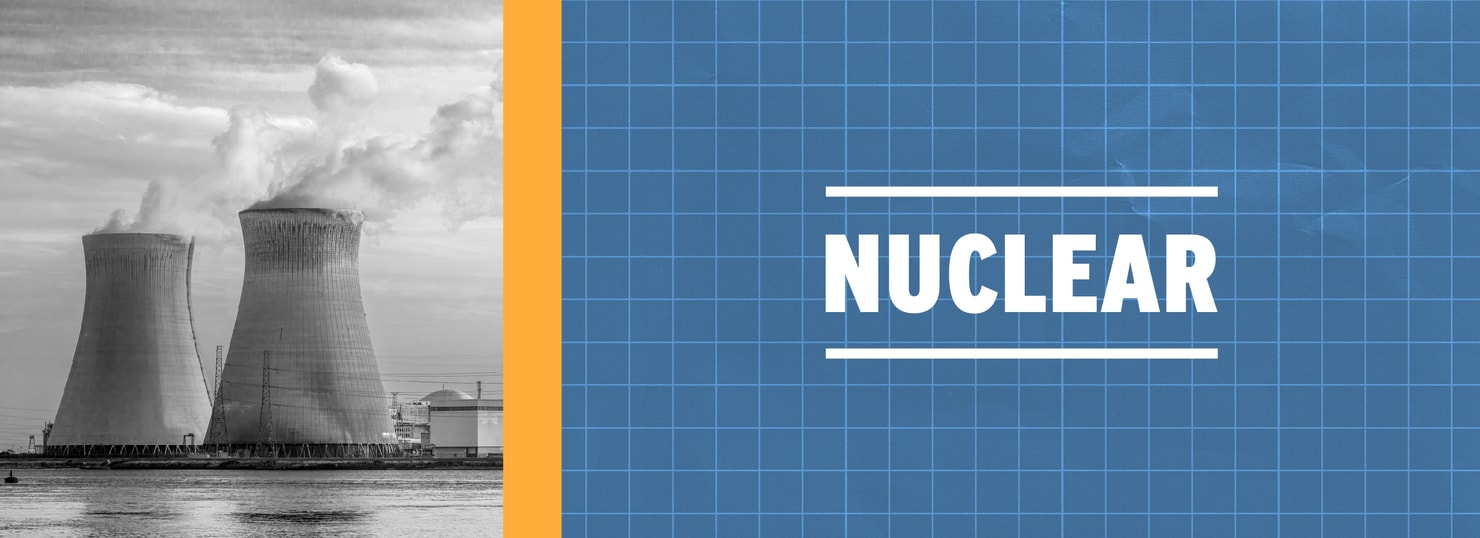
Europe’s appetite for nuclear power is growing fast, and the US is well-positioned to meet this demand. A new report from Third Way, however, warns that aggressive tariffs, erosion of alliances, and a conservative federal lending strategy, combined with rising protectionism from some segments in Europe, are creating new obstacles for American developers. You can read the full report here, but here are a few key points:
- The US holds a real first-mover advantage, but is in danger of losing it. Several American small modular and advanced reactor designs are contenders to be built in Europe. While European buyers want American tech, they don’t want to deploy it sight unseen. That means America’s lead only holds if we can build first-of-a-kind (FOAK) reactors and prove our designs domestically, and do it quickly enough that competitors in Asia, Canada, and Europe don’t move faster.
- The binding constraint is financing, and our own lender won’t move. FOAK projects carry costs and construction risks that private banks won’t underwrite alone, so public financing is critical to getting a first plant built. The Department of Energy’s Energy Dominance Financing (EDF) office was created for exactly that purpose. The program, however, has so far confined itself to low-risk restarts and uprates. For instance, EDF has put nearly $30 billion behind the AP1000 over 15 years–a design already in commercial operation–but nothing behind other designs. New informal guidance from EDF would lock this bias in, requiring a reactor to be commercially operating before it can even apply for a loan to build one.
- American foreign and trade policy is compounding the damage. Nuclear deals are century-long relationships, and European demand rests on the US being a stable long-term partner. But threats to NATO, ongoing tariff volatility, and open feuds with allies have shattered the US’s credibility as one. The tariffs themselves are also raising the cost of the cross-border supply chain and co-financing partnerships that nuclear builds depend on.
- The NRC is America’s best sales tool, and it's being blunted. European nations that are nuclear newcomers lack the in-house capacity to license unfamiliar reactor designs on their own. They often lean on the US Nuclear Regulatory Commission (NRC), long treated as the gold standard in nuclear regulation, through cooperation agreements and joint design reviews to gain expertise. Working closely with the NRC, countries’ regulators learn how to review specific American designs and can rely on the analysis the NRC has already done, so when it’s time to license one, they know the reactor is technically validated and how long reviews will take. A design that a regulator knows it can approve on schedule is the one the country buys. But the Trump Administration's firings and rushed overhauls have gutted the NRC’s capacity to meet that demand just as Europe’s need for it spikes.
Why This Matters: Nuclear exports represent century-long strategic relationships–involving fuel, parts, and technical support over the lifetime of the plant. Whoever builds the world’s next fleet of reactors sets the terms for decades. Neither the US nor its allies can scale nuclear alone; each depends on the other for pieces of the nuclear supply chain, financing, and regulatory capacity. Working together, the US and Europe can set the global standard. Working against each other, they hand it over to other countries.
What Comes Next: Across more than a decade of work on US nuclear policy, Third Way has made the case that America’s advantage abroad depends on its partnerships. But realizing that advantage depends on smart, consistent policies that open markets to US technologies and bridge financial chasms. To secure the opportunity in Europe, we’re pushing the US to do two things at once: commercialize new reactors at home and stabilize its alliances abroad. We’re working across our Economics and Foreign Policy teams to take down costly tariffs and rebalance relationships with Europe, while also focusing on aligning nuclear financing across allied nations and equipping tools, like the Export-Import Bank, to work hand-in-hand with allied credit agencies. We’re also working to restore the NRC’s independence and credibility. All of this comes down to timing–the opening in Europe is real, but it won’t stay open for long.
You don't have to look very far to find backlash to data centers. As the AI boom sends demand for data infrastructure soaring, hyperscalers are racing to build data center facilities across the country, and the communities being asked to host them aren’t sold. The opposition is rooted in something deeper than any single project. Our newest public opinion research digs into why. Third Way partnered with Impact Research to convene an online focus group of 100 swing voters nationwide, and what we found is that skepticism about data centers is driven by distrust in powerful corporations and utilities and frustration with elected officials who voters feel have dropped the ball on regulation and community protection. Here are three takeaways from our polling:
- Americans see data centers as inevitable, but unwelcome. Even when we described data centers built the “right way”–using no water and passing no electricity costs to ratepayers–a slight majority still opposed them. The handful of supporters mostly framed data centers as a necessary evil; something their community would tolerate rather than something they actually wanted.
- The core grievance is a lopsided bargain. Communities that host data centers are asked to accept the traffic, pollution, strain on the grid, and higher bills, and in return, they might get some construction jobs. As participants told us again and again, they believed someone would benefit from data center build-out, just not them.
- The real problem is a trust gap. Trust in institutions is near an all-time low, and the tech companies and developers making the case for data centers are no exception. When we showed participants Sam Altman’s congressional testimony on the benefits of AI, most found him unpersuasive. One respondent dismissed him as the “CEO of Chat,” selling “his own medicine.” When we showed a clip of Tucker Carlson questioning whether a data center’s job promises were worth the trade-offs, even self-identified liberals–who said they rarely agree with Carlson –sided with him.
What We’re Doing: Americans don’t believe they’ll see the benefits of data center build-out or that they’ll be protected from higher bills. That opposition hasn’t hardened yet, so there’s still a window to turn things around and find strategies that allow continued economic growth in the tech sector and protect communities’ interests. We’re pushing industry and policymakers to act. We’re spelling out what building responsibly actually looks like: transparency in dealmaking, legitimate benefits for communities, and firm commitments that won’t raise costs for consumers.
- Lily Bermel, in the Washington Post, argues that the clean energy transition is still underway, and that climate policy should shift away from restoring lost tax subsidies and instead focus on permitting reform, grid buildout, reliability, and more investment in clean firm power.
- Molly Taft, in WIRED, argues that the rapid expansion of data centers has become a flashpoint in American politics and is pulling together criticism from people who normally have little in common.
- Rob Meyer, on Heatmap’s Shift Key podcast, sits down with Daniel Palken, the Director of Infrastructure for Energy and Permitting at Arnold Ventures, to walk through the state of play of permitting reform legislation.