Blog Published September 11, 2025 · 5 minute read
NRC Reform, The Right Way
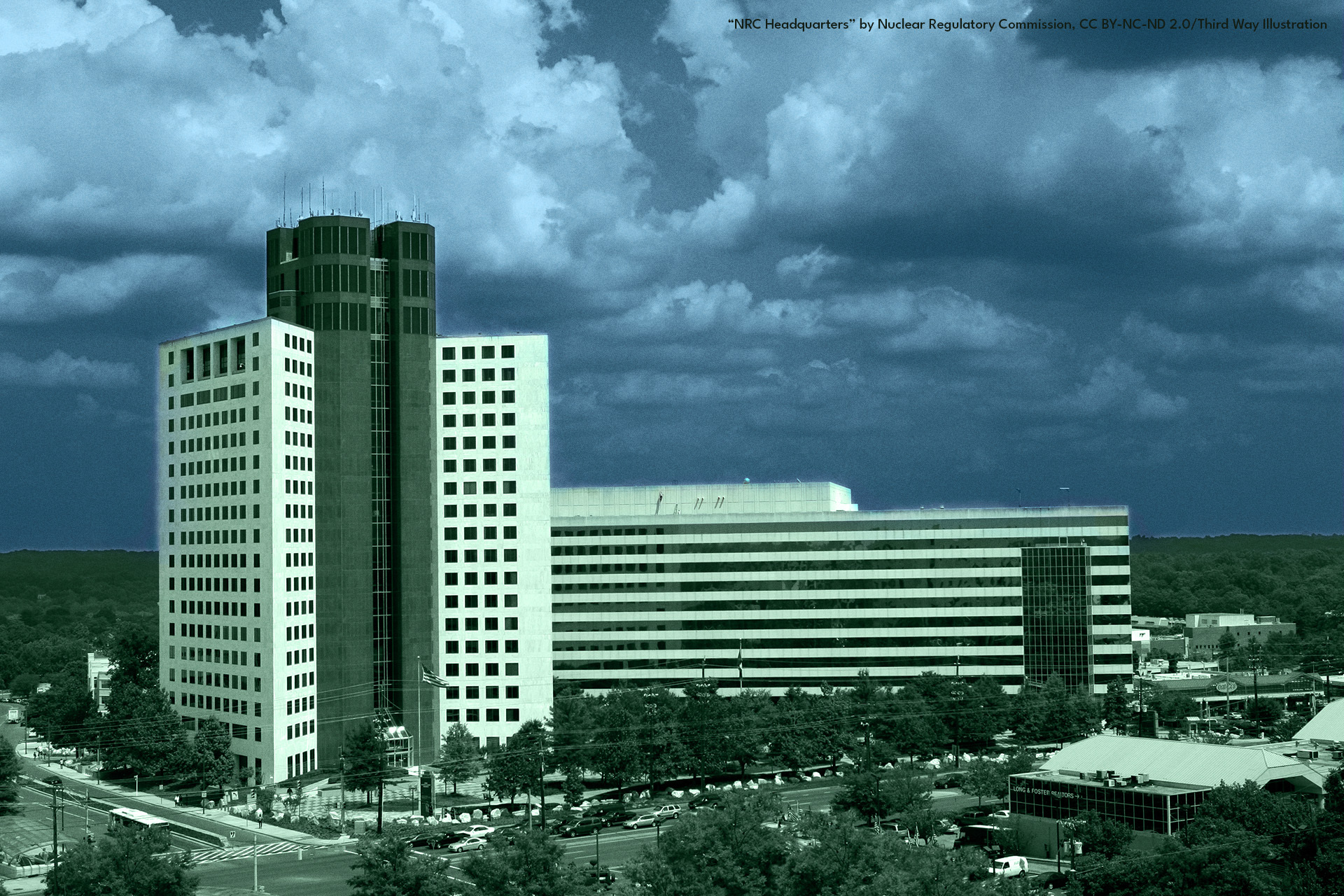
US energy demand is skyrocketing. For the nuclear sector to succeed in delivering reliable energy and economic opportunity, the US needs a trustworthy, efficient, and globally respected Nuclear Regulatory Commission (NRC). Under the direction of Congress’s bipartisan Accelerating Deployment of Versatile, Advanced Nuclear for Clean Energy (ADVANCE) Act, the NRC has begun the process of reform to flexibly meet the licensing needs of the next generation of American reactors.
One of the Trump administration’s four executive orders (EOs) on nuclear energy emphasized the ADVANCE Act’s direction for the NRC and set an ambitious goal of quadrupling nuclear energy growth by 2050. But the administration has since taken actions that undermine the NRC’s independence, credibility, and effectiveness—limiting its ability to support that goal. To ensure the NRC can safely and efficiently approve proposed reactors to meet American energy demand, the administration must lean on the NRC’s decades of expertise.
It’s Not Too Late to Course-Correct
An independent regulator staffed by dedicated, impartial experts is the foundation upon which the nuclear sector rests. American nuclear energy has reached a critical point—public support for nuclear power has reached new heights, and hyperscalers need the 24/7 power that nuclear provides. Perhaps more than ever, private industry, the public, investors, and the nation need confidence in the regulatory process.
While there have already been serious ramifications from the administration’s observed and reported actions at the NRC, it is not too late for the administration to reverse course. The administration must take immediate steps to restore the agency’s independence, preserve its technical capacity, and unleash an American nuclear energy revival. The following core principles should inform the administration’s implementation of Congressionally-mandated reforms:
- Keep the NRC at the forefront of nuclear licensing: Neither DOD nor DOE have the capacity, institutional knowledge, relationships, or specialized expertise to license commercial power reactors at scale. While leveraging the capabilities of the Defense and Energy Departments to catalyze deployment, as is highlighted in the EO, is vital, these agencies are not substitutes for NRC licensing. In specific applications, it may be appropriate for these Departments to continue authorizing specialized reactors (e.g., national labs, military forward-deployed environments) in close coordination with the NRC. Therefore, regardless of the location or application, the NRC should be at the forefront of licensing coordination.
- Remove the OMB bottleneck: Funneling all NRC decisions through the Office of Information and Regulatory Affairs (OIRA) within the Office of Management and Budget (OMB) undermines the agency’s independence, generates more regulatory uncertainty, and ultimately hands off final say to an office with little nuclear expertise. According to NRC Chair Wright, OIRA has already reviewed significantly more decisions than in years past, increasing the chances of gridlock and extending licensing timelines. For the NRC to respond nimbly to industry needs, it must avoid additional layers of bureaucracy and keep OIRA referrals to the minimum extent necessary.
- Prevent indiscriminate DOGE cuts: Quadrupling US nuclear generating capacity by midcentury (while also supporting international markets and promoting US nuclear exports) means there is very little margin for error, and very little time to waste. The NRC’s aging workforce, recent hiring freezes, and loss of technical experts and senior executives further compound capacity issues at the agency. Meeting the administration’s nuclear ambitions means strategically preserving existing staff and quickly scaling up (i.e., increasing the size of “certain functions,” per the EO). Ill-conceived workforce reductions or wholesale regulatory revisions by inexperienced DOGE detailees would be disastrous for the agency and the broader US nuclear sector.
- Seek efficiencies using existing authorities: Congress has given the NRC tools under the ADVANCE Act and the Nuclear Energy Innovation and Modernization Act to modernize and reform the agency, and the NRC is working in good faith to implement those reforms. Even with these regulatory reforms, the administration can still improve the function of the agency. For example, the NRC can leverage authorities and pathways already available, such as the Non-Power Production or Utilization Facility License Renewal rulemaking. That would be less intensive in terms of time, effort, and resources.
It is also important to acknowledge Congress’s jurisdiction over these matters. The administration’s actions have undermined the legislative branch’s role in providing direction to the NRC. The future of nuclear and the health of our democratic system hinges on the separation of powers.
Conclusion
The administration has started down a troubling path when it comes to NRC’s independence, authority, and capacity, but it’s not too late to change course. Nuclear has gained significant momentum over the last several years, and the NRC is working hard to meet the moment. The tools are already there to ensure the NRC is equipped to reform its approach to nuclear licensing and regulation. Undermining that effort risks losing Americans’ faith in the nuclear enterprise as a whole. The Trump administration must take this opportunity to strengthen—not undercut—the NRC’s role in supporting a robust American nuclear energy sector.