Memo Published July 30, 2026 · 6 minute read
What’s In It For Me? What Americans Really Think About Data Centers
Takeaways
- Americans see data centers as inevitable but undesirable.
- They worry that data centers will drive up their energy bills, deplete their water supplies, and damage the environment. And they’re skeptical that data centers will create meaningful jobs or revenue for their communities.
- Americans are willing to support data center buildout only if their communities reap substantial benefits and don’t bear the associated costs.
- They do not trust that tech companies, government, and other key stakeholders will protect their interests. These groups must work to rebuild trust with impacted communities if they hope to win support–or even tolerance–for data centers moving forward.
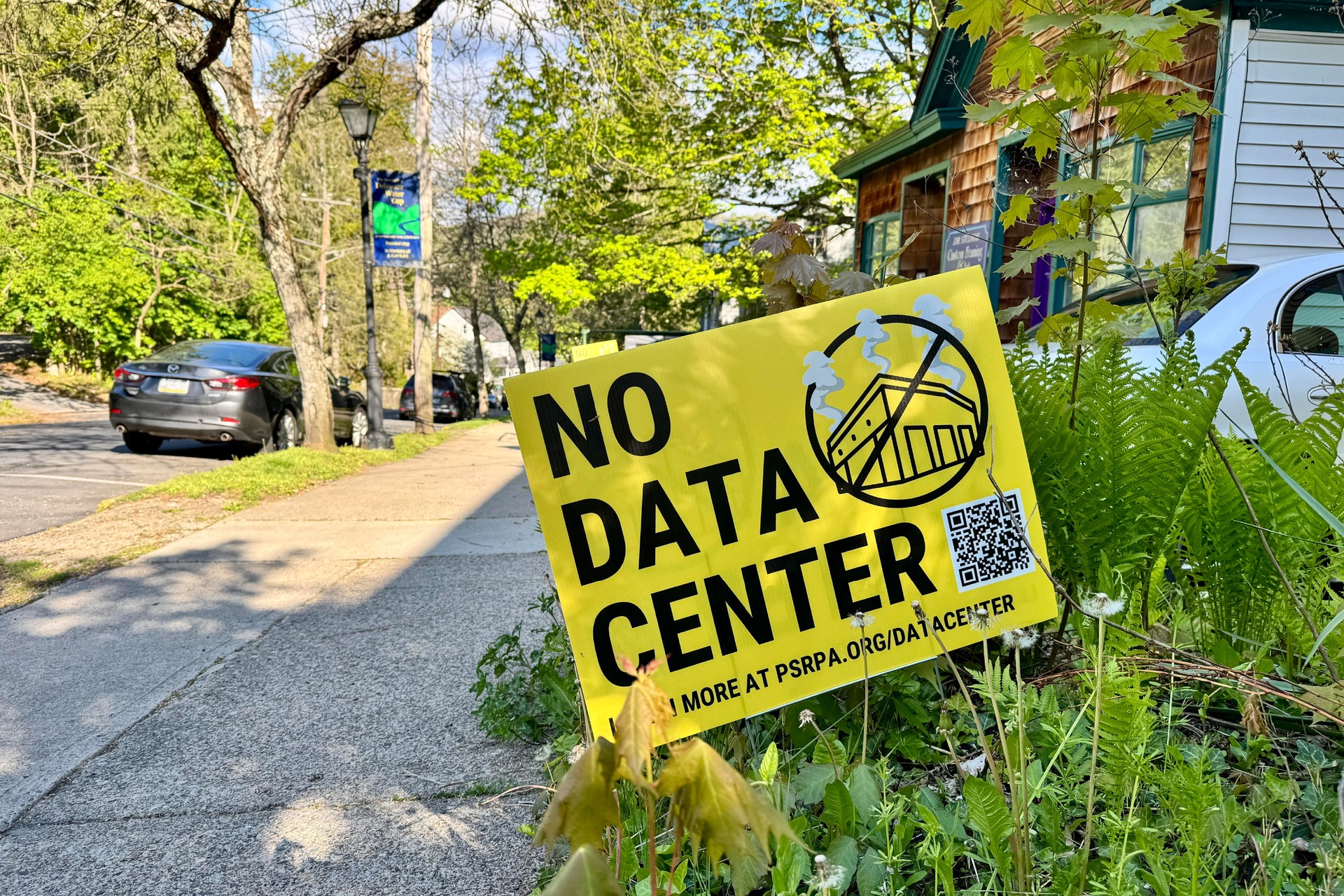
Data centers have become one of the most divisive issues in energy politics. We’ve seen a handful of lawmakers float the idea of a national moratorium on new construction, and communities across the country are pushing back against projects they fear will raise their electricity bills, strain local water supplies, and transform their communities in ways they aren’t comfortable with. Those concerns are legitimate, and they should not be simply dismissed in the name of innovation.
At the same time, the US has a compelling interest in expanding the infrastructure needed to support AI. As competitors like China invest heavily in advanced computing efficiency, maintaining US leadership will require building more data centers–not just for economic growth, but increasingly for global competitiveness. The challenge is ensuring that this expansion does not come at the expense of the households and communities that host it.
To get a deeper understanding of how Americans are reasoning through that tradeoff, Third Way partnered with Impact Research to convene an online focus group of 100 swing voters nationwide. We saw real skepticism about data centers rooted more in distrust than ideology. We detail the results below.
Americans Are Down on Data Centers. But They’re Still Curious What Could Be In It for Them.
Previous Third Way polling on data centers found Americans to be deeply divided on data centers, even if they are done the “right way”, meaning data centers would use no water and not pass electricity costs to ratepayers, with 43% in support of building data centers in their state and 41% opposed.
We saw similarly tight margins in our focus group, with a slight majority opposed to data center buildout, even if done the right way.
Only a handful of participants expressed unequivocal support. Most “supporters” framed data centers as a “necessary evil.” They didn’t want to see data centers built in their communities, but they acknowledged that tech companies need server space to fuel growth, and local data center build-out seemed inevitable. They rationalized that there could be some benefits for their community, like new construction jobs or tax revenue.
As one participant put it, “[Data centers] are going to be around and exist somewhere. I would like to have communities benefit from them. Their earnings need to be shared.” Another expressed similarly muted enthusiasm: “As long as communities maintain good health, that is the primary priority. If it brings in more jobs and opportunities, I’m open to hearing details. As long as communities are at the forefront...” Not exactly a ringing endorsement.
Anti-data center participants worried about the impact of construction on the local environment, mentioning concerns about pollution, traffic, and noise. One participant described ongoing construction in their state, saying it had already “caused flooding, washed-out roads, caused lots of damage."
Others worried about the impact of data centers on local electricity costs. “Data centers cause pollution, add traffic, and drive up energy costs. It is the indisputable truth,” said one participant. “We don't need the pollution, the noise & certainly not the energy increase,” said another.
Ultimately, participants felt they were asked to give more than they received: allow data centers to change their community, impact the environment, and potentially raise energy bills; gain, if all goes well, jobs and tax revenue.
Participants believed someone would benefit from data center buildout, just not them.
Low-T Individuals (And the ‘T’ Stands for ‘Trust’)
Trust in our institutions is close to its all-time low, and tech companies are no exception.
As one respondent put it, “We end up paying for their corporate welfare.” Another echoed that same frustration: “The large companies get massive tax breaks and then do not follow through with the jobs or share the profit back to the communities and state.”
Participants were shown footage of an exchange between Kevin O’Leary and Tucker Carlson. The two discuss O’Leary’s ongoing investment in an AI data center campus in Utah. O’Leary argues that the project would create 2,000 long-term and 10,000 manufacturing and construction jobs. Carlson questions whether creating 2,000 permanent jobs in Utah justifies the impact of AI on other American workers. Respondents, including many who self-identified as Democrats or Liberals, overwhelmingly agreed with Carlson.
More liberal participants noted that they rarely agreed with Carlson politically, but “I’m with him all the way on this one.”
One respondent questioned the long-term benefits of data center buildout, saying, “I agree with Carlson because he makes reasonable rebuttals. In the video, it says [data centers] will create millions of jobs, but if we look at the local level, once they are built, only a handful of people are needed to maintain them. There may be a lot of jobs at the beginning, but near the end there will be barely any left.”
Participants were similarly skeptical of OpenAI CEO Sam Altman’s testimony before Congress on the benefits of AI and data centers–including both those who did and did not know who he was. Most respondents found his testimony unpersuasive and did not believe he was being truthful or that he is a credible source. One respondent summed up the mood concisely, “He’s the CEO of Chat, he’s selling his own medicine.”
The Bottom Line
America’s opposition to data centers has less to do with their feelings about artificial intelligence and more to do with their anger and distrust of large corporations and government.
Most participants were open to new data center development if they believed their communities would actually receive the benefits promised by tech companies and investors like Kevin O’Leary. But the trust isn’t there. Communities need some evidence or assurance that developers will make good on their promises and greater transparency around plans for data center buildout. Until then, Americans will likely remain skeptical and suspicious of data center buildout.
Methodology
Third Way and Impact Research conducted a hybrid qualitative/quantitative focus group, called a Remesh, with 100 swing voters nationwide on June 2, 2026. Findings are directional and cannot be extrapolated to the entire population.