Memo Published April 2, 2026 · 5 minute read
Asking Americans: What’s Causing High Energy Prices and How Do We Fix It?

Takeaways
- Voters think utility bills are higher than they should be. They know inflation is part of the problem, but they’re also pinning the blame on utilities, large load users like data centers, and the federal government.
- Americans do not blame specific energy sources–either clean energy or fossil fuels–for rising prices. They overwhelmingly support an all-of-the-above approach, understand that expanding our energy supply can help lower costs, and want to build a mix of energy sources to do so.
- Voters are looking to Democrats to deliver on two priorities: 1) rapidly expanding new energy generation, including clean energy and fossil fuels, and 2) protecting customers from free riders, excess fees, and price gouging.
New Third Way polling makes it clear: voters are fed up with high energy costs, and they want Democrats to lower them by rapidly expanding energy production while cracking down on anything they see as jacking up their rates, including data centers. The ongoing war with Iran and rising gas prices at the pump have only exacerbated pre-existing anxieties about energy costs. Voters are looking for relief now.
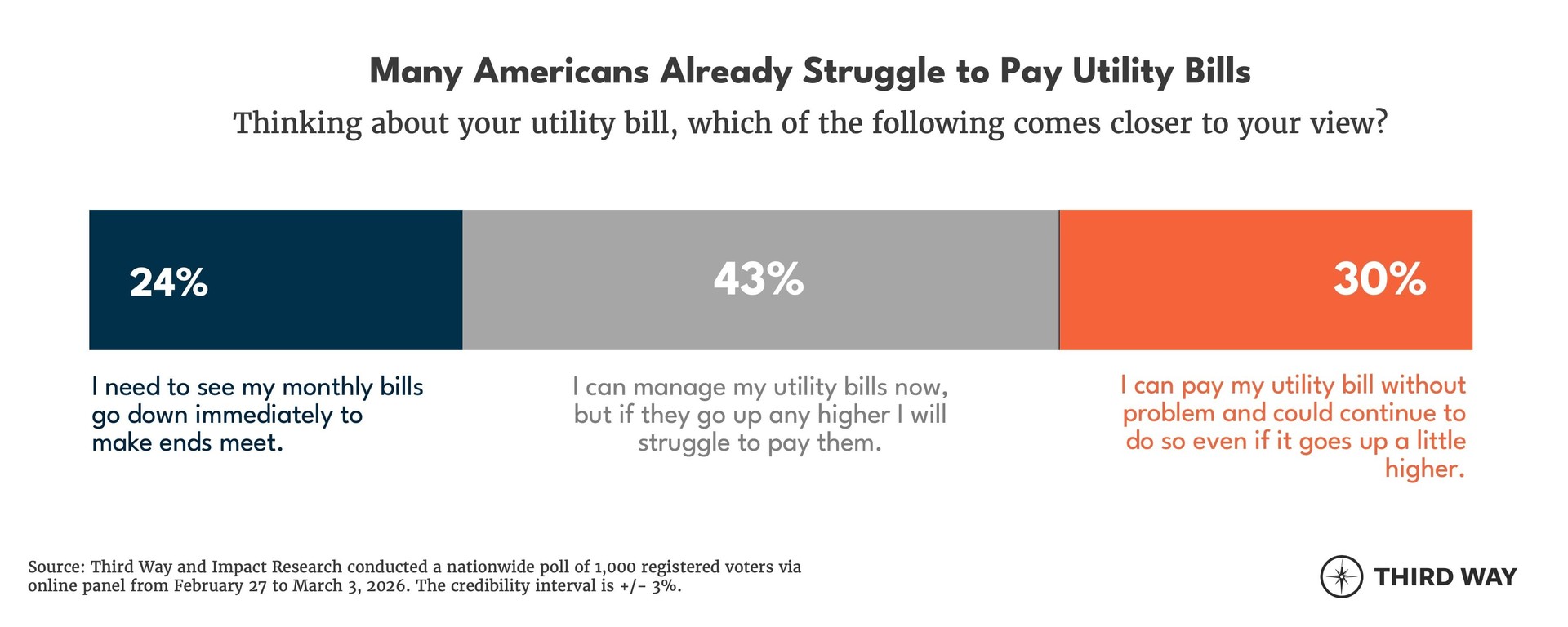
In a March survey of 1,000 registered voters, respondents ranked energy fourth among their cost-of-living concerns, behind housing, groceries, and health insurance, and ahead of childcare, education, taxes, and prescription drugs. 86% said their energy costs had increased in the last few years.
And for many households, there is little room left to absorb future price growth. While some respondents said they can manage their energy costs today, a plurality (43%) said they would struggle to keep up if bills rose further. A quarter of respondents said they can’t make ends meet at today’s prices, let alone the higher rates many analysts expect Americans will see in the years to come.
Why Do Voters Think Energy Bills Are Up?
When asked to rank the causes of electricity price increases on a scale of 1-10, voters gave four factors a score of 7 or higher: inflation (7.6/10), price gouging by utilities (7.2/10), large energy users like data centers (7.2/10), and the federal government (7/10).
Concerns about inflation are not unique to the energy sector. But the other causes of rising prices identified by voters–the growth of Big Tech, runaway utility pricing, and poor decision-making by the federal government–reveal widespread frustration with powerful actors. Voters feel they’re being ripped off and are looking for accountability.
Voters did not feel specific technologies had caused prices to spike. Respondents felt reliance on fossil fuels or government mandates for renewable energy had little impact on energy costs. As we’ve written previously, Americans are more tech-agnostic than their representatives in Washington. They express strong favorability toward renewables, natural gas, and nuclear energy. When asked about the ideal energy mix for their communities, an overwhelming majority (79%) favored some combination of clean energy and fossil fuels.
What Do Voters Think Will Bring Prices Down?
Voters gravitated toward solutions that did two things: increase the supply of energy and create accountability for corporations and utilities.
Respondents expressed support for building more of “all types” of energy, including renewables, gas, nuclear, and coal. Respondents grasp the importance of expanding energy supply to lower costs, and they’re open to building a wide range of energy sources to lower their monthly bills.
But they’re also pretty sure that their bills are higher than they should be. Voters think they’re being treated unfairly–by utilities, who they believe to be price gouging, and by tech companies, who they see as free riders on the electric grid.
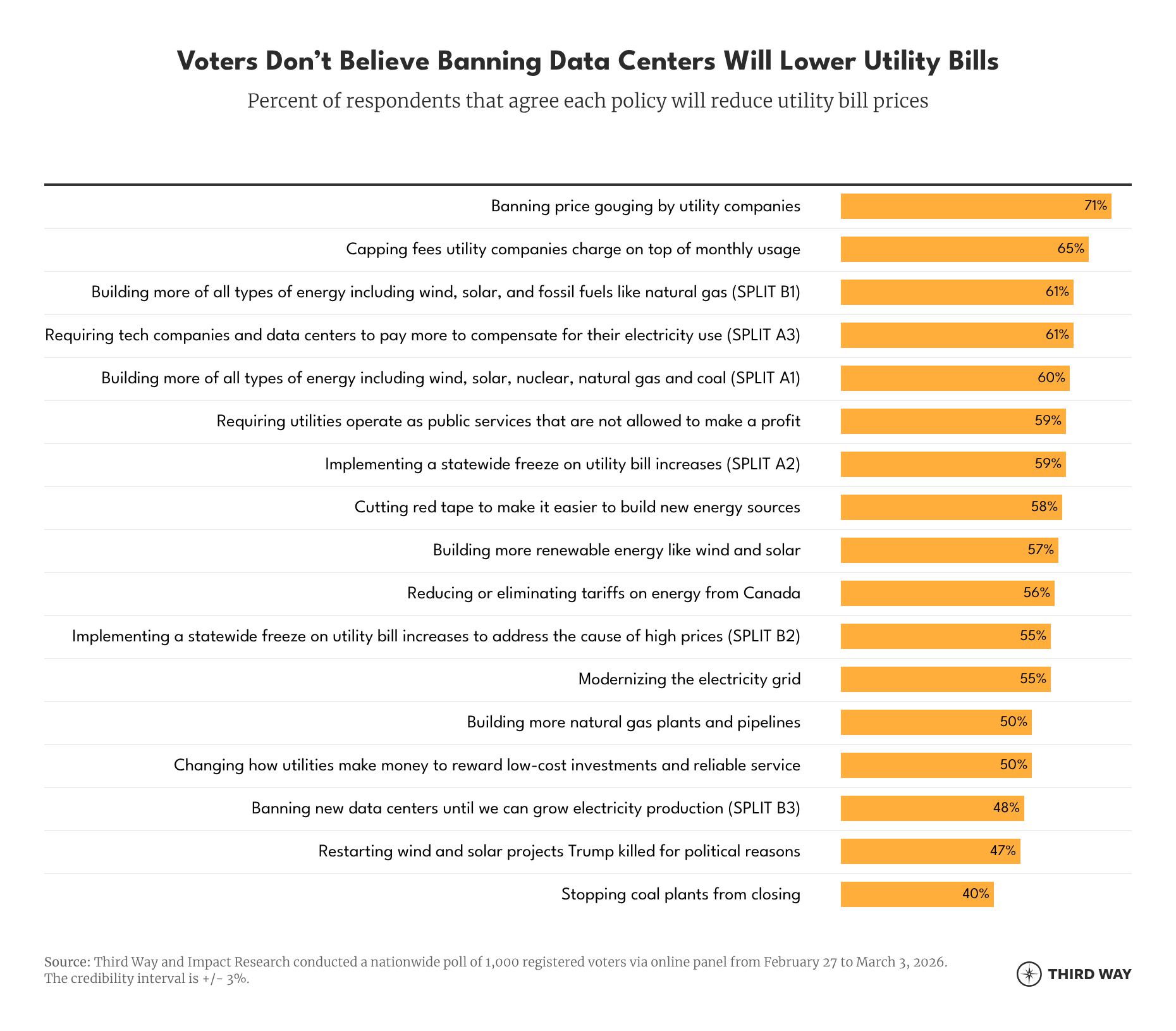
Banning price gouging by utilities was the most popular policy proposal we tested, securing support from more than 70% of respondents. Utility price gouging is already illegal in many states, but the sentiment still stands: voters believe they’re being charged more than they actually owe.
Similarly, our second-most-popular policy proposal focused on capping monthly fees charged on utility bills. Many of these charges cover important elements of service–like transmission and distribution– or recoup the cost of infrastructural repairs and upkeep. Still, voters think it’s a raw deal.
We also saw widespread support for holding tech companies accountable for their impact on the grid. 61% said requiring data centers to pay more to compensate for their electricity use would reduce consumer utility bills. Elsewhere in our survey, 70% of respondents said they were worried data centers would increase their bills, and respondents were evenly divided on whether to allow data centers into their states or oppose new buildout.
From corporations and utilities, voters want the same thing: a fair deal.
Message Testing
We tested a series of messages related to our policy proposals, asking voters which ones they found most convincing for lowering utility bills. Our top-performing message by a wide margin focused on expanding the supply of energy:
“This Democrat says we need an energy policy that uses every tool available. By combining reliable natural gas with fast-growing technologies like wind, solar, and nuclear, we can increase our energy supply, protect against global price spikes, and bring down costs.”
Messaging on data centers paying their fair share and modernizing the grid also performed well. Still, the gulf between these messages and our all-of-the-above message was stark: the all-of-the-above message was 25% more effective than messages on grid modernization and data center buildout. It was our most successful message with voters from both parties and among Independents.
What’s Next?
Policymakers cannot afford to look away from high energy prices or focus solely on other affordability concerns, like housing and groceries. Democrats must tackle the energy costs crisis head-on.
If policymakers and candidates take one thing from this research, it’s the following:
Voters from both parties are eager for policies that 1) build more energy generation, including both clean energy and fossil fuels, and 2) protect customers from free riders, excess fees, and price gouging. These principles must be central to Democratic messaging and energy policymaking moving forward.
Methodology
From February 27 to March 3, 2026, Third Way and Impact Research conducted polling via an online panel of 1,000 registered voters nationwide with a +/- 3% credibility interval.