Memo Published December 9, 2025 · 7 minute read
Poll Shows Americans Want Affordable, All-of-the-Above Energy—Not the Green New Deal or Trump’s Coal Plants
New research from Third Way and Impact Research shows concern about electricity prices is at a historic high. In a national survey of 1,000 likely voters, with an oversample of Black and Latino voters, 83% of respondents reported that their energy costs had increased over the last few years.
That’s near unanimous concern, regardless of race, political affiliation, or education. Over half (51%) of respondents say energy costs have increased a lot, while just 11% say they’ve stayed the same
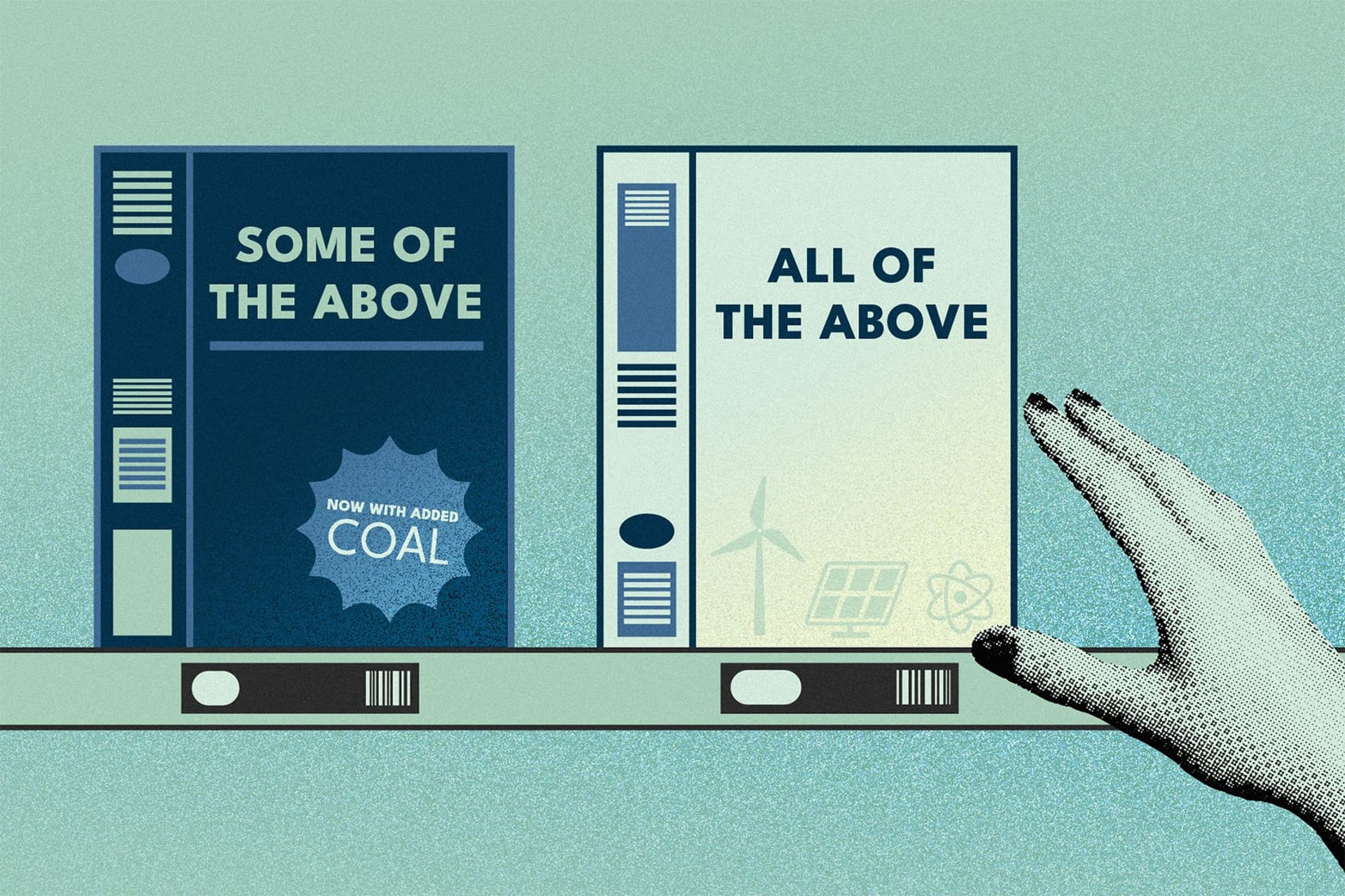
Environmental advocates say that renewable energy alone can lower prices. The White House plan to slash bills relies on limiting electricity production to a ‘some of the above’ strategy with coal at its center. Americans aren’t buying either strategy.
On Electricity, Americans Want Fossil Fuels AND Clean Energy
Our research shows that a majority (59%) thinks a mix of clean energy and fossil fuels is best for the United States’s electricity sector. Most respondents have a favorable view of clean energy, including wind and solar (68%), as well as natural gas (73% favorable). Favorability of clean energy climbs to 76% when nuclear is included alongside wind and solar. Even oil and petroleum are above water, with 58% favorable and 35% unfavorable.
Partisanship does alter support for individual energy technologies, but not as much as one might think—59% of Democrats are favorable to natural gas, and 54% of Republicans are favorable to clean energy, including nuclear, wind, and solar. Republican favorability decreases to 37%, however, when asked about clean energy, including just wind and solar, and excluding nuclear.
Though party leaders and ideologues might be purists about one technology or another, Americans aren’t. They’re practical, and they understand that a mix of energy sources is the best way to achieve reliable energy.
Clean Energy Today, Lower Costs…Some Day
An overwhelming majority of Americans believe building more energy in the US will lower energy costs (82%). A slightly smaller share believes the US building more clean energy specifically will cut costs (73%). At the most basic level, Americans understand that building more energy helps lower costs and increases reliability.
Perception varies across individual technologies. Americans see wind as the most expensive energy source on the market (20%), followed by oil (16%) and coal (13%). Solar is seen as the most affordable source (26%), followed by nuclear (22%).
Respondents were closely divided on the impact of doubling US wind and solar: 41% believed doubling deployment would lower the cost of electricity. 35% thought it would increase costs. Participants clearly understood the basics of supply and demand—more energy means lower prices. But they have serious concerns about the affordability of some clean energy technologies, and those tech-specific concerns impact the perception of clean energy writ large.
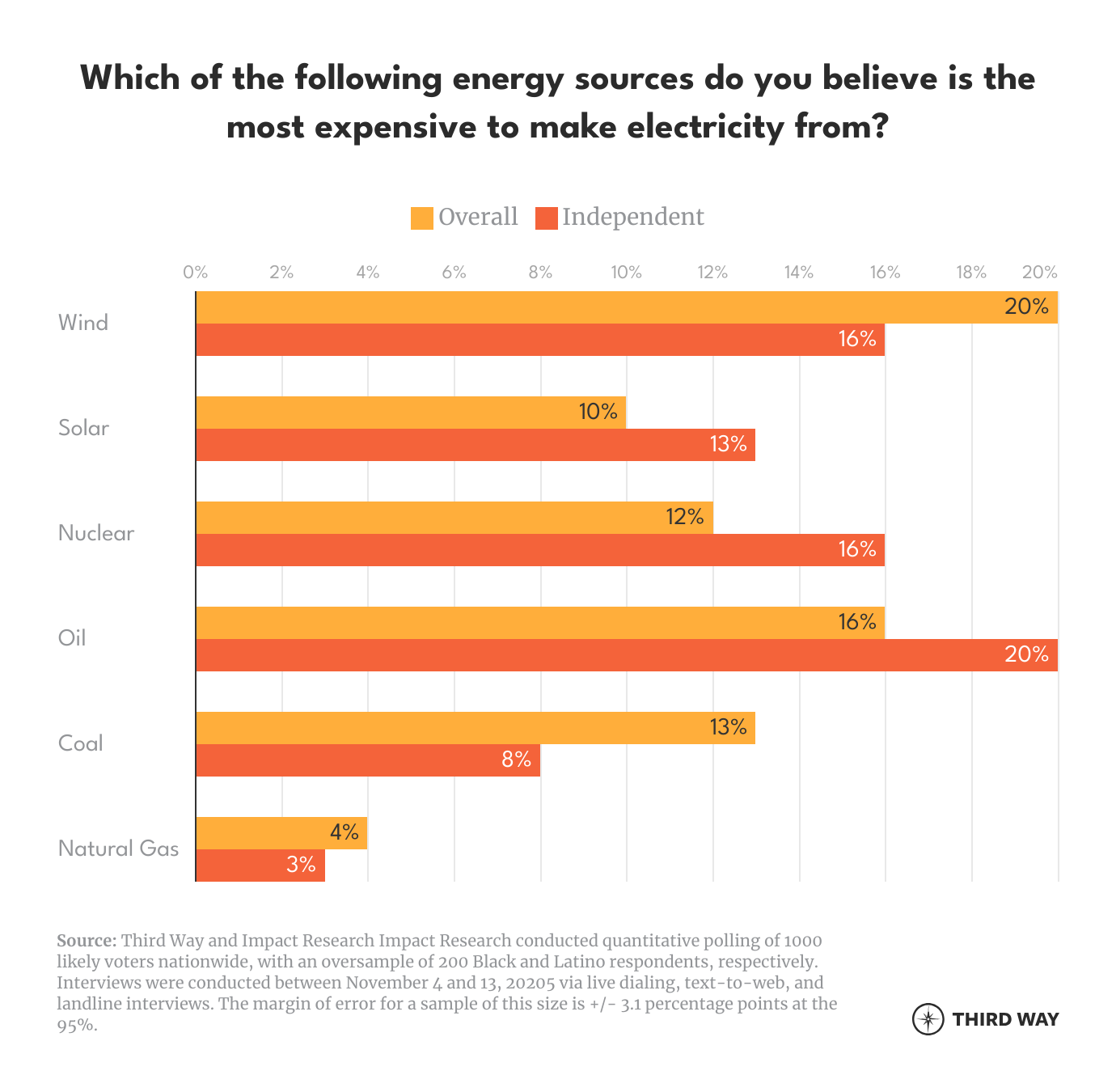
As a result, Americans don’t totally buy that simply building more clean energy leads to lower costs. They want fossil fuels in the mix.
It’s also important to note that Americans aren’t sure how or when they’ll see cost savings from clean energy. Only 37% anticipate short-term cost savings, while 25% anticipate no significant effect on costs in the near future. 57% say clean energy will cut electricity costs in the long term. Americans are desperate for cost savings, and saying clean energy buildout alone will deliver relief simply isn’t credible.
Americans Like Clean Energy—They Just Aren’t Motivated By It
In an open-ended question, 69% of respondents identified the primary advantage of clean energy as some form of environmental protection, like mitigating climate change or improving air and water quality. Only 13% offered lower energy costs as a central benefit, and 22% said clean energy offers no clear advantage.
It is unsurprising that so few respondents identified the economic benefits of clean technologies, given what they reported hearing about clean energy in the media and in their communities. Just 6% reported hearing that clean energy could bring down electricity costs, compared with 11% who’d heard recently about the high cost of clean energy or other economic downsides.
Zoom out a bit, and it’s clear clean energy advocates are losing the messaging war:
- 41% of respondents reported hearing negative messages about clean energy, focused on things like high costs, unreliability, and land use.
- 17% reported hearing about political opposition to clean energy.
- Just 24% reported hearing anything positive about clean energy, including messages on environmental benefits.
- 25% said they’d heard nothing at all about clean energy recently.
Despite considerable effort from advocates to raise awareness of the economic benefits of clean energy, those messages aren’t breaking through. And environmental benefits simply aren’t a priority for most Americans.
When asked about their top priorities for elected officials today, just 2% of respondents listed addressing climate change. That includes only 3% of Democrats and 3% of Independents.
Even when we get more specific and ask about respondents’ priorities for electricity generation, environmental protection still fails to break through. 31% of respondents say reducing pollution and lowering carbon emissions should be the number one consideration when making electricity in the US. 69% of respondents list affordability, reliability, and energy independence as their top concerns for the energy sector. Independents feel similarly, with 67% choosing affordability, reliability, and independence as their top concerns for the energy sector. Even committed Democrats aren’t totally convinced: 52% of Democrats say environmental protection should be the top priority for the energy sector, compared to 48% who chose other priorities like affordability.
Americans understand that clean energy delivers environmental benefits. But they don’t yet grasp that clean tech delivers where it matters most to them: providing affordable, reliable, and secure electricity.
Next Steps: Doubling Down on Economic Benefits
Americans—especially those less convinced of clean energy’s benefits—need to hear more about how clean energy can lower costs and provide consistent, dependable electricity. In our research, we’ve found that the most effective messages for these audiences were:
- “The cost of wind and solar energy is coming down, and they will be far cheaper in the long run than fossil fuels, as the wind blows and the sun shines for free. Meanwhile, the cost to mine and drill for oil, gas, and coal is only going up.”
- “By building domestic supply chains for clean energy technologies, the U.S. can create stable, good-paying jobs in fast-growing industries, with new opportunities in communities across the United States.”
With Independents, our strongest message was:
“With growing data centers and AI taking huge amounts of power, we’re going to need more electricity than ever to power businesses and homes. We should be investing in every energy source that can get us the power we’ll need, including wind and solar.”
To grow support for clean energy, advocates should certainly emphasize these core messages. But they also need to be sure messaging is deployed across media that Americans actually consume. 53% of survey respondents said they got most of their news from social media and podcasts, compared with 28% who consult national newspapers and their websites, and 34% who watch Fox, MSNBC, or other cable news.
Americans are strongly interested in relief from high energy prices. Clean energy can help, but only if advocates can make a credible case that it’s affordable and work to grow the coalition of supporters for clean energy deployment. That effort must go beyond good messaging and center on effective solutions that will lower costs now and create long-term stability. It’s not enough to talk about affordability. Policymakers and advocates must offer the public actionable solutions – and do what it takes to realize lower costs for working families.