Memo Published August 6, 2026 · 4 minute read
Americans Blame the Government for High Health Costs and Want It to Rein in the Industry
Americans are fed up with high health care costs, and they are ready to lay blame. After nearly two years of Republican control in Washington, new polling shows Americans blame the government more than any other factor for rising health care costs.
Voters, however, are not asking government to take over health care. Instead, they want it to do its job: set fair rules, stop industry abuses, and lower costs.
That creates a significant political opportunity for Democrats. Voters across party lines largely agree that government has failed to keep health care costs under control. Yet they also reject a health care system completely run by it. Instead, they favor a balanced approach in which government sets the rules, holds the health care industry accountable, and lowers costs while private companies continue to deliver much of their care.
A Bedrock Polling survey of 1,776 online participants, conducted May 20–24, 2026, reveals three key takeaways:
- People blame both the government and the health care industry for high costs.
- People want government to referee the system, not replace it.
- People support reforms that crack down on industry excesses.
1. People Blame Both the Government and the Health Care Industry for High Costs
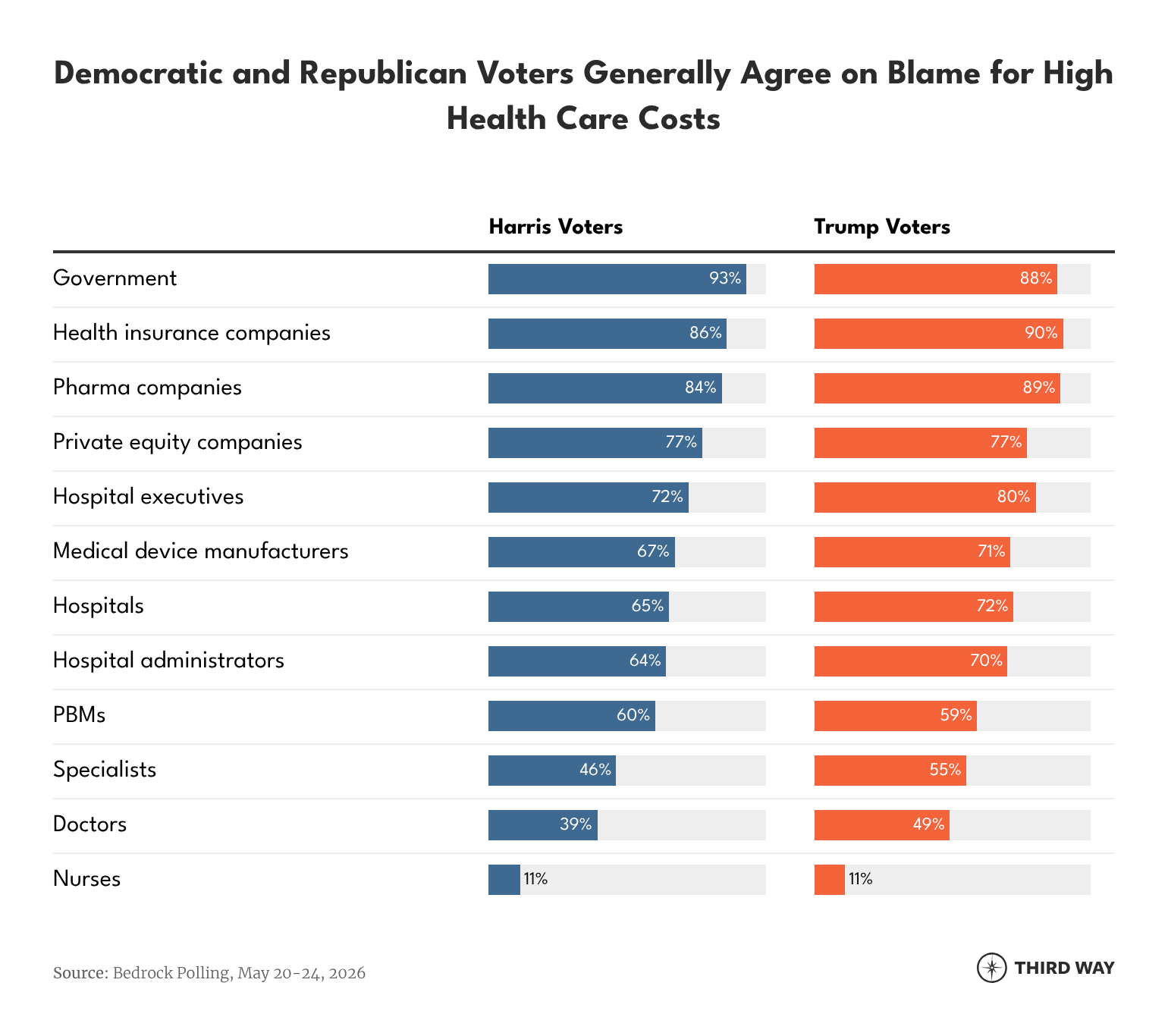
The public places the most blame on government for high health care costs, followed closely by health insurance companies, pharmaceutical companies, private equity firms, and hospital executives. By contrast, doctors and nurses are not seen as the primary drivers of high costs.
The pattern is remarkably consistent across party lines. Democratic voters are somewhat more likely to blame the government, while Republicans place the most blame on health insurance companies. But both groups assign substantial blame to government and to nearly every major segment of the health care industry.
2. People Want Government to Referee the System, Not Replace It
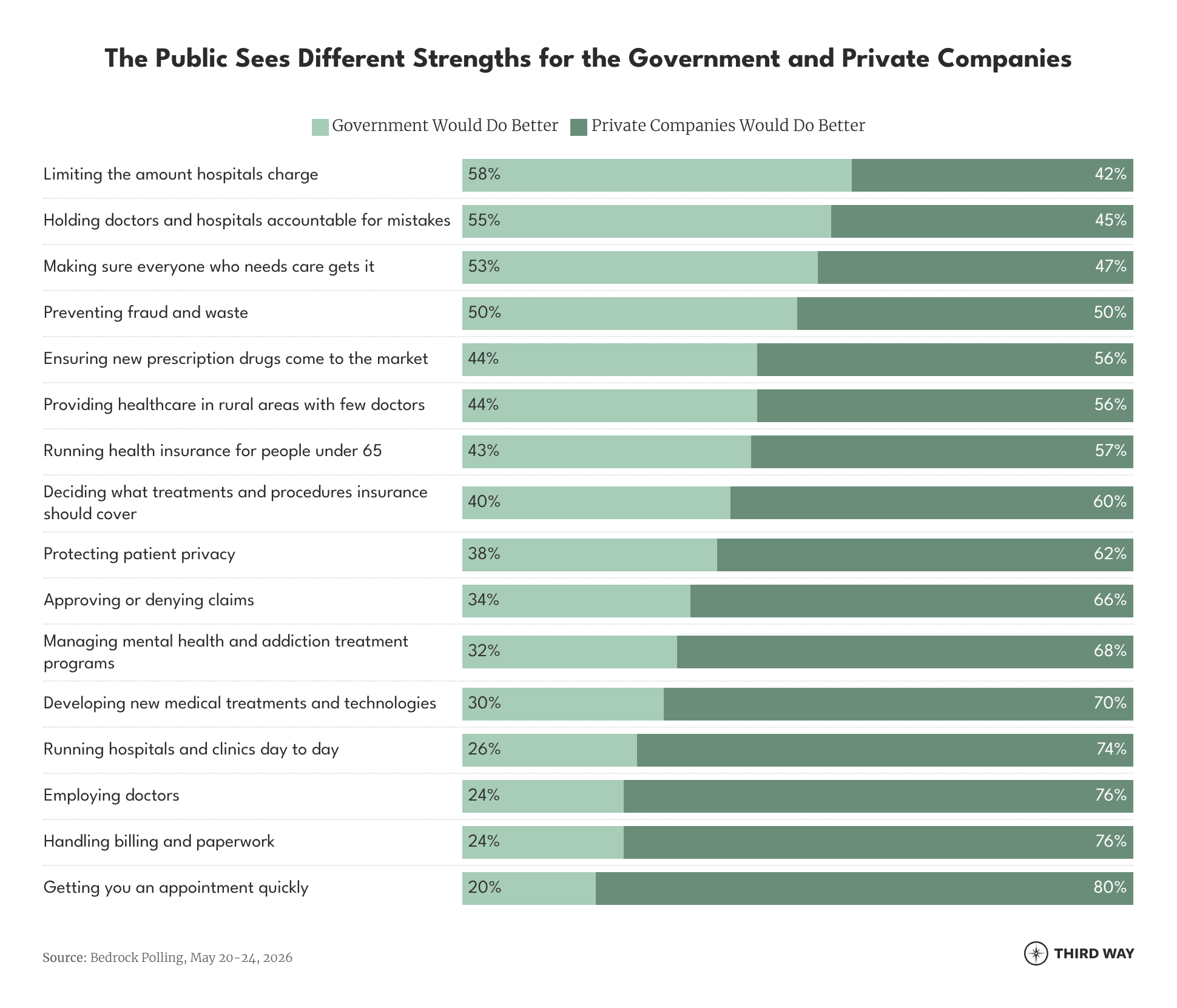
Americans reject the idea that either government or private companies should do everything. Instead, they take a practical view, assigning different responsibilities to each. Voters trust the government to lower hospital prices, hold the health care industry accountable, and ensure that people can access care. They prefer private companies to deliver care, develop new treatments, and handle the day-to-day operation of the health care system.
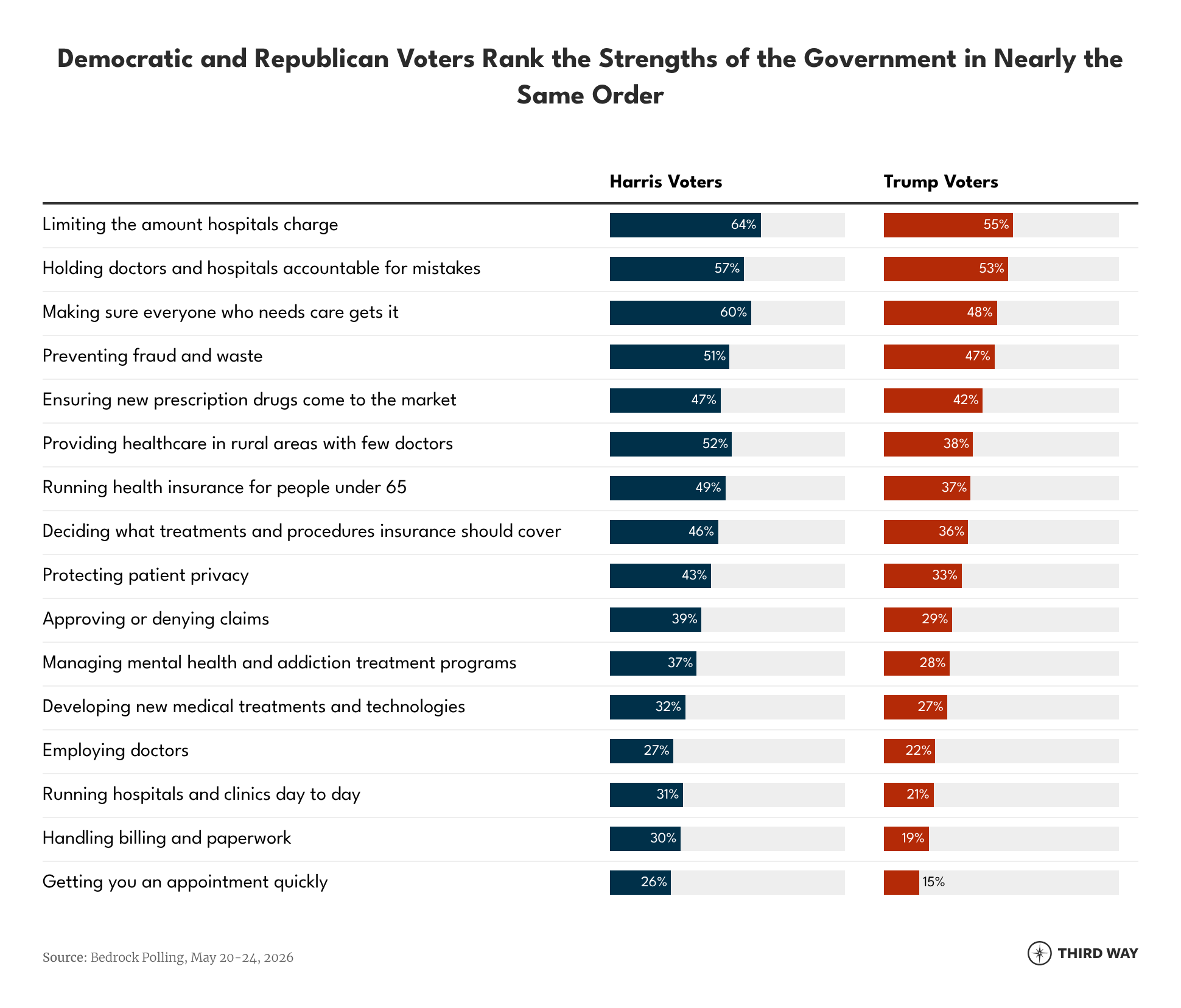
Democrats are generally more likely than Republicans to prefer a larger government role, but voters in both parties prioritize many of the same responsibilities. For example, 64% of Democratic voters believe the government would do a better job at limiting hospital charges, compared with 55% of Republican voters. Both groups, however, rank that role at the top of the list of government actions. Across the political spectrum, voters see the government's strongest role as lowering hospital prices and holding the health care system accountable—not replacing the private sector altogether.
3. Crackdowns Beat Takeovers
Americans overwhelmingly favor reforms that rein in the health care industry over proposals that expand government’s direct role in providing care. The strongest support goes to policies that lower prescription drug prices, limit what hospitals can charge, and curb private equity ownership of hospitals. By contrast, proposals that would put everyone into a government-run health plan receive weaker support.
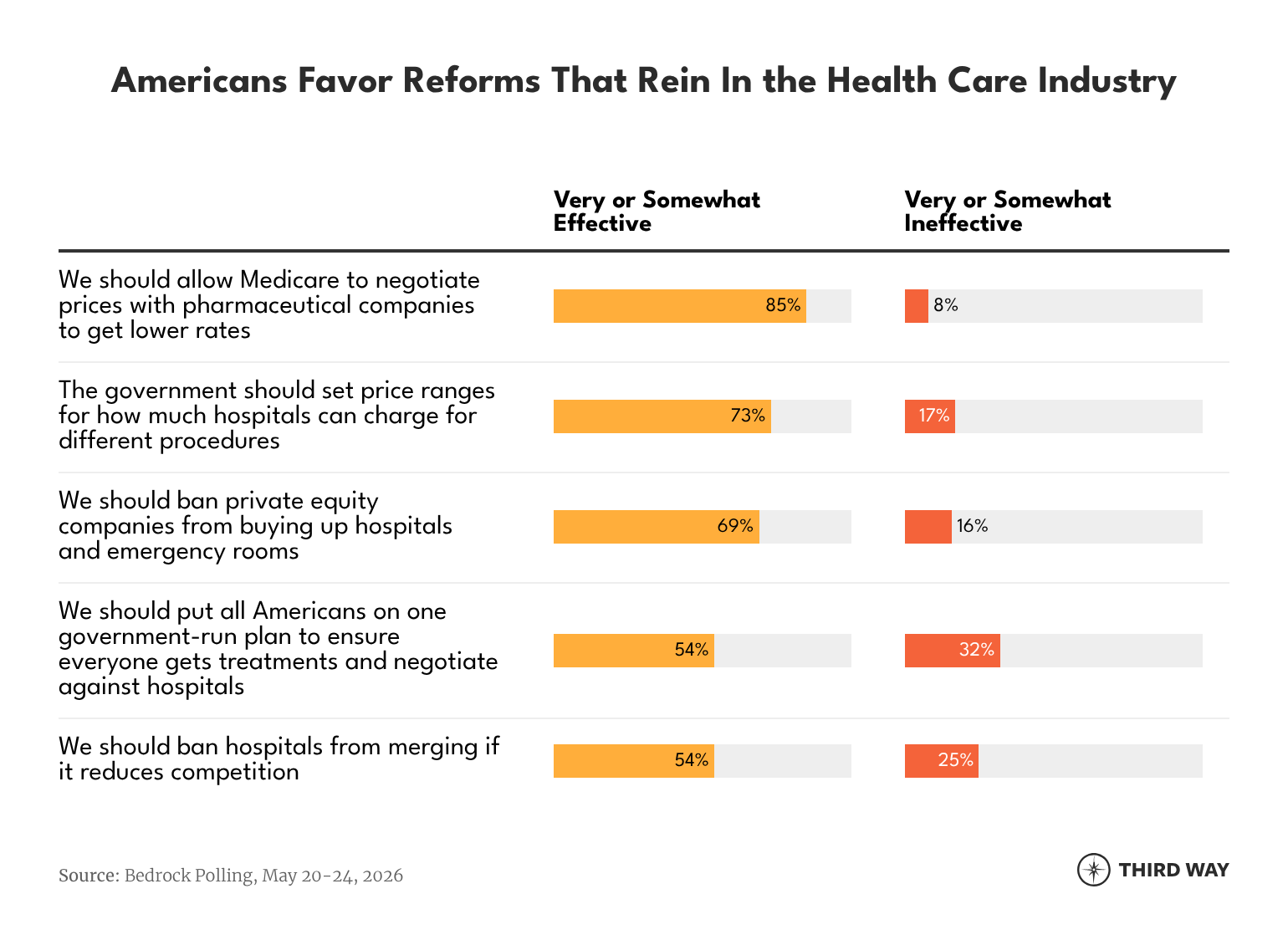
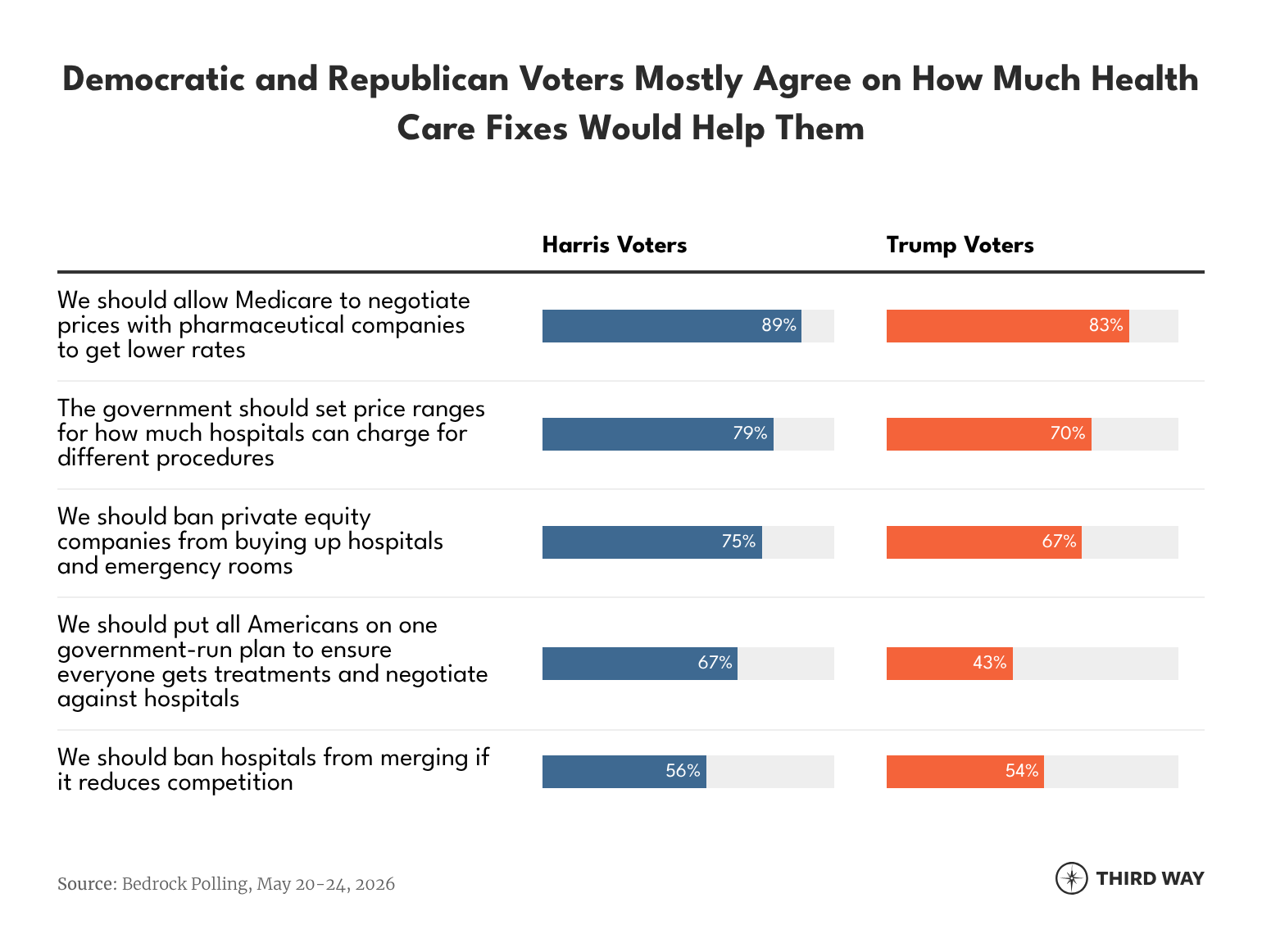
That agreement extends across party lines. Two-thirds or more of both Democrats and Republicans support solutions to regulate the health care industry.
The biggest disagreement is not over whether government should act. Voters clearly want action. The debate is over whether government should hold the health care system accountable—or run the health care system.
Conclusion
The poll points to a clear political opportunity. Americans are looking for leaders who will lower health care costs by holding the health care industry accountable—not by putting government in charge of the entire system. Policymakers who tackle high prices, strengthen accountability, and protect patients will be advancing an agenda with broad bipartisan support.