Debating Asian Trade Here & Abroad

While President Obama was in Asia to tout the 12-nation Trans-Pacific Partnership (TPP) last week, the House Democrats launched a series of in-depth forums on various aspects of the trade deal. As our country’s leadership in Asia is debated here and abroad, one thing is certain: Asia is critical to U.S. growth and middle-class prosperity.
By 2030, the global economy will grow by over $60 trillion, and nearly 90% of that growth will occur outside of the United States. If we want to grow and prosper as a nation, we need to seize a bigger part of this global expansion. Expanding U.S. exports and tapping into this growth is the only path for middle-class prosperity.
As we’ve previously explained, the combined market of the 15 leading Asian economies grew by 261%, from $1.5 trillion in 2000 to $5.4 trillion in 2014. But despite this market boom in Asia, the U.S. market share has fallen by 46% (from 12.3% to 6.6%) since 2000, the biggest drop of any of the 25 largest exporters into Asia except Japan.
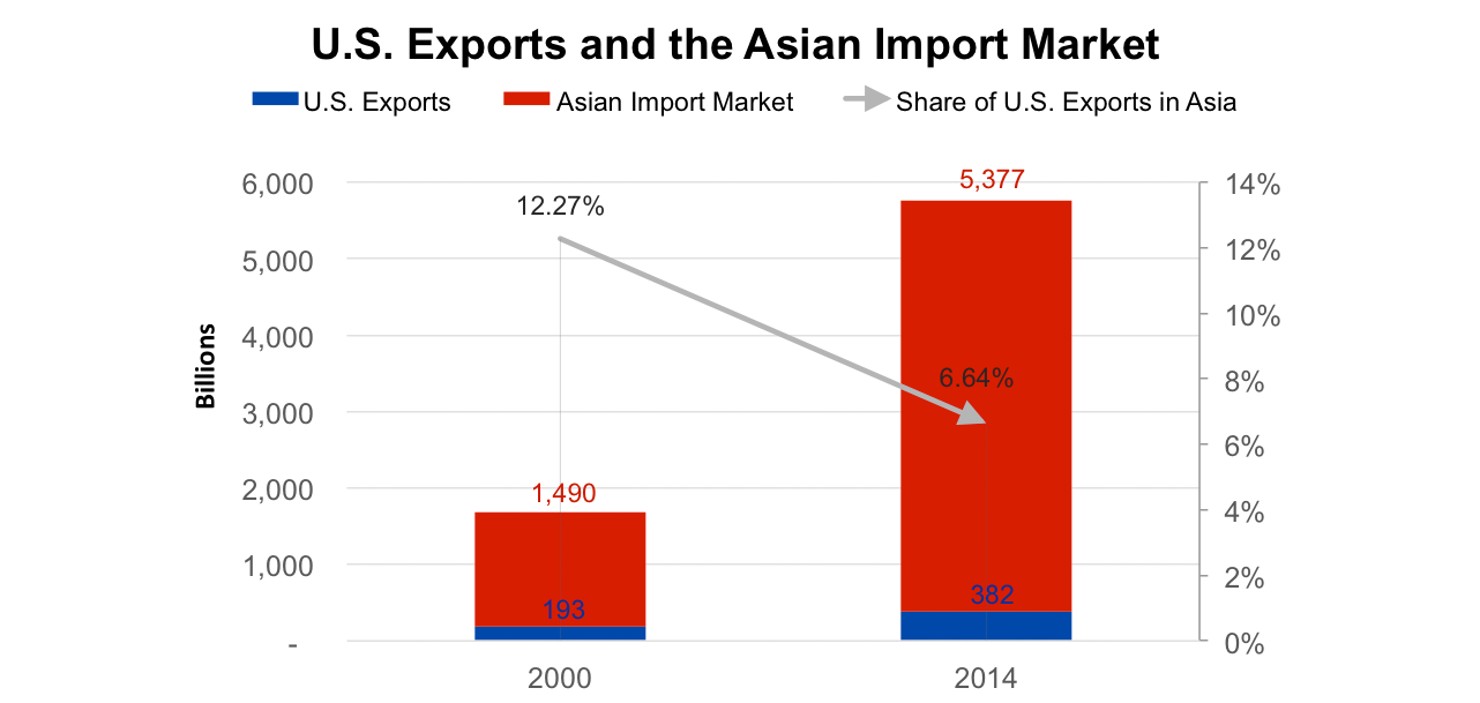
Had the United States maintained its market share in Asia in 2014, it would have added an additional $275 billion in exports, which could have supported nearly 1.6 million jobs.
But maintaining that market share without high standards trade deals is increasingly difficult. American exporters face some of the stiffest trade barriers in the world, ranking 130th (out of 138 total countries). TPP cuts over 18,000 tariffs and allows us to chart our path forward, giving American companies and workers a fair and level playing field so that they can compete and win.

More in Economy
View all Economy
Linked In: Trade Networking In the Asia Pacific
