Newsletter Published July 10, 2026 · 5 minute read
On the Grid: A Grant Conspiracy
Hi Friend!
Welcome back to On the Grid, Third Way’s bi-weekly newsletter, where we’ll recap how we’re working to deploy every clean energy technology as quickly and affordably as possible.
We’re excited to have you join us!
The Trump Administration is quietly proposing one of the most sweeping overhauls to how the federal government spends money in decades, which would dangerously politicize the process. On May 29, the Office of Management and Budget dropped a proposed rule that would rewrite how every federal agency issues grants, loans, and financial assistance–over $1 trillion a year (nearly 3% of the entire U.S. economy) across all 41 agencies. On its face, this reads like a boring regulatory tune-up. In practice, it hands political appointees a ball-peen hammer to cancel any award they don't like, at any time, for any reason, with no recourse.
You can read our full analysis here, but if adopted, the rule would allow political appointees to:
- Vet every discretionary award.
- Deny funding based on perceived political affiliations.
- Cancel grants whenever they decide they no longer align with an administration's priorities.
- Shut recipients out of any meaningful appeal process.
The goal here isn’t to make federal dollars work better–it’s to make them slower, more unreliable to count on for hiring and investment decisions, more burdensome to accept, and tied to ideological conditions.
Why It Matters: Stable public funding, especially in early-stage innovation, research, and development, is what makes long-term investment possible. Nuclear plants, transmission projects, critical mineral facilities, and industrial demonstrations all take years to build. And to be clear, this extends beyond clean energy into schools, hospitals, housing programs, and public health systems that federal grants underwrite in every state. Put simply, this rule will turn federal R&D dollars into a political weapon. At a moment when countries like China are making decades-long bets on strategic industries, we’re making our contingent on who’s in the White House.
What We're Doing: Third Way is helping lead a coalition of businesses, investors, universities, and nonprofits to push back before the July 13 deadline for public comment. We're co-organizing sign-on letters, coordinating congressional outreach, and making it easy for organizations to submit their own comments. If your work depends on federal grants–whether in clean energy, manufacturing, R&D, infrastructure, workforce development, or beyond–this rule affects you. Predictable federal funding shouldn’t be a partisan issue. Now is the time to weigh in.
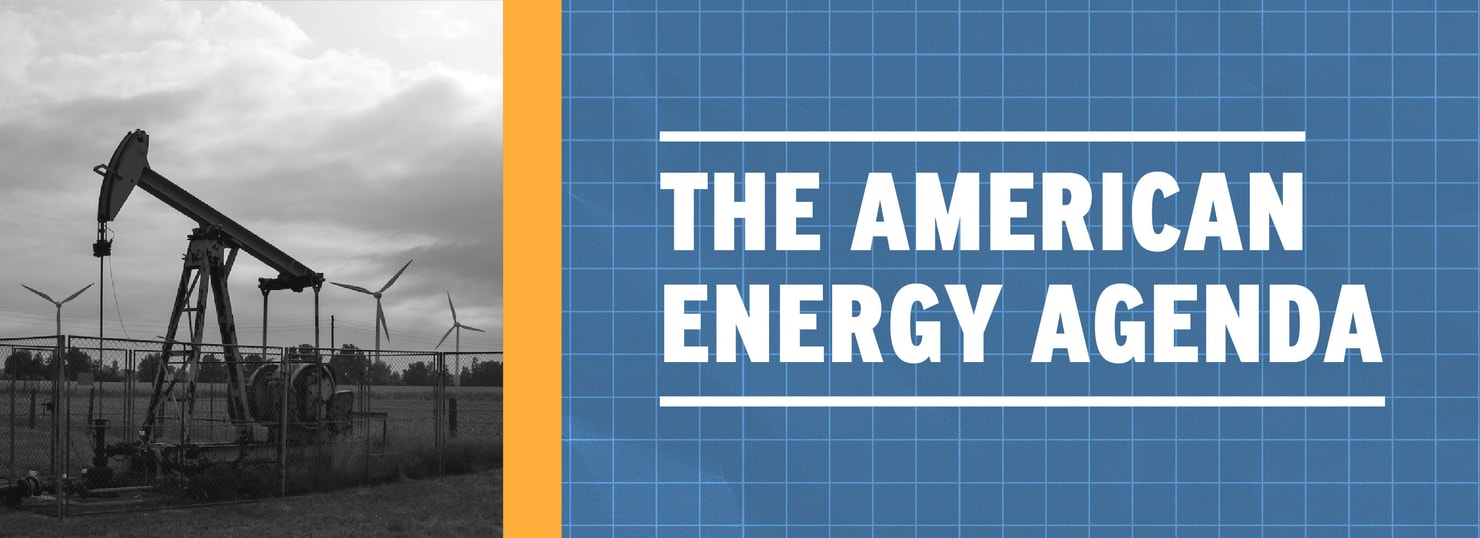
It’s been one year since Republicans passed the One Big Beautiful Bill Act (OBBBA), gutting core pieces of the Inflation Reduction Act’s clean energy tax credits and grant programs. Since then, the Administration has also layered on executive orders, administrative decisions, and agency rulemaking to delay clean energy projects already in development or under construction. Our year-one timeline tracks how those actions have played out for solar and wind projects, and our analysis of the Pentagon’s de facto onshore wind ban breaks down how one piece of that campaign is costing ratepayers money and damaging grid reliability.
It’s easy to look at the last year and assume that America’s energy transition has been fundamentally derailed. That’s certainly been the Administration’s goal. But that’s not quite accurate.
A new report from MIT’s Center for Energy and Environmental Policy Research lays out how OBBBA, in fact, did not erase the structural forces growing clean energy deployment and reshaping the power sector. The report is worth reading in full, but here are three elements that stood out to us.
- Most of what the IRA set in motion is still happening: OBBBA doesn’t touch 74% of new clean capacity and 71% of new clean generation. 67% of the emissions reductions that the IRA would have delivered through 2035 are still on track. While the policy environment is weaker than it was a year ago, it’s a far cry from rock bottom.
- The fossil fuel fleet isn’t expanding to fill the gaps as we’d expect: Emissions from coal and gas are certainly higher–coal generation averages 91% higher than it would have been under IRA, and gas generation is about 10% higher. But gas and coal capacity have not scaled as much as anticipated in this anti-clean energy policy environment.
- Restoring tax credits isn't the highest-leverage move. The report finds that even fully reinstating wind and solar tax credits would only recover about 2.5 years of lost solar and storage deployment.
Why This Matters: The report paints a more hopeful picture than many post-OBBBA headlines would suggest. The clean energy transition is increasingly constrained by our ability to build, not our willingness to subsidize. The biggest opportunities to accelerate deployment aren't just restoring tax credits; they're reforming permitting, expanding transmission, and investing in the next generation of clean firm technologies.
What We’re Doing: The next chapter of the clean energy transition should focus on making clean technologies cheaper and easier to build. We’re working closely with federal policymakers, governors, and advocates to turn broad agreement into actionable reforms this year that accelerate deployment.
- Josh Freed, in Nuclear Newswire, reflects on the state of the nuclear landscape and argues that while momentum behind advanced nuclear is real, achieving long-term commercial deployment will require sustained investments and regulatory certainty.
- The NC Clean Energy Technology Center, in its quarterly 50 States of Energy Affordability report, outlines recent state and utility action being taken across the country to address rising electricity costs effectively.
- Rob Meyer, on Heatmap’s Shift Key podcast, talks with Lily Bermel, visiting fellow at the Columbia Center on Global Energy Policy, about why the clean energy transition remains resilient in a post-OBBBA landscape.