Memo Published August 25, 2026 · 12 minute read
Trump’s Failure in Iran: A Foolish War Waged by a Foolish President with Americans Paying the Price
Takeaways
- Trump’s war on Iran was a foreseeable disaster. US intelligence and defense officials warned him how it would unfold. He ignored them and the result has been disastrous. The administration proved its strategic incompetence by starting this war. It is now proving its diplomatic incompetence by failing to end it.
- Americans have paid a heavy cost for Trump’s Iran war: 18 troops killed so far, billions of taxpayer dollars wasted, critical munitions dangerously depleted, and costs at the pump and throughout the economy that will likely endure for years.
- Democrats have a simple message: this is a foolish war waged by a foolish president and Americans are paying the price for it.
A War with No End in Sight
Trump’s war with Iran has now entered the quagmire phase.
Nearly six months in, the Trump administration is no closer to its stated objectives than it was at the outset. This week it blew through the 60-day deadline it set for an accord curtailing Iran’s nuclear program, an unsurprising outcome for a president who has failed to maintain a consistent approach to the war. One day President Trump insists productive talks are underway. The next he vows to declare the Strait of Hormuz US territory. Having concluded that Trump is not a credible negotiating partner, Iran appears to have decided to wage a campaign of controlled attrition to wring concessions out of the United States, betting it can endure more economic pain than Trump can with midterms fast approaching.
Both sides are digging in for a longer war. Secretary Hegseth has declared the United States can maintain its blockade of Iranian ports “indefinitely.” Tehran has elevated hard-liners to positions of prominence and resumed hanging the anti-regime protesters Trump swore to help. Iran is reportedly buying hundreds of Chinese antiaircraft launchers to rebuild its air defenses, while the Pentagon struggles to replenish the interceptor and long-range precision missile stockpiles the fighting has drained to dangerously low levels. American troops are also bearing the strain. Aboard the USS Abraham Lincoln, grim conditions and extended deployments have driven multiple sailors to attempt to jump overboard. Disturbingly, the Trump administration refuses to level with the American people about the full price of the war: after weeks of undercounting casualties, the Pentagon manipulated data on US war dead to obscure the conflict’s full human toll.
All of this amounts to a moral and policy disaster, and all of it was foreseeable.
A Predictable Catastrophe
Experts inside and outside of government warned about the worst-case scenarios of entering a military conflict with no clear strategy. Trump ignored them all and charged ahead into a foreseeable catastrophe.
- He dismissed intelligence warning that killing Iran’s Supreme Leader would not fracture the regime but would instead consolidate power in the hands of Iran’s Revolutionary Guard Corps and other hardliners even more committed to Iran’s nuclear program.
- He disregarded Pentagon war games which had repeatedly shown that Iran would respond to a US attack by closing the Strait of Hormuz, choking off a major share of the world’s oil and turning economic pain into strategic leverage.
- And he overlooked a core lesson of modern warfare: populations do not rise up against their governments under bombardment; air strikes send people into shelters, not the streets.
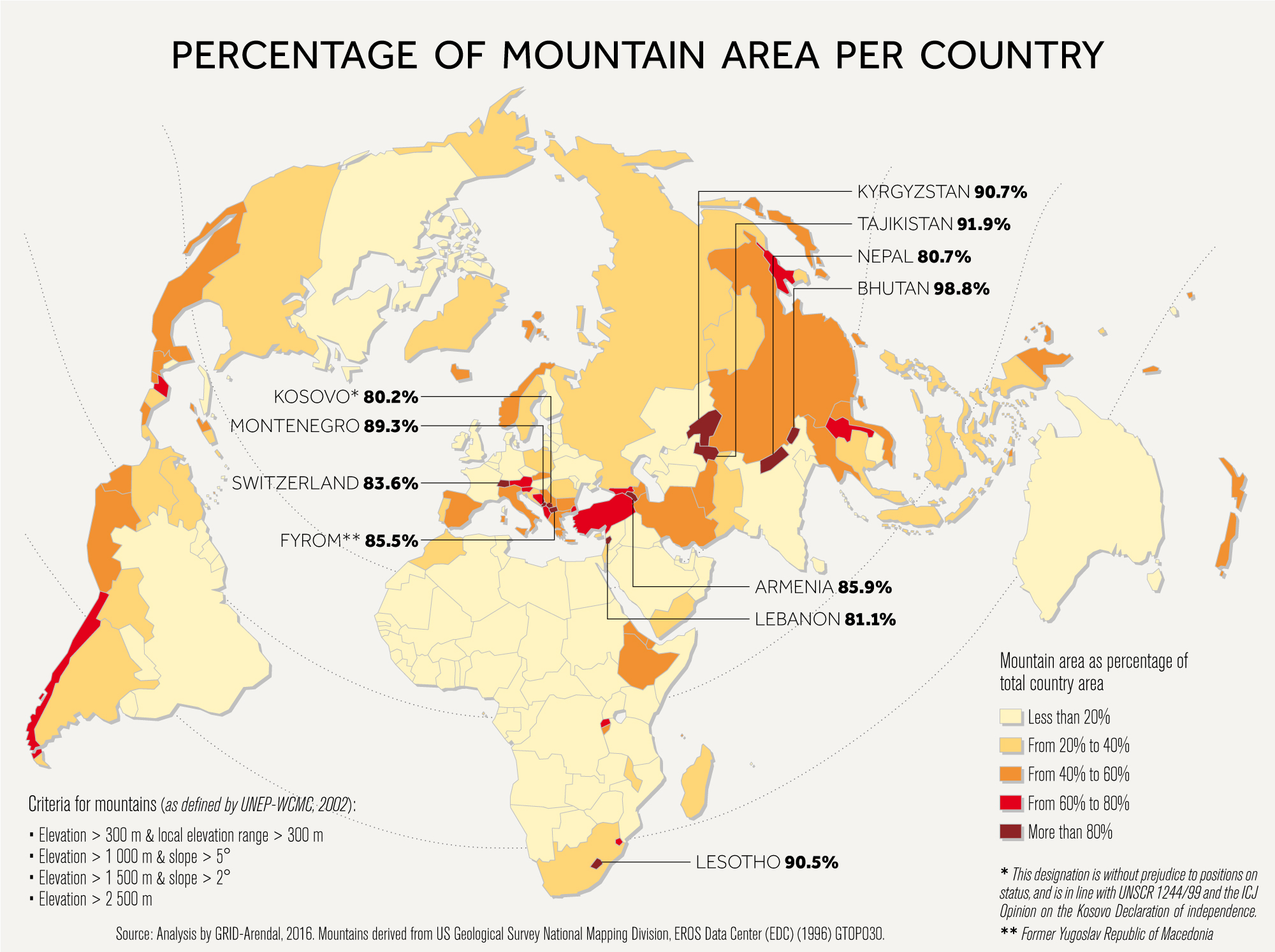
The only path to achieve Trump’s maximalist goals ran through a ground invasion—never realistic against a country approximately four times the size of Iraq and nearly as mountainous as Afghanistan, nor something the American public would stomach.
Trump knew all this but ignored the implication: Tehran had a clear path to victory—wait Washington out while squeezing the Strait. When your adversary can win just by surviving, the war is lost before it starts.
Trump, belatedly realizing his military campaign had no viable endgame, attempted to extricate himself from the situation by negotiating a Memorandum of Understanding (MOU) with Tehran that would leave Iran in a better strategic position than it was before the war started. Even that failed. The Trump administration notified Congress that the military campaign against Iran officially recommenced on July 7 and subsequently reimposed the US naval blockade for an indefinite period of time.
In short, the war has been a failure, diplomacy to end the war is now failing, and Americans are paying the price for this incompetence.
Anatomy of a Failure: An Aimless War with Aimless Diplomacy
Aimless War
A war without clear objectives is unwinnable.
The Trump administration has never adequately explained why this war was necessary in the first place. President Trump’s definition of victory has constantly changed, one reason Third Way opposed this war from the start. Measured against Trump’s initial claims, the record is damning.
- He vowed to “raze” Iran’s missile industry “to the ground,” yet now says it is only fair to let Iran keep some of its missiles. US intelligence says Iran retains roughly 70% of its prewar arsenal.
- He demanded Iran’s “unconditional surrender” and called on the Iranian people to rise up, telling them “help is on its way,” but the regime remains firmly entrenched and he abandoned regime change as a goal.
- He swore there would be “no enrichment” of uranium, but now he is open to low levels of enrichment a and nuclear deal is nowhere in sight.
Across every strategic objective Trump named over the course of the campaign, he waffled and came up short.
Along the way, the US military was made to look feckless, held off by cheap drones, mines, and fast boats in the Strait of Hormuz. Eighteen American troops died with 482 others wounded. By the Pentagon’s own count, tens of billions in taxpayer dollars were spent, and critical munitions were drained from stockpiles that will take years to refill, all to achieve an outcome that leaves the United States worse off than the day before the strikes began.
Even some Republicans are admitting to the folly of Trump’s misadventure. In June, four Republican senators joined with Democrats to approve a House-passed War Powers Resolution directing President Trump to “remove United States Armed Forces from hostilities against the Islamic Republic of Iran.” While the Trump administration has dismissed these efforts as meaningless and unconstitutional, they speak to the growing sense in the country that this war was a grave mistake.
Aimless Diplomacy
Just as Trump’s military objectives shifted with each setback, so has his diplomacy.
Trump began by promising a deal better than Obama’s 2015 Joint Comprehensive Plan of Action (JCPOA). Instead, the MOU Trump negotiated with Iran was substantially worse across every metric:
- Enrichment. The JCPOA capped Iran’s enrichment at 3.67%. The MOU set no cap and punted enrichment limits to a 60-day negotiation that flopped.
- Verification. The JCPOA imposed intrusive international inspections and verified Iran’s compliance right up until Trump walked away in 2018. The MOU had no monitoring at all.
- Enforcement. The JCPOA set clear penalties for cheating and bound China, Russia, and Europe to enforce them. The MOU set no penalties and bound no one.
- What Iran gives. The JCPOA won verified, enforceable limits. The MOU’s lone concession was a pledge not to build a weapon, something Iran already committed to in 2015 and that US intelligence judged it was not doing before the war.
- What Iran gets. The JCPOA traded conditional, reversible sanctions relief. The MOU lifted every sanction on a schedule, released Iran’s frozen assets, and handed Tehran new leverage over the Strait of Hormuz it never held in 2015.
- The cash. Trump spent years attacking the $1.7 billion in “pallets of cash” tied to the 2015 deal, money that was Iran’s own and accompanied the release of American prisoners. His MOU blessed a $300 billion reconstruction windfall for Iran—176 times larger than the amount Trump criticized.
- The bottom line. Obama won verified limits for conditional relief without spilling a drop of American blood. Trump waged a costly war to get a weaker deal that subsequently collapsed.
In their attempts to sell this giveaway to a skeptical public, Trump and members of his administration have made multiple claims that appear to have no basis in fact. After the MOU was signed, Trump announced the Strait of Hormuz was reopened and would remain toll-free. Multiple strikes on ships in the Strait have since demonstrated otherwise. Trump stated that Iran would use its unfrozen assets to purchase US agricultural goods. Iran denies it. Vice President Vance announced that Iran had agreed to admit inspectors from the International Atomic Energy Agency. Iran says this is untrue as well. And, after the MOU collapsed, Trump announced a 20% US toll on ships transiting the Strait of Hormuz, then scrapped it the same day.
It is unsurprising that a deal negotiated in the context of such mendacity and shifting objectives has failed to stick. Trump himself has now declared the MOU “over.” But the deal did not die before potentially delivering for Tehran.
To implement the MOU’s central concession, the Treasury Department issued General License X, which opened a legal channel through which Iran could monetize an estimated $4.5 billion in oil exports shipped in the weeks between the MOU’s signing and the license’s July 7 revocation. An unknown fraction of that value could have settled in dollars while the license was active, an issue which demands congressional scrutiny.
Regardless of whether Iran benefitted from the lull in sanctions while the MOU was in effect, Americans certainly did not. Instead, Trump’s failed diplomacy has left them with an indefinite state of tension in the Strait of Hormuz—open some days and closed others. That new status quo will be costly for Americans. In fact, it already has been.
Costs on the Homefront
While Trump chased a disastrous regime change abroad, America paid for it at home.
At the Pump
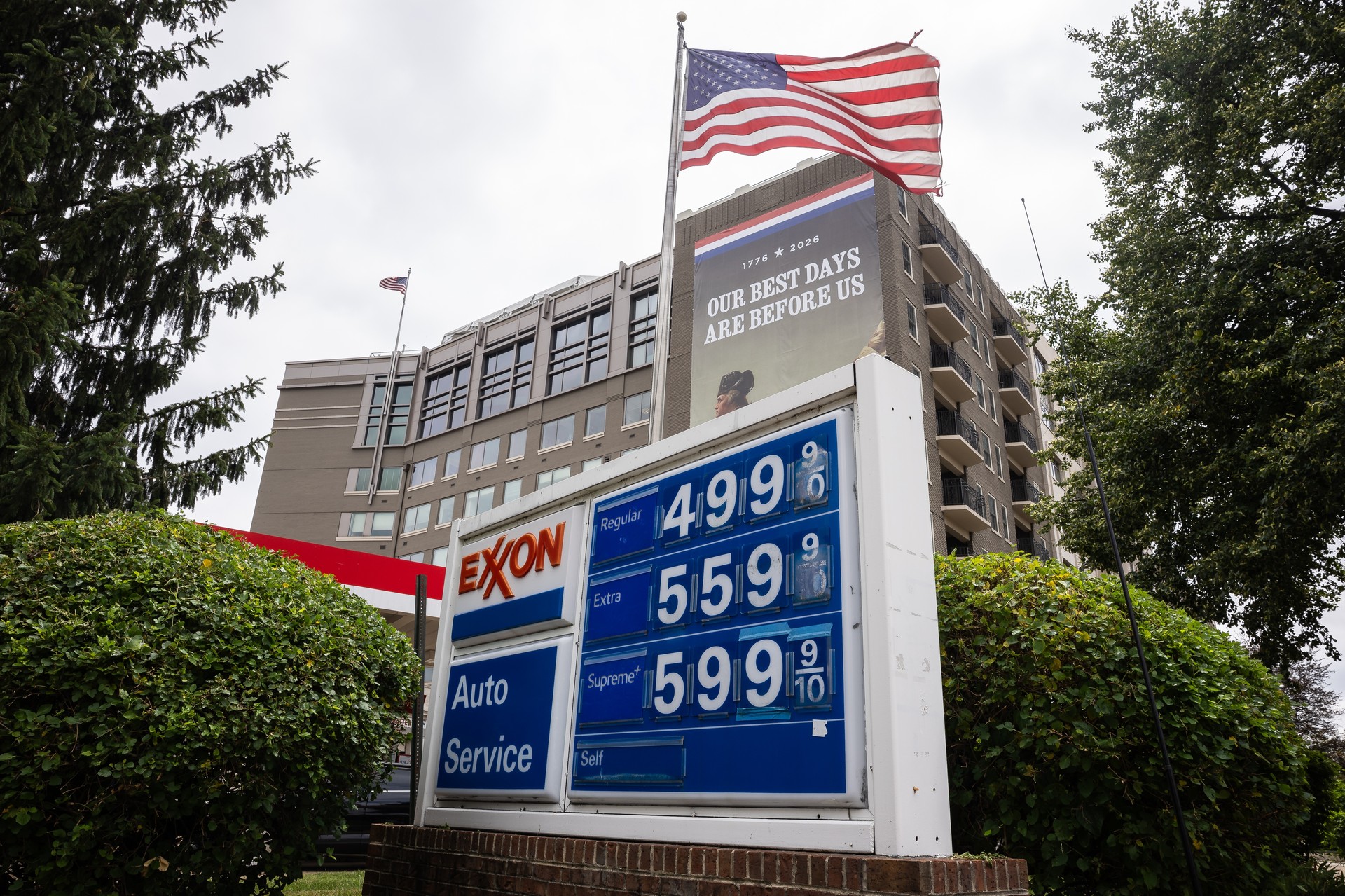
At the time of its publication, Third Way analysis showed the average car owner has already paid more than $156 in additional fuel costs because of the war, while the average SUV owner has paid more than $232. As instability in the region continues, those costs could rise to nearly $446 per car if gas prices stay elevated, with a typical two-vehicle household looking at over a thousand dollars in added fuel costs.
This is the predictable consequence of President Trump’s actions. Experts have long warned that any military conflict in the heart of the global oil market would raise energy prices. It did. Now Americans are paying more every time they fill up their tanks.
Beyond the Pump
Higher fuel prices have affected almost every corner of the US economy, forcing local governments, school districts, businesses, and families to make difficult tradeoffs. The effects showed up across the country:
- In Hope, Maine, spiking oil prices have pushed the cost of asphalt binder up 32% in a single month. Now, the town is holding off on signing road repaving contracts, hoping that fuel costs settle. Similar delays and budget pressures are affecting paving projects in communities across New York state and elsewhere.
- In Yakima, Washington, the war has driven the cost of diesel up 64%, to $6.30 a gallon, adding $213,000 a year to bus the district’s students, roughly the cost of two teachers in a district where 86% of kids live in poverty. Now, the district is forced to make piecemeal purchases of diesel only on days when prices dip to “limp through the end of the year.”
- In Darke County, Ohio, the price of nitrogen fertilizer jumped by $100 per ton within days of the war, from roughly $400-$490 per metric ton to between $600-$700. Diesel prices have nearly doubled from mid $3 to around $6 a gallon. Together, those increases are reshaping planting decisions across the region, with some farmers shifting acreage from corn, which requires large amounts of nitrogen, to less fertilizer-intensive crops like soybeans. Farmers across the country are facing similar pressures. In Seymour, Wisconsin, diesel has hit an all-time state high, forcing growers to only fertilize when absolutely necessary to keep their operations afloat.
- In York, Pennsylvania, the war has driven First Capital EMS’s fuel costs up 54% from last year, putting the ambulance service on pace to spend roughly $123,000 on fuel in 2026—the equivalent of a full year’s payments on a brand-new ambulance. To absorb it, the group is delaying a second ambulance that was due by year’s end and holding off on equipment upgrades.
- Rising fuel costs are squeezing food banks across the country. In the Bronx, the Food Bank For New York City has seen fuel costs climb 35% since early February, increasing the cost of running the refrigerated trucks that keep food from spoiling. In San Antonio, the San Antonio Food Bank reports serving more than 140,000 people—about 20% more than a year ago—even as its own fuel costs have risen by roughly 50%. In Florida’s West Orange County, the squeeze is forcing real cuts. Matthew’s Hope, a homeless ministry, has reduced the amount of food it distributes after fuel costs for its buses rose from roughly $4 per gallon to nearly $7. Nearby, the Southeastern Food Bank has resorted to putting fuel purchases on credit cards just to keep deliveries moving.
What Democrats Should Say
Democrats have a simple message: A foolish war waged by a foolish president with Americans paying the price.
- A foolish war. Trump chose this war. Not the American people, not Congress, not foreign leaders, not emergency circumstances. He did not inherit this conflict, and there was no imminent threat that forced his hand. Instead, he launched a pointless campaign that has undermined US national security and left Iran in a better strategic position.
- A foolish president. Trump was warned repeatedly about how it would unfold, and he ordered the strikes anyway. Everything Trump said he wanted from this war, chief among them, eliminating Iran’s nuclear program, could have been pursued at the negotiating table. Instead, he ignored all advice and plowed ahead.
- Americans are paying the price. With blood, taxpayer dollars, and skyrocketing prices. Our polling confirms that voters have largely understood the war in those terms: their top concerns are the loss of American lives (55%), the cost to taxpayers (44%), and rising gas prices (43%)—not abstract questions about Iran’s regime. Democrats should meet them there, and in that order. First, the lives: eighteen American service members killed so far, and hundreds wounded. Then the cost: a $132 billion price tag that taxpayers are covering. Then the pump: gas prices up, with Tehran now holding new leverage over oil markets for the foreseeable future.