Immigration First: How a $240 Billion Surge is Reshaping Criminal Justice
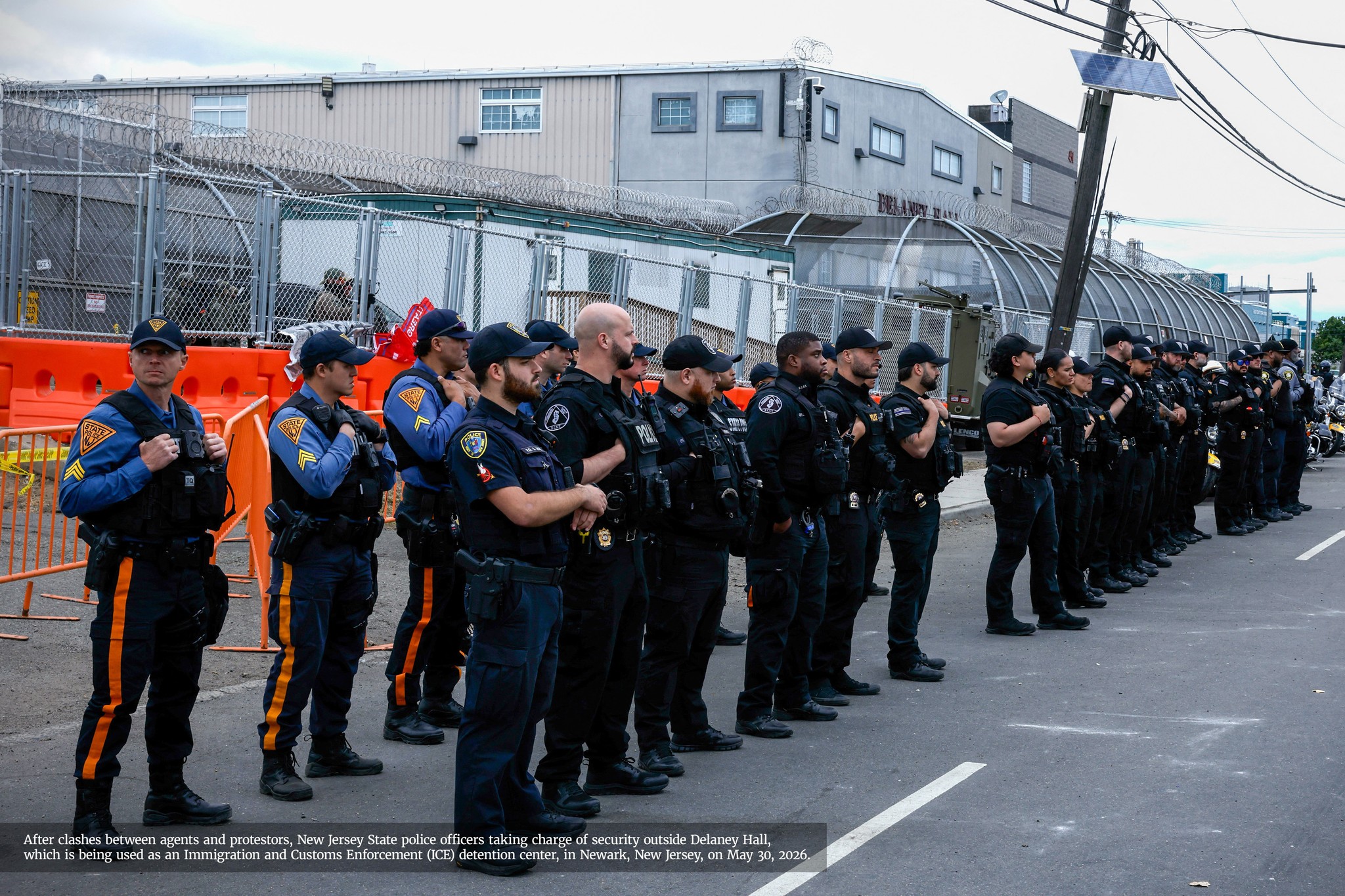
Sarah Pierce, Amy Solomon
Takeaways
- Congress is fundamentally reshaping American criminal justice around immigration enforcement. Rather than investing nearly a quarter-trillion dollars in a system better equipped to prevent violence, solve crimes, and protect victims, the federal government is making immigration enforcement its organizing priority.
- The Administration’s immigration crackdown is coming at the expense of other public safety priorities. Federal agents are being pulled away from serious criminal investigations, understaffed police departments and prosecutors are being recruited into immigration enforcement, and federal grants are being redirected toward the President’s immigration agenda.
- The transformation is just beginning, and its consequences could last for generations. Roughly two-thirds of ICE and CBP’s supplemental funding remains unused, with future spending poised to transform law enforcement priorities, local budgets, detention infrastructure, and public trust for decades.
The United States is in the early stages of one of the most consequential transformations of its criminal justice system in decades. Across two reconciliation bills, Congress has delivered an extraordinary infusion of funding to the nation’s immigration enforcement system. But that money is doing far more than expanding the agencies responsible for enforcing immigration laws. It is beginning to fundamentally change how American law enforcement operates, what it prioritizes, and how it allocates its limited resources.
For decades, the federal government has used its financial power to shape criminal justice across the country. The creation of the modern federal criminal-justice grant system in 1968 and the enactment of the 1994 Crime Bill helped transform how communities police, prosecute, and incarcerate. Those investments altered local hiring, infrastructure, and policy choices for decades. More than 30 years later, the federal government is deploying that machinery again, but with immigration enforcement as its organizing priority.
The consequences extend far beyond immigration policy. Federal agents who once investigated child exploitation, gun trafficking, and other serious crimes are being reassigned to immigration enforcement. Understaffed local police departments are being paid to perform federal immigration work. Prosecutors are being recruited away from local criminal cases, and federal grants traditionally used to support policing, prosecution, and violence reduction are being redirected toward the Administration’s immigration agenda.
These changes represent a profound shift in federal public safety priorities. At a time when police departments are struggling to fill vacancies, prosecutors are overwhelmed, and victims’ services face chronic funding shortages, the Administration is drawing personnel and support away from the existing criminal justice infrastructure to build up immigration enforcement. Instead of investing in communities and a system better equipped to prevent violence, solve crimes, and protect victims, the federal government is increasingly organizing that system around immigration enforcement.
And this transformation has barely begun. The majority of the money has not yet been spent, many of the new officers have not yet been hired, and many of the facilities and programs it will finance have not yet been built or fully implemented. The consequences—for public safety priorities, state and local budgets, law enforcement capacity, community trust, and Americans’ relationship with the justice system—will emerge over years and could endure for decades.
This report examines how the Administration is redirecting public safety resources toward immigration enforcement; how the funding provided to the immigration enforcement system through the One Big Beautiful Bill Act (OBBBA) and the Secure America Act is reshaping state and local justice systems; and why the consequences for the American criminal justice system may last long after the current Administration leaves office. The question is no longer simply how much immigration enforcement will expand, but how profoundly that expansion will change the rest of American criminal justice.
An Extraordinary Infusion of Funds
OBBBA pumped more than $170 billion into the Administration’s immigration enforcement apparatus, including $65 billion for US Customs and Border Protection (CBP) and $75 billion for US Immigration and Customs Enforcement (ICE). CBP received the equivalent of more than three years of its ordinary annual funding at once, on top of its regular appropriations. ICE received more than seven times its annual budget, with few meaningful limitations or guardrails on how the money could be spent.
Less than a year later, Congress provided another $70 billion in multi-year funding through fiscal year 2029 for immigration enforcement through the Secure America Act.
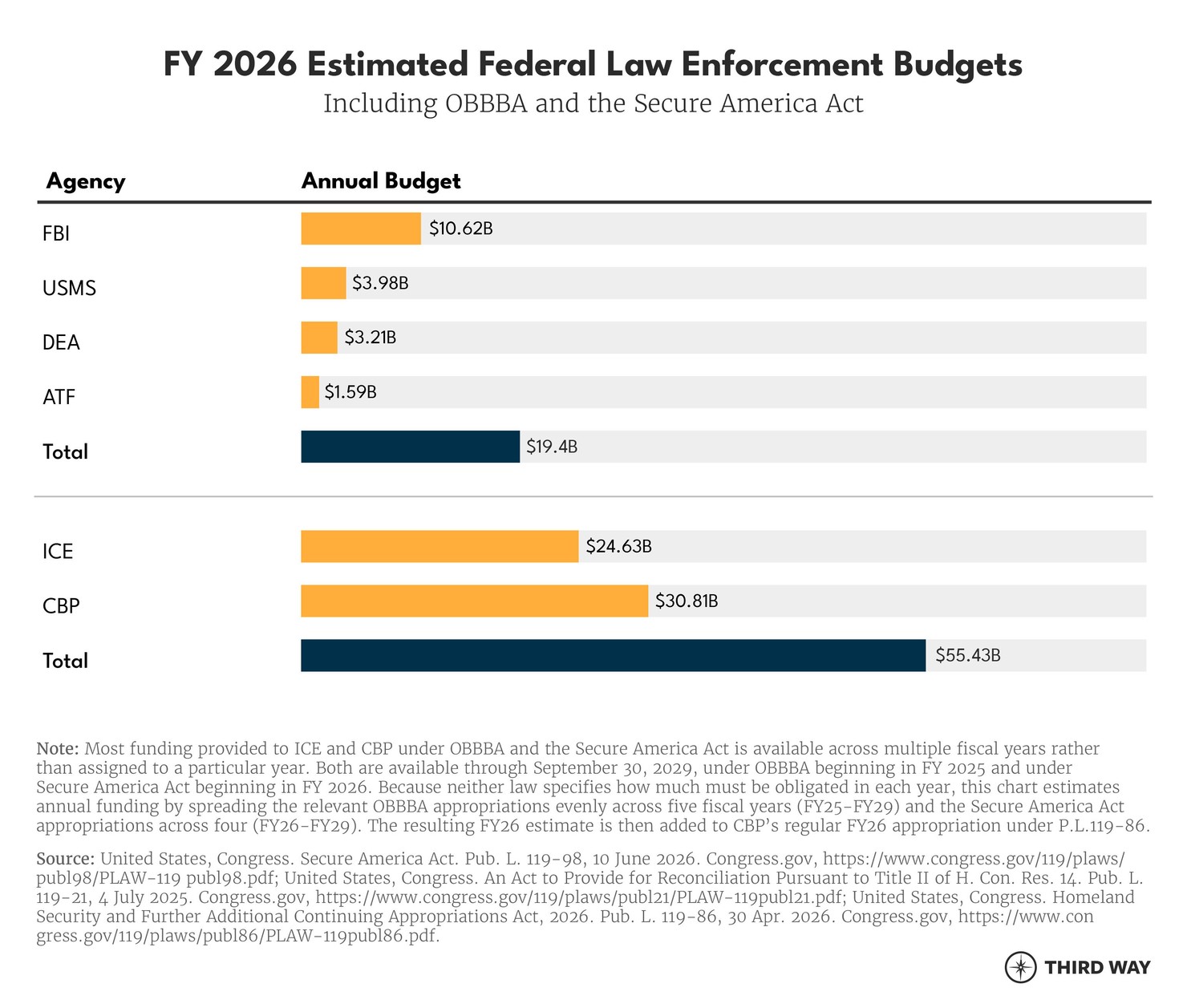
Taken together, the federal government is poised to spend approximately $240 billion on immigration enforcement over the next several years, and that doesn't take into account annual appropriations for 2027 and beyond. That is more than twelve times the combined annual budgets of the FBI, Drug Enforcement Administration (DEA), Bureau of Alcohol, Tobacco, Firearms and Explosives (ATF), and the US Marshals.
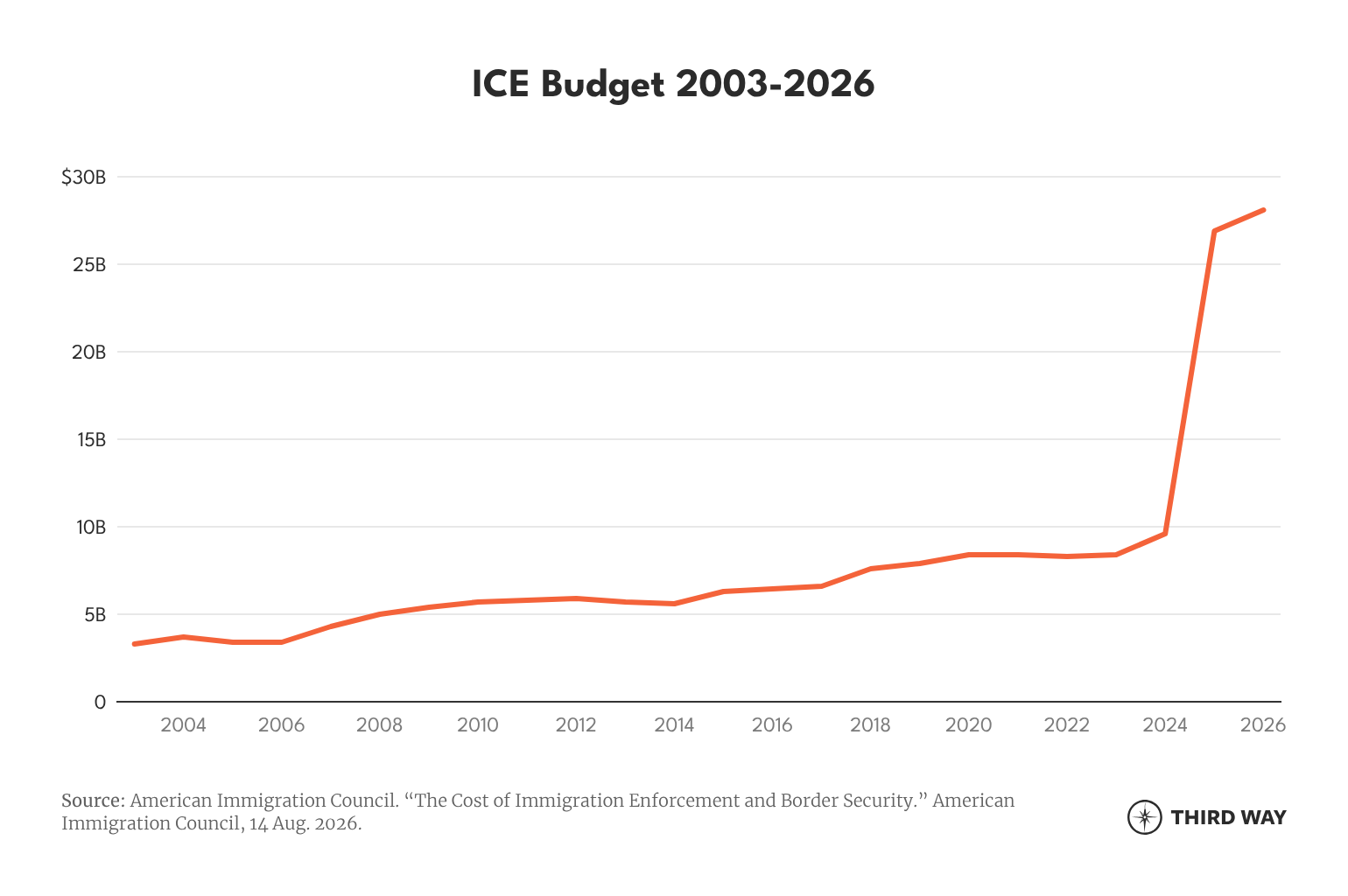
The increase in ICE’s budget is exorbitant. The agency’s FY 2025 budget was more than four times the agency’s average annual budget since its creation in 2003.
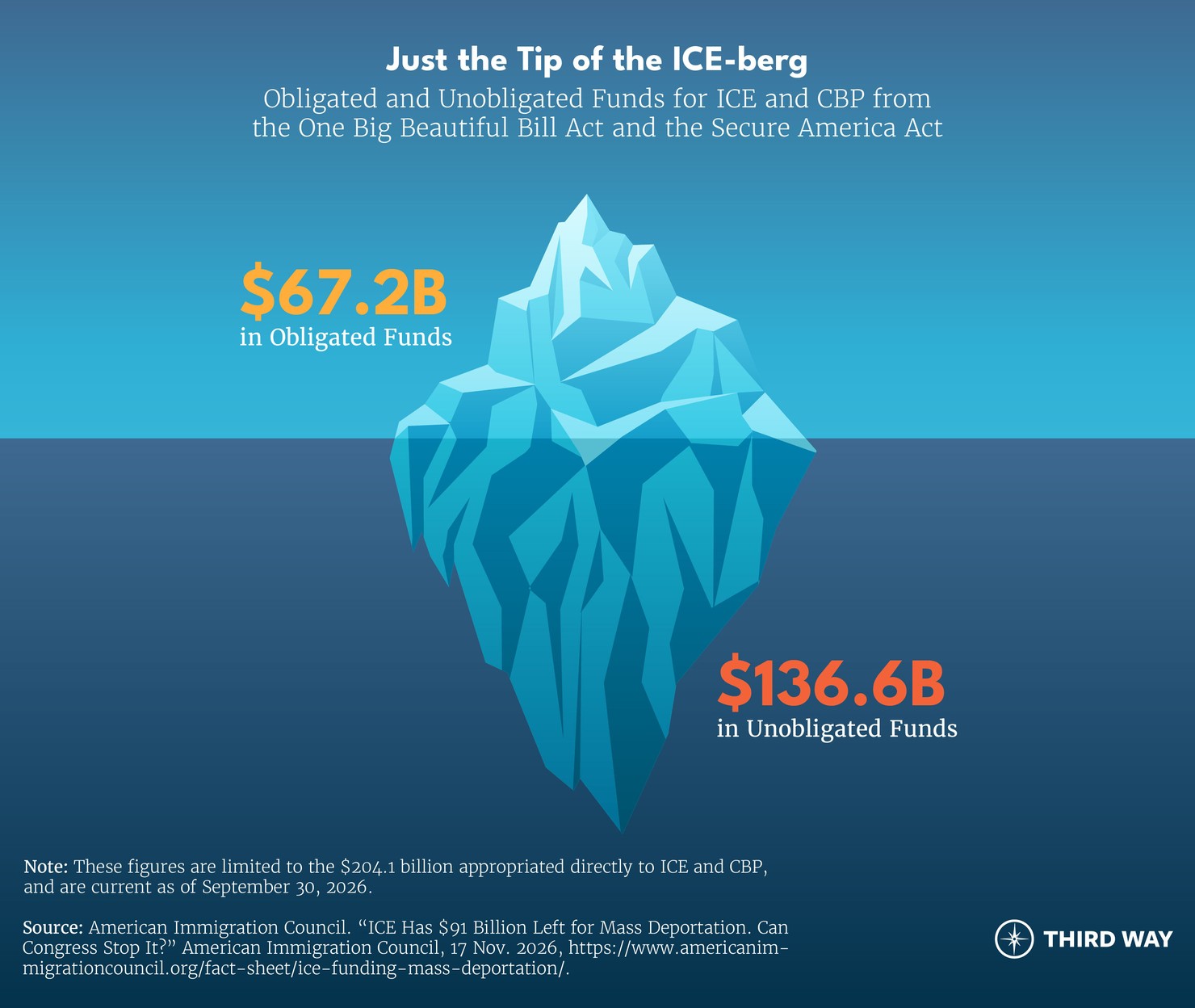
ICE and CBP are using these taxpayer resources to hire thousands of new immigration agents, construct detention centers and checkpoints, acquire surveillance tools and enforcement technology, and expand the Administration’s immigration dragnet. And while the remainder of this report describes the extraordinary changes these funds have initiated across the country, these are just the tip of the iceberg. Through September 2026, roughly two-thirds of the funding appropriated to ICE and CBP was still uncommitted. The agencies have until September 30, 2029 to spend the funds, and at its current rate, ICE would have to nearly double its daily rate of spending to reach that deadline.
While this unprecedented infusion of funds has been moved under the banner of protecting public safety, the scale and structure of this investment reveal a very different set of priorities.
What $240 Billion Could Have Done for Public Safety
The Trump Administration argues that its aggressive immigration enforcement campaign is making American communities safer. And to be clear, immigration enforcement can serve legitimate public safety goals, particularly when it targets individuals who pose serious threats. But there is little evidence that the Administration’s sweeping crackdown is concentrating its resources in that way or is responsible for the historic decline in violent crime. In fact, a recent analysis finds that communities with the largest increases in immigration arrests have not experienced the largest declines in violence. And in a recent convening of four dozen leading crime scholars, the vast majority (94%) found that increased immigration enforcement had negligible or no contribution to the homicide decline.
That raises a fundamental question about the Administration’s strategy and priorities. If the goal is to make America safer, why devote nearly a quarter-trillion dollars to expanding immigration enforcement rather than investing in police departments, prosecutors, crime prevention programs, and victim services that address community safety at the local level? The scale of that choice is staggering.
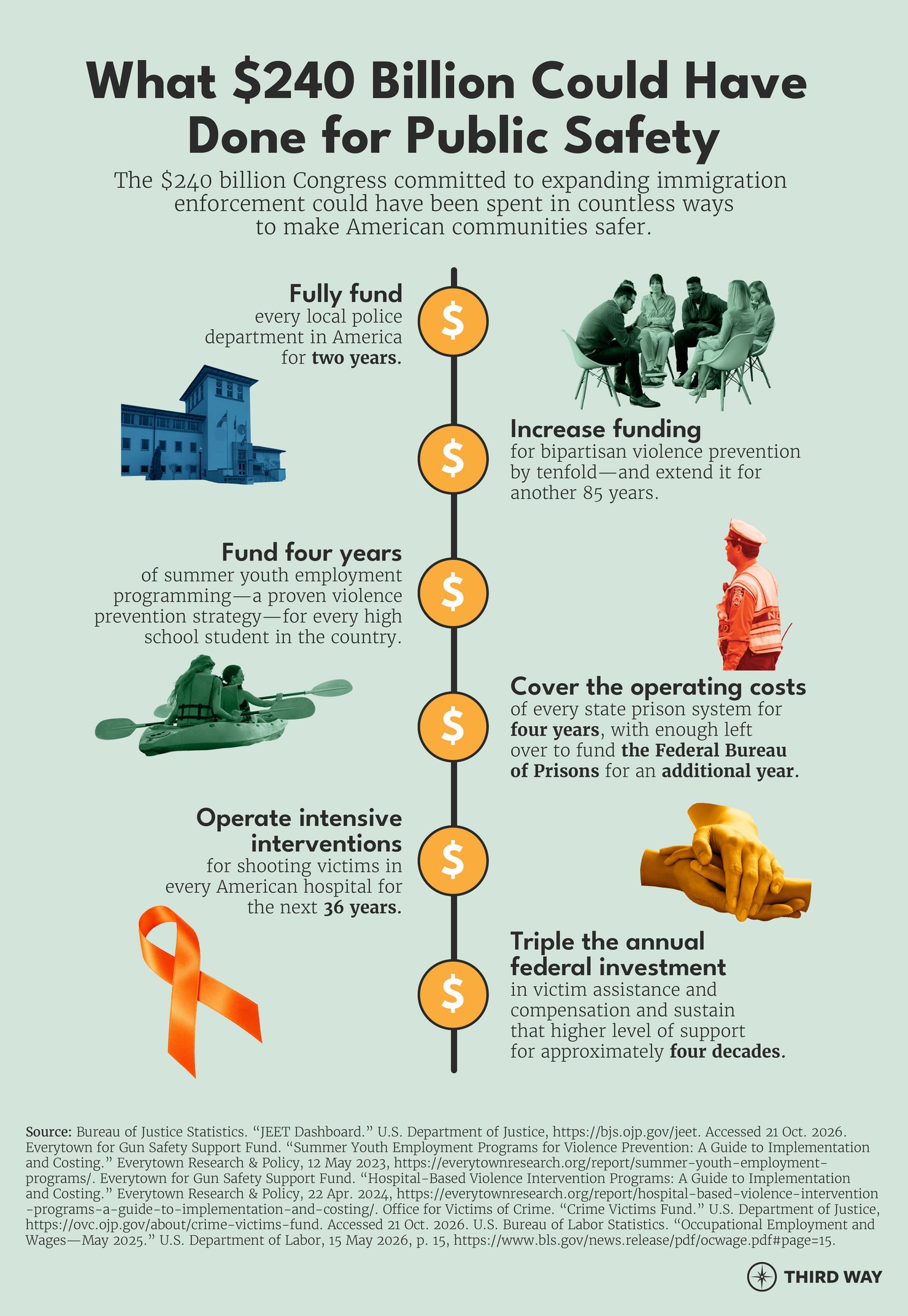
Those comparisons are not an argument that every dollar should have been spent on any single alternative. But they illustrate the magnitude of the choices Congress made.
Police departments are struggling to fill vacancies. Prosecutors are dropping cases because they lack the attorneys to handle them. Victim-service providers face chronic funding shortages. Community violence intervention programs have been cut. Crime laboratories carry substantial backlogs. Yet instead of addressing the struggling and aging criminal justice infrastructure, Congress committed nearly a quarter-trillion dollars to rapidly building a parallel immigration enforcement infrastructure. And the consequences go beyond the resources that could have been invested elsewhere. As the next section demonstrates, the Administration is actively drawing on the personnel, funding, and institutional capacity of the existing criminal justice system to fuel that expansion.
Immigration Enforcement Takes Priority
The Administration is doing more than expanding federal immigration enforcement. It is changing the incentives and priorities that determine how law enforcement operates across the country. To supersize the immigration enforcement apparatus, the Administration is pulling on the personnel, funding, institutions, and authorities of the existing criminal justice system—and redirecting them toward immigration enforcement.
That shift is happening at every level of government. Federal agents are being reassigned from investigations into serious crimes. Understaffed local police departments are being paid to take on federal immigration work. Prosecutors are being recruited away from local cases. And Justice Department grants traditionally used to support policing, prosecution, and violence reduction are being repurposed to reward cooperation with the Administration’s immigration agenda.
The result is not simply a larger ICE or CBP. It is a reordering of public safety priorities with immigration enforcement increasingly determining where law enforcement officers, prosecutors, and federal dollars are deployed—even when doing so comes at the expense of other pressing threats to Americans’ safety.
ICE Recruits Local Police
ICE and CBP are flush with unprecedented amounts of federal money and personnel. Yet the Administration is still recruiting state and local police officers to perform the work of federal immigration agents.
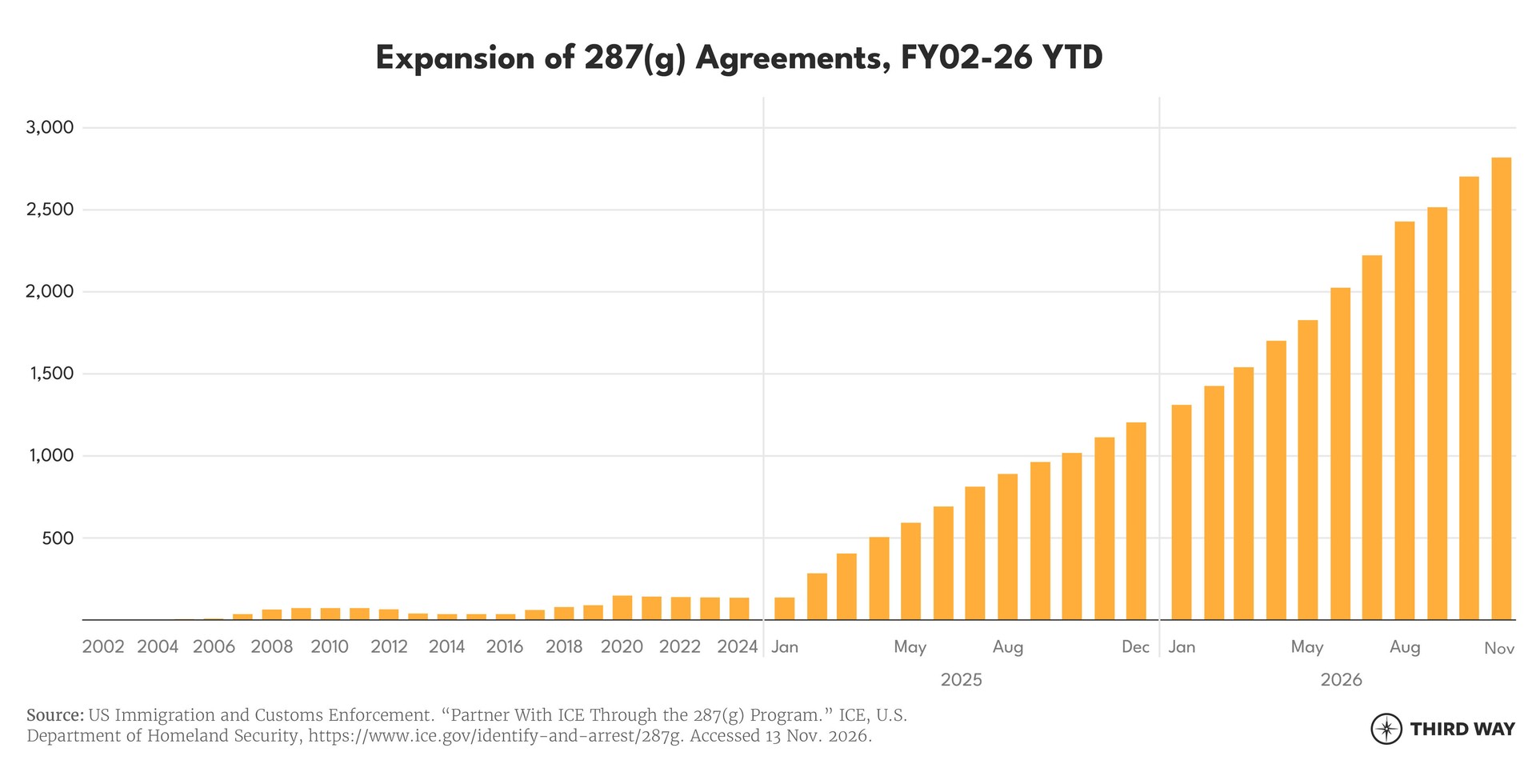
Through the 287(g) program, ICE enters into agreements with state and local law enforcement agencies and delegates certain federal immigration enforcement authorities to their officers. Although the program has existed for decades, it has expanded exponentially since January 2025. When President Trump returned to office, ICE had approximately 130 signed 287(g) agreements. It has since entered into more than 2,700 agreements—a roughly twenty-fold increase. Most of the agreements have fallen under the previously discontinued Task Force Model, which maximizes local officers’ authority to conduct immigration enforcement in the normal course of their duties. To further speed this expansion, the Administration has decreased the training for 287(g) officers from four weeks of in-person training to 40 hours of virtual training.
For the first time, ICE is also using federal money to pay local police departments for participating. Using funding provided through OBBBA, ICE is covering compensation for participating officers and offering performance bonuses based on the number of immigrants agencies apprehend. Law enforcement agencies are expected to receive between $1.4 billion and $2 billion in 287(g) payments in 2026 alone. That creates a powerful financial incentive for police departments to dedicate their limited officers to federal immigration enforcement rather than local public safety priorities.
The Administration is offering these incentives at a moment when many departments have little manpower to spare. A nationwide survey of more than 1,000 law enforcement agencies found that roughly 65% had reduced police services or specialized units, or withdrawn from task forces and community engagement efforts, because of chronic staffing shortages.
Rather than helping departments rebuild their capacity, the Administration is encouraging them to divert even more officers away from core policing duties.
Federal Investigators Diverted From Serious Crime
The distortion of law enforcement priorities is equally stark at the federal level.
As of September 2025, ICE had diverted roughly two-thirds of ATF agents, half of DEA agents, and one-fifth of FBI agents and US marshals to work on immigration enforcement. Despite demands from lawmakers, the Administration has yet to release straightforward or updated numbers on the total number of federal law enforcement agents diverted to immigration enforcement. These personnel have been pulled away from investigations involving child exploitation, gun crime, cyberattacks, terrorism, narcotics and human trafficking, violent extremism, and other serious threats to national and community safety.
Instead, federal agents are being deployed to arrest tens of thousands of immigrants, most of whom have no criminal record.
Every law enforcement agency must make decisions about where to deploy finite personnel. Those choices should be driven by the severity of the threat, the agency’s expertise, and where federal involvement can make the greatest difference.
The Administration has reversed that logic. It has made immigration arrest numbers the organizing priority for federal law enforcement—even when doing so means sidelining investigations into individuals who pose a much clearer danger to the public.
ICE and DOJ Drain Local Justice Systems
In addition to incentivizing local law enforcement to take on the job of federal immigration enforcement and diverting federal law enforcement to focus on immigration, the Departments of Justice and Homeland Security are reaching into state and local law enforcement and prosecutors’ offices to permanently recruit staff.
ICE has undergone what appears to be the fastest expansion of a federal law enforcement agency in modern American history, adding 12,000 officers and agents and more than doubling its enforcement workforce in just a few months. To pull this off, ICE explicitly recruited experienced state and local officers with bonuses and benefits that many local departments could not match. ICE even used contact information from 287(g) contract agreements to recruit deputies away from the same agencies that signed on to help with immigration enforcement. Police leaders have stated that the federal hiring blitz is intensifying the already fierce competition for officers and recruits.
The hiring campaign also raises serious questions about ICE’s vetting, with reports of recruits who had active warrants or suspected gang ties. The dangers of that rushed hiring and vetting were brought into sharp focus when a new ICE officer fatally shot an immigrant in Maine after having previously been rejected by a local police department because of “too many red flags” in his background.
While CBP hasn’t engaged in a comparable hiring blitz, this year Border Patrol reached its highest staffing level in the agency’s 102-year history: 21,471 agents. OBBBA funds supported the hiring of 3,000 additional border patrol agents, 5,000 CBP officers, and 200 Air and Marine agents.
Using OBBBA funding, the Administration is also paying local prosecutors’ offices to loan attorneys to DOJ for the explicit purpose of bringing federal cases against noncitizens.
That effort comes at a moment when many prosecutors’ offices are already struggling to handle their existing caseloads. Offices in Houston and Los Angeles have reported vacancy rates exceeding 15%. In Miami, approximately one-third of prosecutor positions are vacant.
These shortages have real consequences. Some district attorneys have been forced to dismiss cases because they do not have enough attorneys to prosecute them. In Anchorage, severe staffing shortages contributed to the dismissal of more than 900 cases in less than six months, including cases involving domestic violence, child abuse and neglect, animal cruelty, and driving under the influence.
DOJ should be helping jurisdictions strengthen their ability to prosecute serious crimes. Instead, the Administration is offering financial incentives for those offices to send their limited attorneys into the federal immigration system.
The predictable result is fewer prosecutors available to seek justice for victims in their own communities.
DOJ Grants Boost Immigration Enforcement
The Administration’s emphasis on immigration enforcement extends beyond federal agents and local law enforcement. It is transforming operations across parts of the Justice Department and, by extension, the public safety infrastructure of communities across the country.
DOJ’s grantmaking offices distribute roughly $5 billion each year to support state and local policing, prosecution, crime prevention, victim services, and other justice programs. These grants have historically allowed the federal government to fill gaps in local capacity and invest in innovative and evidence-based strategies to prevent and reduce crime.
The Trump Administration is increasingly reorienting those grants towards immigration enforcement—often at the expense of their underlying public safety missions.
For example, the Administration has expanded the purposes of some of the leading sources of federal support for state and local law enforcement, such as the Byrne Justice Assistance Grant and the COPS Hiring Program, to include immigration enforcement. Rather than concentrating those resources on violent crime, investigations, officer staffing, or community safety, the Administration is encouraging them to support participation in 287(g) agreements and other federal immigration operations.
This shift is occurring even though DOJ-funded research has found no evidence that participation in 287(g) produces meaningful reductions in crime.
In addition, the Justice Department has added significant conditions to much of the Department’s public safety funding. To qualify for many grants, states and cities are required to cooperate with federal immigration authorities and comply with other elements of the Administration’s ideological agenda, including restrictions involving diversity initiatives, gender ideology, and vaccine requirements.
That leaves police chiefs, mayors, governors, and other local leaders facing an untenable choice. They can forfeit federal resources needed to protect their residents, or they can accept vague, confusing, and potentially unlawful conditions that may conflict with state law, trigger costly litigation, or expose them to the possibility that DOJ will withdraw the funding midway through a grant.
Project Safe Neighborhoods, a longstanding violence-reduction initiative led by federal prosecutors in coordination with the Office of Justice Programs, is also being redirected. The program is now being used to implement Operation Take Back America, an initiative DOJ launched in March 2025 to deploy criminal justice resources in support of the President’s immigration agenda.
Programs specifically designed to reduce violence are being converted into tools for maximizing immigration prosecutions and removals.
A Lasting Enforcement Infrastructure
The most consequential effect of the new funding may not be what it changes today, but what it leaves behind. Federal funding does not simply pay for current operations. It creates jobs, builds facilities, establishes partnerships, and changes the financial incentives that shape decisions by state and local governments. Once those changes take hold, they can be extraordinarily difficult to reverse. The United States has seen before how a temporary surge of federal funding can permanently alter state and local criminal justice systems.
The clearest modern example is the Violent Crime Control and Law Enforcement Act of 1994. The law promised 100,000 additional police officers, devoted $9.7 billion to prisons, and used federal grants to encourage states to expand prison capacity and adopt tougher sentencing policies. In all, the law authorized $30.2 billion over six years—roughly $60-70 billion in today’s dollars. Although not all of those dollars were appropriated, those that were changed what criminal justice looked like on the ground: police departments grew, tens of thousands of prison beds were built, and states changed sentencing laws in ways that kept people incarcerated longer. Those investments helped enlarge the nation’s law enforcement and corrections infrastructure in ways that lasted long after the initial federal funding was spent.
The scale of today’s investment is substantially larger. In less than one year, ICE and CBP received more than three times the inflation-adjusted value of the entire 1994 crime bill. But this time, the priority isn’t to hire more community police officers, prevent violence, or increase capacity to prosecute crime. This time, the priority is to reorient the criminal justice system around immigration enforcement.
Funding a Permanent Immigration Enforcement Infrastructure
OBBBA intensified the unconventional immigration pressures on the Justice Department by giving DOJ $3.3 billion in flexible funding for immigration-related investigations, prosecutions, grants, and other proceedings. The law also created the $3.5 billion Bridging Immigration-related Deficiencies Experienced Nationwide Reimbursement Fund, named the “BIDEN Reimbursement Fund” for short. Congress presented the fund as a way to repay states and localities for immigration-related expenses incurred after January 20, 2021.
But rather than simply reimbursing jurisdictions for past costs, DOJ is using the money to seed a massive expansion of the federal immigration enforcement apparatus in cities and states nationwide.
DOJ began distributing the money in 2026 through its new BIDEN Fund Grant Program, offering approximately $3 billion to jurisdictions to accelerate the detention and prosecution of noncitizens accused of crimes.
To qualify, applicants must first sign a 287(g) agreement and commit to “significant participation” in other federal task forces. The grants can then be used to hire officers and other personnel, purchase enforcement equipment and technology, and construct immigration detention facilities.
This new funding creates the same kind of long-term incentives created by the 1994 Crime Bill: they do not simply pay for current operations, but help jurisdictions build personnel, equipment, technology, and detention capacity that can remain in place long after the grant period ends.
The new immigration enforcement grants risk creating a similar legacy.
Each time the federal government subsidizes a construction project, it retains an ongoing financial interest in that property. Facilities built with DOJ funding are therefore subject to federal requirements that can make them difficult to close, sell, or repurpose after the grant period ends.
Once jurisdictions accept federal money to build immigration detention centers, they may be forced to keep operating those facilities for years—or repay the federal government’s investment.
The Administration is thus encouraging states and cities to make physical and financial commitments that could shape their justice systems for decades to come.
Cities Take on New Financial Liabilities
DOJ is also using OBBBA and other DOJ funding to launch the Model Cities Initiative, a $300 million grant program expected to make substantial investments in a small number of American cities.
The initiative appears, on its face, to address a broad range of legitimate public safety needs. Cities can seek funding to hire and train police officers, upgrade technology and equipment, provide behavioral-health interventions, support crime victims, and expand reentry services.
But the money comes with significant strings attached.
In addition to certifying cooperation with federal immigration authorities, applicants for the Model Cities Initiative and BIDEN Fund grants must agree in advance to cover the costs of federal law enforcement intervention conducted in their city.
Those expenses can be enormous. The federal deployment to Minneapolis cost an estimated $18 million per week, while the operation in Chicago produced an estimated $59 million bill. The National Guard deployment in Washington, D.C. through January 2029 is expected to cost a total of $1.4 billion.
DOJ grants are supposed to bring federal resources into communities. Under these programs, accepting federal assistance could instead leave cities responsible for millions of dollars in unforeseen federal enforcement costs.
A Massive Detention Infrastructure Is Taking Shape
The OBBBA is also transforming the scale and physical footprint of immigration detention. The law provided ICE with $45 billion for detention capacity—compared with just $3.4 billion appropriated for the entire detention system in FY 2024.
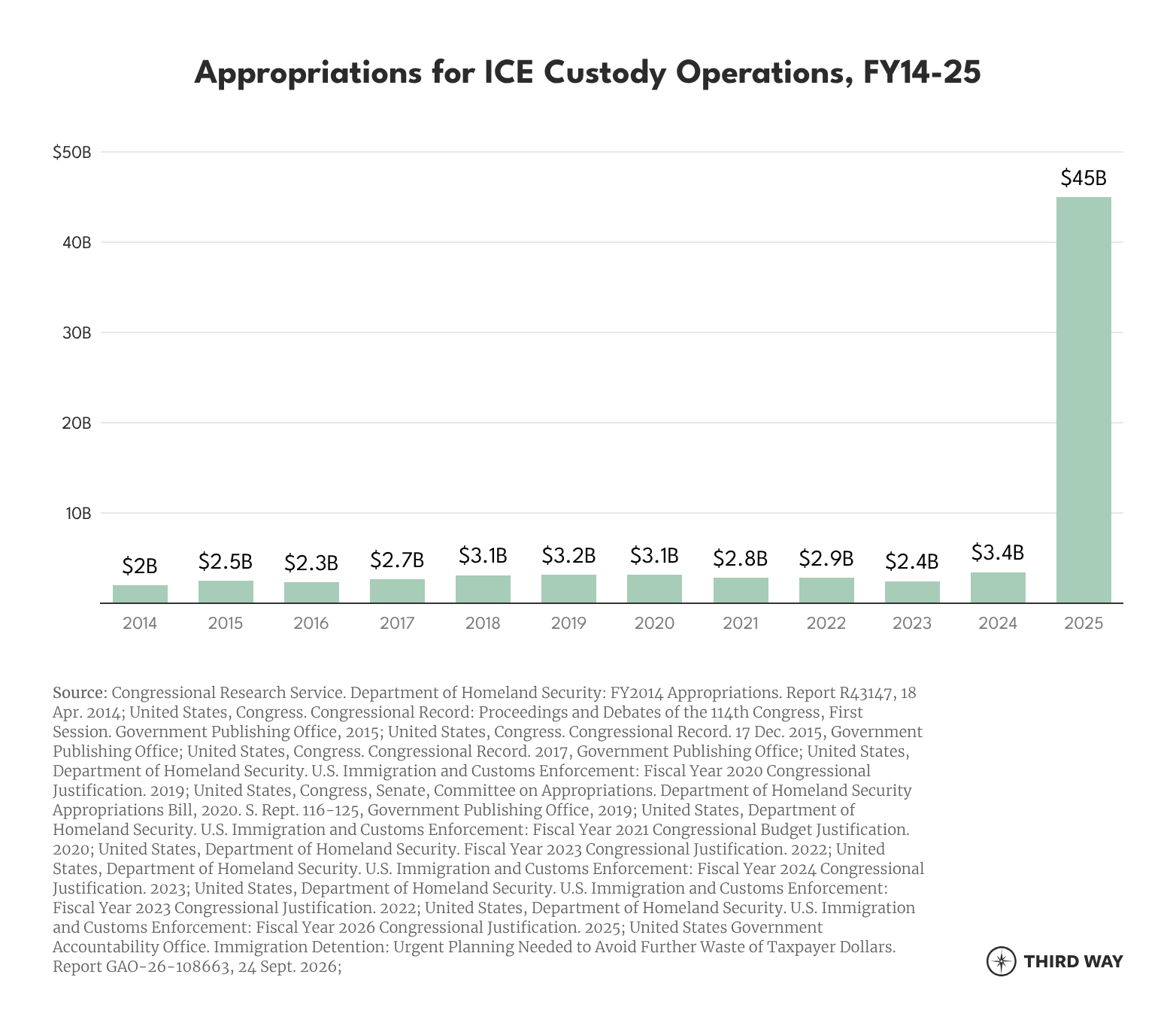
The funding, in addition to the Administration’s unique legal interpretation that has massively broadened the number of immigrants subject to mandatory detention, has already substantially expanded immigration detention. Between January 2025 and April 2026, ICE’s average detained population grew 71%, from about 39,000 to 67,000, while the number of authorized detention facilities jumped 78%, from 134 to 239. And that is just the start.
To further the expansion, the Administration has rapidly shifted its strategy, at significant cost to taxpayers. ICE initially spent more than $1 billion buying 11 warehouses as part of a plan to create massive new detention facilities, but later moved to unload seven of those properties and rely more heavily on existing state and county capacity. At the same time, DHS has begun buying existing detention infrastructure outright, spending another $2.2 billion to purchase four existing private detention facilities, including nearly $496 million for a Minnesota prison that its former owner had offered to sell to the state for just $75 million a year earlier.
The expansion will also likely have significant implications for the country’s already struggling incarceration workforce. ICE relies extensively on private contractors and state and local governments to operate facilities and provide guards, medical care, transportation, and other services. This means that the billions in new federal spending will likely pull more correctional personnel and infrastructure into civil immigration enforcement.
The 1990s show how quickly federally supported incarceration infrastructure can become durable. During that decade, states added 351 correctional facilities and more than 528,000 prison beds. The 1994 Crime Bill reinforced that expansion through billions in prison funding and incentives to build additional capacity. OBBBA has now devoted $45 billion to immigration detention alone. Once federal money builds facilities, workforces, contracts, and institutional capacity around incarceration, those structures can endure long after the original funding ends.
ICE’s Increased Surveillance Is Expanding into Conventional Policing
The reconciliation funding is also rapidly expanding ICE’s surveillance capabilities. ICE has used the funds to fuel a major expansion of biometric identification, cellphone tracking, and other surveillance technology. ICE has purchased or expanded access to facial- and iris-recognition systems, commercial cellphone location data, license plate databases, phone hacking software, and drones, and begun using facial recognition in street-level enforcement operations.
ICE’s acquisition and broader deployment of these technologies are permitted by immigration enforcement’s unique legal position, allowing it to operate with fewer of the safeguards that constrain surveillance in ordinary criminal investigations. While the Fourth Amendment still applies, immigration law has long been treated as constitutionally exceptional—in particular, illegally obtained evidence generally cannot be suppressed in civil removal proceedings.
Yet as ICE normalizes the use of such powerful technologies with fewer guardrails, there is a real risk that the tools, data, and practices built for immigration enforcement will creep into ordinary policing and criminal investigations. In some places, this is already happening. DHS has developed a facial recognition app for local police deputized under its 287(g) program, allowing officers to scan people they encounter against more than 250 million federal records, with images retained for 15 years. In Arizona, every law enforcement agency in Cochise County announced plans to adopt the same iris-scanning technology purchased by ICE. And in Illinois and Nevada, local police have enabled ICE-maintained immigration watchlists in their license plate surveillance systems.
These developments not only blur the boundaries between immigration enforcement and everyday policing, but also highlight the risk of ICE’s aggressive surveillance practices eroding the safeguards that ordinarily constrain criminal investigations.
The Risk to Public Trust
The reordering of American criminal justice is not simply a matter of budgets, staffing, or institutional priorities. It also threatens to fundamentally change Americans’ relationship with the criminal justice system.
This comes at a time when local police hold a position of substantial public trust. In Third Way polling, 78% of voters viewed their local police favorably, compared to 59% who viewed federal law enforcement favorably. Third Way’s recent polling shows an even sharper divide, with ICE’s favorability sitting at 39%.
The Administration is increasingly blurring that distinction. ICE officers commonly wear uniforms marked “POLICE.” More than 2,000 state and local agencies have entered into agreements allowing their officers to exercise federal immigration authorities. Local police are being paid to conduct immigration enforcement, while federal agents from agencies traditionally associated with criminal investigations are being deployed into immigration operations. As those lines become harder to see, the distrust generated by federal immigration enforcement risks attaching itself to the broader justice system.
There are already early signs of that spillover. In Third Way and UnidosUS polling conducted this spring, 15% of voters said federal immigration enforcement had caused them to trust their local police less, compared with 13% who said it had increased their trust. Most Americans—70%—said it had not affected their views. But the effects were considerably larger among Hispanic voters: 30% said immigration enforcement had made them trust local police less, compared with just 13% who said it had increased their trust.
Those numbers should be read cautiously because the reorientation described in this report is still in its early stages. And other polling suggests the risk is real and may increase as enforcement becomes more visible. For example, in Greater Houston—one of the areas most heavily exposed to ICE enforcement—59% of residents surveyed in 2026 said ICE’s actions were negatively affecting trust in law enforcement in their own communities.
The erosion has significant public safety consequences. Criminal justice depends heavily on voluntary cooperation. Police need victims to report crimes, witnesses to come forward, and residents to provide information. Recent Census Bureau research examining an earlier federal program that integrated local policing with immigration enforcement found that it reduced crime reporting by Hispanic victims—and that the resulting decline in reporting increased offending against Hispanics. The researchers estimate that a 10% decline in victim reporting produced a 7.9% increase in offending.
Voters appear to understand the importance of preserving clear lines and accountability. Seventy-one percent in the Third Way/UnidosUS poll supported requiring federal immigration agents to notify local authorities before large-scale operations. Ninety-four percent supported body cameras for immigration agents, 86% supported additional training and certification, and 70% supported requiring agents to clearly display their agency and identifying information. Nearly three-quarters supported allowing state and local police to investigate immigration officers accused of excessive force.
These public attitudes make clear that the more the federal government makes local police departments, prosecutors, and other criminal justice institutions extensions of its immigration enforcement apparatus, the greater the risk that it will erode that distinction—and with it, some of the trust and cooperation ordinary public safety depends upon.
In the name of public safety, the Administration is building an immigration enforcement system that could make Americans less willing to engage with the very institutions responsible for keeping them safe.
The Transformation Is Just Beginning
The United States needs a functional immigration enforcement system. The federal government must be able to secure the border, enforce immigration laws, and prioritize people who present genuine threats to public safety and the integrity of the immigration system.
But that is not what this unprecedented spending spree is designed to do.
Congress has provided the Administration with approximately $240 billion while imposing few meaningful guardrails. And the Administration is using that money to do far more than expand ICE and CBP. It is reshaping the priorities, personnel, funding, and infrastructure of the American criminal justice system around immigration enforcement.
The consequences extend well beyond immigration. Federal agents are being pulled away from investigating child exploitation, gun trafficking, narcotics, and other serious crimes. Local police departments are being offered financial incentives to take on federal immigration responsibilities. Prosecutors are being diverted from other criminal cases, and victims are less likely to report crimes to police. Federal grants are being repurposed, and communities are being drawn into financial and legal commitments that could last for years.
And unlike an annual budget decision, these changes cannot simply be reversed when a new administration takes office. New detention facilities, expanded enforcement partnerships, altered funding structures, weakened investigative capacity, and frayed relationships between law enforcement and the communities they serve could shape how American law enforcement operates for decades to come.
For nearly a quarter-trillion dollars, Americans should be getting a criminal justice system better equipped to prevent violence, solve crimes, and protect victims. Instead, they are getting one increasingly organized around immigration enforcement, with public safety forced to compete for whatever personnel, funding, and attention remain.
This is not simply an expansion of immigration enforcement. It is a fundamental reordering of the American criminal justice system—and, unless a new Congress or future Administration intervenes, Americans will live with the consequences long after this Administration is gone.
Authors: Sarah Pierce and Amy Solomon


Latest Publications
Winning the Fight on Crime and Public Safety
Battleground Democrats Aren’t Ducking the Immigration Fight
On Immigration, Battleground Voters Want Both Order and Opportunity
Restoring Confidence in the Supreme Court
Never Miss an Update
Sign up for updates on the pragmatic, center-left ideas shaping the future of American policy.