Will Trump Give Away the Farm in Beijing?
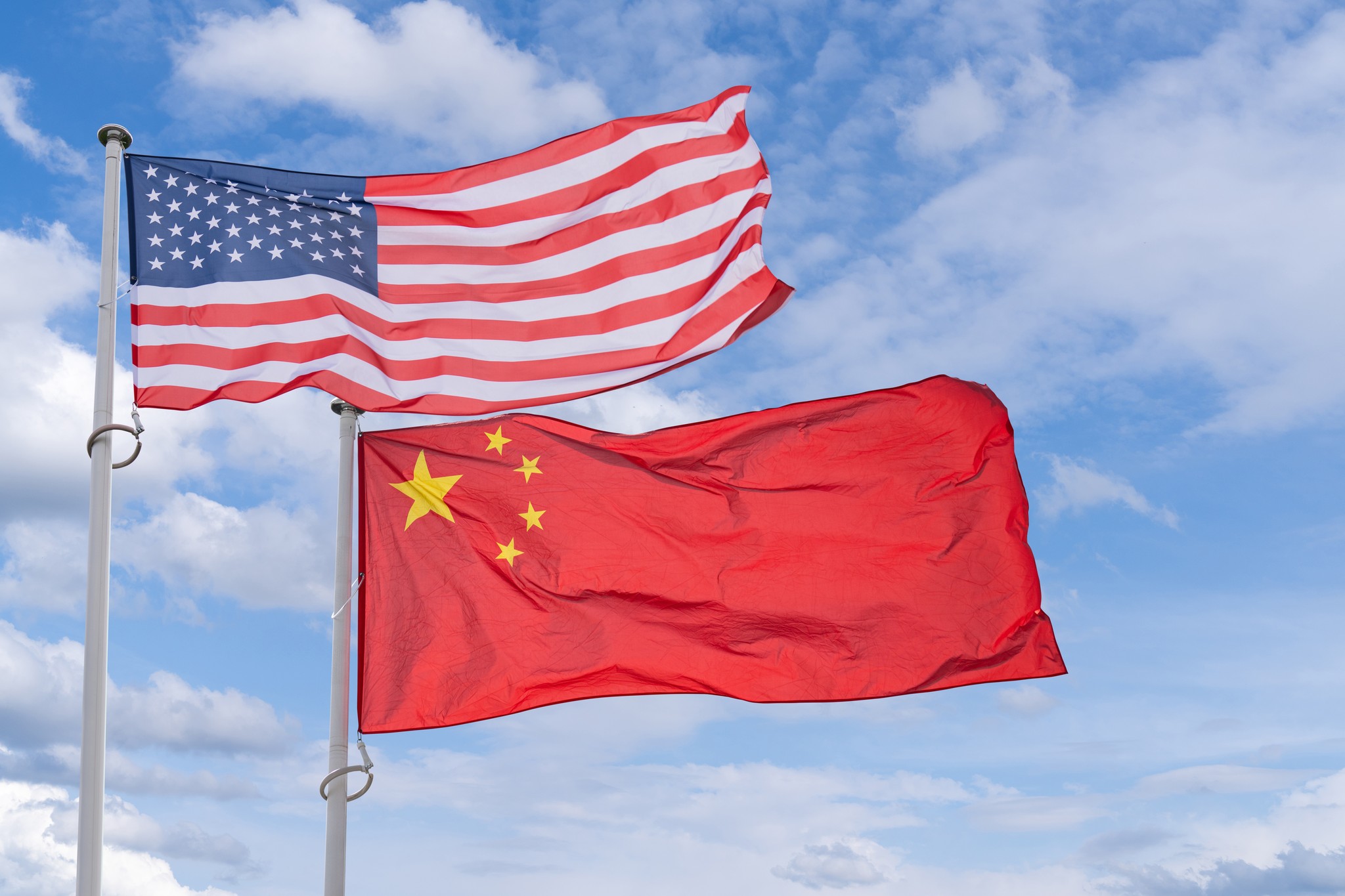
Takeaways
Trump built his political identity on being tough on China. Now, he’s headed to Beijing, bogged down in an unresolved war in Iran, isolated from allies, and with his approval ratings in freefall. He’s desperate for a deal, and America will pay for it. That is precisely the opposite of what Americans want in our relationship with China.
Donald Trump spent a decade telling Americans that China was eating our lunch and he was the only one tough enough to stop it. On the 2016 campaign trail, then-candidate Trump made China a centerpiece of his pitch to American voters, claiming that “China is ripping us on trade, they’re devaluing their currency, and they’re killing our companies” and how they’re “taking our jobs, taking our money, making our products.” He was blunt about what China thought about us: “They can't believe how stupid the American leadership is." He won two presidential campaigns, in part, by promising that he would make China pay for the pain it has inflicted on working Americans.
As president, especially this time, he’s fumbled away many of America’s advantages in our competition with China. So now he’s going to Beijing hat in hand, the worst possible posture for negotiation.
Setting Up a Bad Deal
Trump built his entire political brand on the premise that previous American leaders were weak, naive, and getting played. His first administration sparred aggressively with China on trade, technology, and supply chains, and helped catalyze a genuine bipartisan consensus to get tougher on China that persists to this day. He ran again in 2024 on the same platform, unleashing massive tariffs on China–and other countries–in his second term. Despite legitimate criticism that the tariff strategy was a tax on American consumers, the administration insisted that tariffs could be used to both punish and cajole other countries. China responded in turn, immediately threatening to restrict exports of heavy rare earth metals and magnets. Further escalations by both countries continued until Trump and Xi met in South Korea and agreed to mutual concessions.
Now, Trump is arriving in Beijing mired in difficulty: an unresolved war with Iran, facing a Supreme Court ruling that slapped back his tariff overreach, and plummeting approval ratings. Trump is desperate for a win, and as a result, has not only softened his tone but is considering dramatic concessions to “improve” the relationship with Beijing. This includes loosening export controls, lowering tariffs, and selling advanced computing chips to China.
The same president who said China was ripping us off could trade away our long-term strengths for a short-term deal, undermining US technology advantages and security at the worst possible moment.
Put Us In, Coach
Third Way’s public opinion research is unambiguous: Americans see China as a serious competitor, not an enemy, and they believe the US can win that competition by playing to its strengths. They want a president who shows up in Beijing knowing what he’s walking into and what and who he’s fighting for. This summit should have been an opportunity to project that kind of strength.
Instead, this visit follows months of legal and regulatory confusion about sensitive technology transfers. Earlier this year, the Trump Administration permitted the sale of advanced AI chips to China, which had been previously banned for export. Given the President’s tendency for maximalist demands and dramatic foreign policy announcements, many of which contradict each other, there is little reason to expect that he will leave China with anything that resembles a durable strategy to manage the competition.
What a Stronger US-China Strategy Looks Like
Xi Jinping is not arriving at this summit looking for a fair deal. He is arriving to extract maximum value from a weakened president on a deadline.
To truly strengthen the US position in its competition with China, we need a vastly different approach that prioritizes American interests rather than showmanship. The US must pursue a new dynamic with China that avoids both performative politics and careless capitulation.
A new approach is not out of reach. Democrats and Republicans alike have put forth substantive legislative proposals on competition with China, including some bipartisan ideas. Many of them focus on preserving US technology and related national security interests through export controls. The Trump Administration should leverage that foundation to reinforce guardrails.
A stronger strategy starts with four priorities:
1. Re-engage Allies Before and After the Summit
America’s alliance network is an asymmetric advantage China cannot match, but it has to be cultivated. As one focus group participant said, “If I were going to a bar fight, I’d want to have my friends with me.”
The US should reclaim its role as a diplomatic leader by working with like-minded countries and aligning on China. That includes convening the Indo-Pacific Quad leaders, repairing fraying ties with India, and communicating with European and Asian allies before and after the Xi Summit. Coordinated pressure on technology transfer, supply chains, and deterrence only works if our allies trust us. The administration’s recognition of the importance of allies and partners in securing critical minerals supply chains is a good start, but the same logic needs to be applied more broadly.
2. Guard US Technology
America has been a technological leader for decades, and this is now widely recognized as a pillar of our national security. The Administration pays lip service to the premise that economic security is national security, but then fails to follow through. Advanced chips, AI capabilities, and dual-use technologies should not be provided to China in exchange for short-term deals. Instead, the Administration should strengthen, not weaken, export controls and resist pressure to use technology access as a bargaining chip in bilateral negotiations. Third Way has laid out what responsible US-China engagement could look like in sensitive sectors like energy, minimizing risk and maximizing US advantage.
3. Create Predictable Trade Policy
The signature foreign policy issue of Trump’s second administration has been using tariffs and the threat of tariffs as coercive leverage on non-trade issues. But businesses cannot plan around a continuously changing tariff regime, and families are getting crushed by increased prices. This approach undermines America’s reputation as a country whose word can be trusted when new tariff threats are introduced after deals are reached. China has demonstrated that it can retaliate effectively in ways that raise costs for American consumers and businesses. The Trump Administration must build a durable trade framework that helps American businesses and families and is grounded in strategic priorities.
4. Secure Cyber and Homeland Defense
The ongoing chaos–workforce reductions and leadership voids–at the FBI and the Cybersecurity and Infrastructure Security Agency (CISA) have hollowed out some agencies responsible for keeping Americans safe, making the US a softer target at precisely the wrong moment. US policymakers must prepare for continued Chinese attempts to infiltrate US systems. Americans understand the danger of Chinese cyber intrusion and expect the government to take the threat seriously. The problem extends beyond cyber. Right now, China outmatches the US on drones and other warfighting capabilities. While the Iran war has demonstrated US military capabilities, it has also clearly depleted US military resources. Rebuilding these defenses isn’t optional.
The Bottom Line
China is playing a long game, and right now, it doesn’t have to play very hard. While the US is vacillating between foreign policy crises, China continues to expand its influence in Southeast Asia, the Middle East, and Europe. The Administration has the tools to push back–allied networks, technology advantages, and a bipartisan foundation for serious competition. The question is whether we will use them.
Americans want leaders who are clear-eyed and strategic about China. That requires rejecting both performative toughness and careless capitulation.


Downloads
Latest Publications
Trump’s Failure in Iran: A Foolish War Waged by a Foolish President with Americans Paying the Price
Trump Is Laying the Groundwork to Attack Cuba. Democrats Should Push Back.
Democrats aren’t winning the foreign policy argument, group says (external link)
Calm in Crisis, Clear in Purpose: Americans Want a New Foreign Policy Direction
Never Miss an Update
Sign up for updates on the pragmatic, center-left ideas shaping the future of American policy.