Memo Published October 22, 2025 · 13 minute read
Securing US-China Engagements on Clean Energy Technology
Shane Londagin, Kashvi Chandok, & Michael Davidson
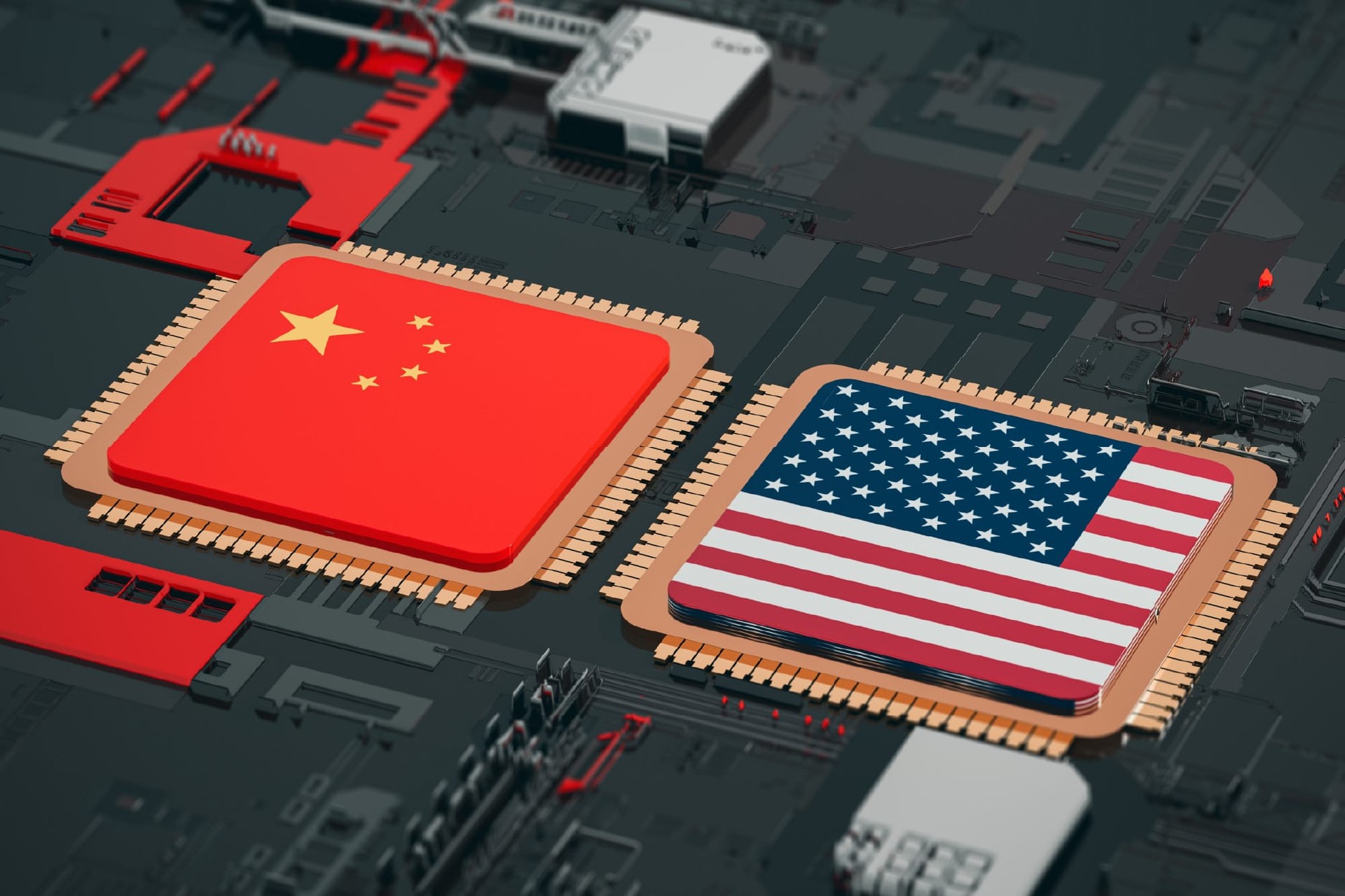
Chinese technology firms—bolstered by decades of state-backed industrial policy—have become dominant global players in key clean tech sectors. Concurrently, the United States is at a pivotal moment in clean energy investment and policy, with significant public funding and regulatory efforts aimed at reshoring supply chains and advancing domestic technological leadership.
To scale deployment, US firms are increasingly engaging Chinese entities in a range of partnerships: as licensors, joint venture partners, technology suppliers, and US-based subsidiaries. In many of these cases, domestic firms and communities have expressed strong desires for such partnerships for their potential to accelerate US technological capabilities, attract investment, and bring manufacturing jobs to local economies.
However, as US-China competition intensifies amid growing global energy insecurity, managing risk while preserving strategic opportunity will be key to advancing US economic and national security objectives. One increasingly relevant (and complex) area of entanglement is Chinese firm involvement in US government supported clean energy projects.
This policy memo draws on new research by Professor Michael Davidson of UC San Diego, a leading China scholar whose research focuses on the engineering implications and institutional challenges of global clean energy deployment. As commissioned by Third Way, the research analyzes the structure of US-China clean energy engagements and proposes a new framework for identifying, measuring, and mitigating risks associated with these types of partnerships. The analysis identifies five categories of risk: (1) intellectual property exposure, (2) supply chain vulnerabilities, (3) facility and community security, (4) data and technology security, and (5) dual-use military concerns.
By applying this new framework to US-China engagements through a series of project-level case studies, we outline a dual-track policy strategy: one that minimizes risk through tighter transparency, sourcing requirements, and IP protections, and one that maximizes US advantage by enabling carefully structured collaborations that promote domestic ownership, job creation, and technological leadership.
To be clear, US-China engagements on clean energy are not without risk. However, the goal of this memo is to demystify the complexities, challenges, and strategic opportunities of such partnerships, clarifying where perceived risks pose actionable threats, and presenting a series of targeted policy recommendations to mitigate them.
Managing these tensions will allow the US to navigate the realities of global supply chains and technological interdependence without compromising long-term energy security, economic competitiveness, or national interests.
Click here to read Professor Michael Davidson’s full research paper, as commissioned by Third Way.
Understanding Risk in US-China Engagements
While the US rapidly expands its domestic clean energy supply chains and its use of “friend-shoring”, it is inevitable some American companies will choose to involve Chinese-based firms or technologies in certain projects, owing to China’s dominance in current supply chains and leading technological advantages. Our research identifies five categories of risks that can emerge from these types of engagements:
- Intellectual property. Contractual terms and informal practices that might undermine the creation and protection of US IP.
- Supply chain resilience and trade practices. Upstream component supplier relationships, reliance and potential bottlenecks, and the potential for unfair trade practices prioritizing select foreign suppliers.
- Facility and community security. Concerns of Chinese land and facility ownership and presence of Chinese employees in the community.
- Technological data security. Potential violations of privacy through collection of sensitive US citizen data and risks for critical infrastructure disruption due to control of key technologies.
- Dual-use applications. Connections between Chinese firms and the Chinese military and the potential for enhancing military capabilities.
Beyond protecting national interests through diligent risk management, the US should seek to advance them in any interactions between American and Chinese businesses. While these five categories of risk present challenges to US-China firm to firm engagements, they also open the door for strategic opportunities to bolster US competitiveness.
A brief overview of these risks is presented below, for a deeper dive into the framework, including case studies and engagement-specific examples, please see the full report.
Intellectual Property
Intellectual property (IP) concerns are central to engagements with Chinese entities, with China remaining on the US Trade Representative's 2024 Special 301 Priority Watch List due to gaps in IP protection and enforcement. Issues such as trade secret theft, bad faith trademark applications, and technology transfer pressures raise risks, particularly in sectors like electric vehicles. Foreign firms operating in China, especially through joint ventures (JVs), may face regulatory requirements that compel disclosure of proprietary technologies, while variable interest entity (VIE) structures can further complicate control over IP. However, US partnerships involving technology supply and licensing present more nuanced risks, sometimes enabling a “reverse technology flow” where US firms leverage Chinese innovations. Concerns also extend to reliance on Chinese IP, which could potentially limit the development of alternative technologies.
Supply Chain Resilience and Trade Practices
The upstream supply chain for critical minerals and components poses challenges for US firms, particularly in batteries and solar energy, where China dominates refining and production. Dependence on Chinese materials raise risks of supply disruptions, price manipulation, and export restrictions. Solar panel manufacturers also face trade regulations on materials from Xinjiang due to forced labor concerns. Unlike batteries, the solar sector has seen greater Chinese investment in the US, with Chinese-affiliated manufacturers expected to supply 20 GW of modules annually by 2025—half the market—prompting complaints from non-Chinese firms about unfair advantages from industrial subsidies.
Facility and Community Security
Concerns over Chinese ownership of land and on-site employees have led to legislative actions in several states, including South Carolina, Texas, and Virginia, restricting property purchases by entities from "foreign adversaries" like China. These concerns have fueled opposition to projects such as Illuminate USA’s Ohio solar panel factory (a joint venture with LONGi). Additional scrutiny applies to joint ventures and subsidiaries near US military facilities, such as Gotion Inc., and broader economic security concerns tied to firms like CATL.
Technological Data Security
Chinese technology deployment in the US has raised security and privacy concerns, particularly regarding data collection from connected vehicles and energy storage systems. Joint ventures and subsidiaries may pose risks if sensitive technology is shared with Chinese parent companies. In response, the 2024 NDAA prohibits the DOD from purchasing batteries from Chinese firms like CATL starting in 2027. Political pressure also led to the DOE rescinding a $200 million grant to Microvast over its China ties, though the company continues its US investments without DOE funding.
Dual-Use Ppplications
China’s “military-civil fusion” strategy has heightened concerns about indirect or direct military links in Chinese firms operating in the US. Gotion Inc., a subsidiary of Gotion High-Tech, has faced scrutiny for its joint venture with China Energine, which has military affiliations. Similarly, Ford’s licensing agreement with CATL for a Michigan battery plant has been criticized due to potential ties to suppliers of the People’s Liberation Army. While direct cases of US technology enhancing foreign defense capabilities are limited, oversight of Chinese firms in clean energy remains a growing regulatory focus.
Policy Recommendations
Based on prior historical examples and lessons and the ongoing sets of engagement with Chinese firms, our research presents policy recommendations with two key objectives in mind: (1) Minimizing risk and (2) Maximizing US advantage. These are specifically designed with federally-supported clean energy manufacturing facilities in mind. In certain instances, recommendations for state and local governments are included, for which the federal government can play an important role in education and lesson sharing. Guiding examples for each are included in the full report.
Minimizing Risk
Policy Recommendation 1: Foreign Entity of Concern (FEOC) restrictions on federal incentives should be designed around flexibility and making sure that dollars should be going to communities and bringing or developing advanced technology in the U.S.
Expanded FEOC restrictions apply to crucial federal programs, notably the clean vehicle tax credit (30D), clean electricity tax credits (45Y and 48E), and the advanced manufacturing tax credit (45X), even though these tax subsidies have a dedicated sunset period attached. Easy to evaluate ownership thresholds should be preferred over more complex formulations, though some discretion may be warranted for complex business structures. FEOC guidance of a 25% ownership threshold is in line with other federal frameworks. Given the lengthy process to generate the current guidance, regulations on FEOC following OBBBA should be streamlined to allow for flexibility to avoid setting back major automakers and other manufacturers which have been making investments and establishing technology pathways. For all credits, the fundamental principle driving revisions should be that federal dollars go toward communities and bringing or developing advanced technology in the U.S. Foreclosing all partnerships with Chinese firms may lead to slower technological advances for U.S. production facilities. However, these programs should be combined with strengthened requirements for IP localization. Finally, additional restrictions should only be based on assessment of technology-specific risks such as IP protection or national security. Batteries and EVs are shown to have a stronger nexus with some security concerns, while solar panels are less so. Material assistance cost ratio (MACR) requirements introduced in OBBBA can significantly impact the viability of manufacturing investments. Regulations could be designed to allow for greater flexibility, e.g., for projects that have already broke ground and through updated safe-harbor tables. Furthermore, for advanced manufacturing tax credits, consider the overall impact on manufacturing growth when adding new components to MACR requirements and allow for flexibility for manufacturing facilities producing more than one component.
Policy Recommendation 2: Require firms to diversify supplies to address specific scarcity and bottleneck risks where there is a high concentration, especially in upstream minerals and materials, with achievable phase-in timelines.
To respond to concerns of increased reliance on upstream materials and components in U.S. facilities with Chinese ownership or collaboration, additional requirements can be placed as a condition of receiving federal money. There is precedent for enhancing diversity in some regulations (e.g., 30D Clean Vehicle Tax Credit), though specific thresholds for content from allies and partner nations have been difficult to meet for many domestically produced cars. On the other hand, requirements for high degrees of domestic content for all components, e.g., through MACR, may not be necessary. The key metric from the perspective of reducing supply chain bottleneck risks is diversity—including both domestic and a range of foreign suppliers. Additional analyses should be pursued into what level of concentration is deemed too risky at the component level. On the other hand, FEOC restrictions should not abruptly cut off access to dominant global suppliers, especially when those suppliers currently control critical parts of the value chain. Developing alternative sources and domestic processing capacity is a multi-year effort, and overly rigid restrictions on risk disrupting supply chains before viable US or allied options are ready.
Policy Recommendation 3: Monitor and maintain an accurate list of energy products subject to UFLPA forced labor restrictions, and require abundant transparency of supply chains and cooperation with trade-related investigations in affiliated companies of supported US facilities.
Due to the complexity of energy component supply chains, meeting the objective of eliminating the risk of forced labor in goods flowing into the US requires additional resources and information. For facilities with Chinese partners, there should be a requirement of abundant transparency of all material imports to support these policy objectives. These concerns go hand in hand with trade authorities addressing concerns about unfairly priced imports from Chinese facilities. Federal support for projects should be made contingent on cooperation with all trade-related investigations into affiliated companies.
Maximizing US Advantage
Policy Recommendation 4: Require firms and investors involved in Chinese collaborations to establish technology management plans and protocols that specify ownership and protections of intellectual property (IP).
Most collaborations will involve intellectual property, hence clear protocols should be established at the outset that protect US IP and govern the use of joint or newly created IP. These plans should be detailed and tailored to specific collaborations. Few companies disclose the details of these arrangements, leaving some ambiguity and potential of insufficient coverage for partners new to these types of collaborations. General principles of such agreements should include: transparency, risk mitigation, and local IP stays local. The US partners should be able to access foreign IP and given preferential—ideally, exclusive—control over IP created through the collaboration. Furthermore, there should be clarity on recourse options, including within China, if disputes occur. The US Patent and Trademark Office regularly publishes guides to intellectual property rights and enforcement in China.
Policy Recommendation 5: Educate firms and local governments about technology licensing and technology partnership opportunities with Chinese firms that maintain domestic ownership of property and facilities, including if required by state law.
Given the potentially robust advantages to US manufacturing capabilities of collaborations with Chinese firms, effective partnerships should be designed to minimize risks—of which foreign ownership is perhaps the largest. Technology licensing and strategic technology partnerships provide greater levels of US control over facilities and operations, which may be attractive if state law forbids Chinese entity ownership or as a form of risk mitigation depending on local circumstances. Focusing on the core benefits of strategic technology partnerships—jettisoning riskier but less valuable forms of collaboration—helps advance domestic manufacturing, mitigate intellectual property risks, and maximize local economic benefits.
Policy Recommendation 6: Establish best practices and educate state and local governments on designing effective incentives and risk management into agreements with Chinese firms.
Federal government manufacturing supports provide bonus incentives for meeting certain wage and apprenticeship requirements. Yet, state and local governments providing subsidies for factories often engage in more granular contract negotiations as a condition for receiving government dollars. Prior experience indicates two important approaches that could be adopted: participation-based and performance-based. Participation-based incentives have general requirements for employment, wages and/or benefits with more flexible criteria or simpler baseline objectives. Performance-based incentives include explicit quantitative requirements and targets to be reached for employment and investment. The DOE currently provides information on funding opportunities and technical assistance to state and local governments, a hub that could be expanded to include resources to maximize advantage for local communities.
Policy Recommendation 7: Assess the community benefits arising from projects involving Chinese firms and monitor for comparability and cost-effectiveness of government support.
Multiple state and local governments have included requirements on local job creation, retention, and training, emphasizing the large community benefits generated by solar manufacturing firms. Federal initiatives contain requirements or bonus incentives—albeit less granular—which favor high-quality jobs. The full stack of benefits arising from all supported projects should be assessed to ensure that those with Chinese partners are meeting or exceeding those without. In particular, when accounting for jobs created vs. local dollars, solar appears to be an attractive sector for budget-conscious local governments.
Conclusion
As the United States navigates changes to clean energy public investment and focused industrial policy, the question of Chinese firm participation in federally supported projects presents both strategic opportunities and complex risks. Professor Davidson’s report underscores that while Chinese firms bring technological expertise and capital that can accelerate deployment and manufacturing scale-up, their involvement in US projects—particularly those involving critical technologies and infrastructure—raises concerns around five key categories of risk: 1) intellectual property protection, 2) supply chain security, 3) facility ownership, 4) data privacy, and 5) potential military applications.
Existing federal statutes and regulatory frameworks have attempted to address these issues, particularly through FEOC restrictions, CIFIUS reviews, and trade enforcement. Yet critical gaps remain in oversight, implementation, and policy alignment across federal agencies. Moreover, as the structure of partnerships grows increasingly sophisticated, risk mitigation demands a more granular, technology-and transaction-specific approach.
This report concludes that a dual-track policy strategy is essential: one that minimizes security and economic risks through tighter transparency, sourcing requirements, and IP protections, while also maximizing US advantage by enabling carefully structured collaborations that promote domestic ownership, job creation, and technological leadership.
Doing so will allow the US to navigate the realities of global supply chains and technological interdependence without compromising its long-term energy security, economic competitiveness, or national interest.