Blog Published June 24, 2026 · 4 minute read
Summer Preview: New Analysis Shows Massachusetts Families Should Expect Price Spikes on Summer Electric Bills

Every summer, energy demand surges nationwide as Americans cope with rising temperatures. More and more Americans experience extreme summer heat and need to power on air conditioners to cool down. For many families, it’s an annual tradition: higher temperatures mean higher energy bills—this summer, price hikes will hit even harder.
New projections show that this summer will be even more expensive. The United States is currently experiencing record energy demand driven by data center growth, domestic manufacturing, and electrification. And we simply aren't bringing on new energy quickly enough or in large enough quantities to meet rising demand affordably.
All that demand is placing further strain on our already-burdened electric grid, which is aging and long overdue for major infrastructure repairs.
These factors combined—seasonal demand spikes made worse by climate change, arriving amid already record-high electricity demand and putting additional stress on a strained energy grid—mean Americans are in for a summer of scorching temperatures and steep energy bills.
In May 2025, data from MIT and Heatmap showed that Massachusetts residents were spending $127 on their electricity bills. By July, they were spending $226, a 78% increase.
Utility Spotlight
Eversource and National Grid customers have experienced tremendous volatility in power prices over the past few years. This summer is no exception.
Last year, National Grid Customers spent about $750 on electricity from June to September. This year, they could spend more than $1000, according to our analysis of data from Heatmap and MIT.
Eversource customers who spent about $740 on electricity last summer could see total costs top $950 by the end of the summer.
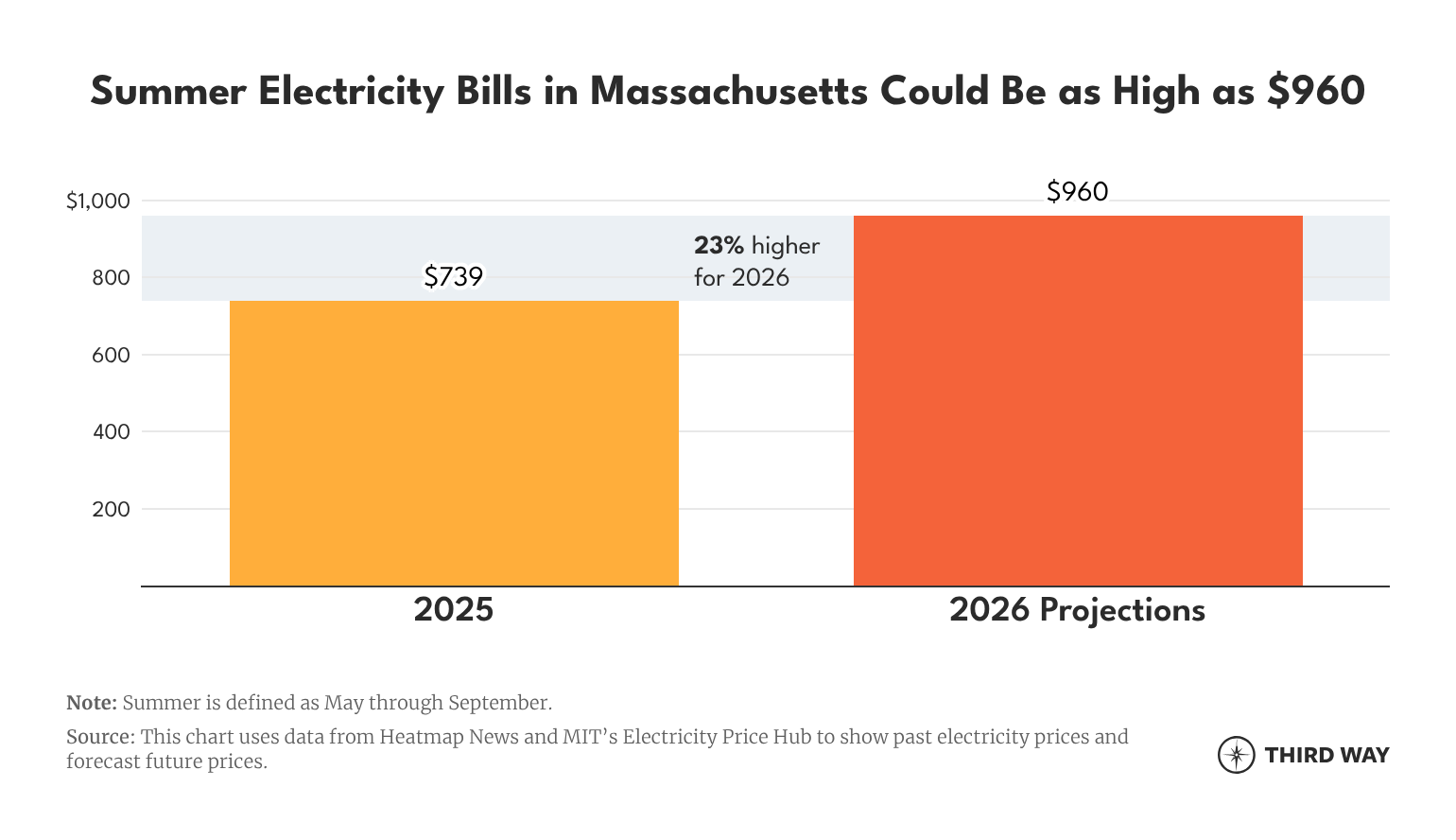
The National Energy Assistance Directors Association (NEADA) released new forecasts showing residential utility bills climbing 10.5% this summer, with the average American’s seasonal electric bills totaling almost $800. They estimate a regional price jump of 10.6% for Massachusetts and the surrounding states. Using their price jump, we estimate summer bills in Massachusetts at $817, up from $739 last summer.
But a closer look at MIT and Heatmap’s electricity bill data suggests that summer electricity costs could far exceed NEADA’s estimate. This year, Massachusetts residents are entering the summer with higher baseline bills: the typical May 2026 bill was around $165, about 30% higher than last year’s. If costs increase at a similar rate as last year, July bills will be around $294. Total electricity bills for summer 2026 could exceed $950.
What’s Next?
Rising energy costs are a compounding problem, and delayed action only makes the problem at hand more daunting. Federal, state, and local governments should work together to expand generation and improve our aging grid. Instead, the Trump administration has made it significantly harder to meet rising energy demand.
To grow domestic energy generation and mitigate the impact of rising electricity demand, increasing clean energy deployment is a natural next step. Clean energy sources like wind, solar, and batteries take less time to build and aren’t subject to the same kind of supply chain shortages and price fluctuations that plague natural gas. But the Trump Administration has stymied clean energy deployment by undermining financing for clean energy, imposing administrative roadblocks that delay project reviews, and formally deprioritizing low-cost resources like solar and wind in federal directives.
Clean energy sources like wind, solar, and batteries take less time to build and aren’t subject to the same kind of supply chain shortages and price fluctuations that plague natural gas. To grow domestic energy generation and mitigate the impact of rising electricity demand, increasing clean energy deployment is a natural next step. But the Trump Administration has stymied clean energy deployment by undermining financing for clean energy, imposing administrative roadblocks that delay project reviews, and formally deprioritizing low-cost resources like solar and wind in federal directives.
Some estimates suggest the Administration has canceled or blocked 22 GW of clean energy deployment from coming online. To put that in perspective, the number of projects canceled in Q1 of 2026 alone could power between 2 and 3 million homes and businesses each year.
For folks in Massachusetts, the consequences of cuts to clean energy are personal. Continued delays from federal interference in offshore wind projects are preventing Massachusetts residents from seeing essential cost savings . A report from Daymark Energy Advisors estimates that had the nearly 3500 MW of planned offshore wind generation been operational between December 2024 and February 2025, Massachusetts residents would have seen savings of $105 to $212 million.
It’s normal for energy prices to rise over the course of the summer. But the current pressures on our energy sector, combined with recent federal policy failures, mean consumers are facing devastating price hikes. Accelerating clean energy buildout can mitigate rising prices and give consumers some much-needed relief as we enter the warmer summer months.