Blog Published May 11, 2026 · 7 minute read
“Electric is Out of Control”: Rising Energy Costs in Central Ohio
Francesca Hsie, Maya Gibbs, Dr. Florian A. Schneider, & Carson Ohlen

The cost of living in Ohio has been climbing for years with no signs of slowing. In Columbus and the surrounding areas, high prices have created real pessimism: research shows only 18.2% of Central Ohioans are optimistic about the cost of living moving forward. That pessimism is partly driven by surging electricity rates, which have increased by almost 50% in the last five years (January 2021 to January 2026), double the rate of inflation over that period.
Anger about rising energy bills is visible on social media, where Ohioans have made their feelings clear. “Electric is out of control…” wrote one Buckeye. “My utilities officially are more than my rent,” wrote another.
Public opinion surveys show Central Ohioans overwhelmingly want to lower energy costs and deploy more clean energy to do so. Our research shows they’re right to be concerned about high costs – and they’re on the right track to effective policy solutions.



Bills Are Rising – But by How Much?
AEP Ohio provides power across much of the state and serves Columbus and the surrounding area primarily through Columbus Southern Power Company.
Five years ago, Ohioans paid about $100 per month for electricity. Today, they pay around $150.
About half of that bill consists of monthly supply charges – the amount of electricity a consumer uses, multiplied by the cost per unit. The other half of your monthly bill consists of transmission and distribution charges, representing the cost of moving power from where it is generated to where it’s ultimately used. Costs in both categories have skyrocketed in recent years. Supply rates doubled from January-March 2021 compared to the same period in 2026, and transmission and distribution costs surged more than 20%.
What’s Causing Price Growth?
Ohio participates in a regional grid and competitive wholesale power market managed by the PJM Interconnection (PJM), which serves about a fifth of the US population. That system allows communities to share power resources and reduce the overall cost of new infrastructure. But being part of a competitive wholesale market means that Ohio’s electricity mix, the speed at which new supply is connected to the grid, and the ultimate cost that Ohioans pay for power are driven by decisions made across PJM’s 13-state territory.
Folks in Columbus and the surrounding counties may have voted for clean energy programs and expressed support for clean energy in public opinion surveys– but they don’t have control over their access to clean technologies. That authority lies with PJM.
Natural gas makes up about half of the electricity mix in PJM, followed by coal and nuclear power. Wind and solar deployment have risen steadily – but their share of the overall energy mix is quite small, under 5%.
In recent years, PJM has prioritized fossil fuel deployment. That decision runs counter to conventional wisdom among its peers and to public opinion among central Ohioans: every other regional grid and market operator in the United States has deprioritized new fossil fuel deployment. In the neighboring Midcontinent Independent System Operator (MISO) market, less than 1% of new electricity supply came from fossil fuels between 2013 and 2023. And, in a 2026 survey, less than 50% of central Ohioans said expanding natural gas generation should be among the state’s energy priorities. There’s a reason Ohioans and electricity market experts disagree with PJM’s strategy: given current market dynamics, prioritizing new fossil fuel buildout simply isn’t the best way to keep energy affordable.
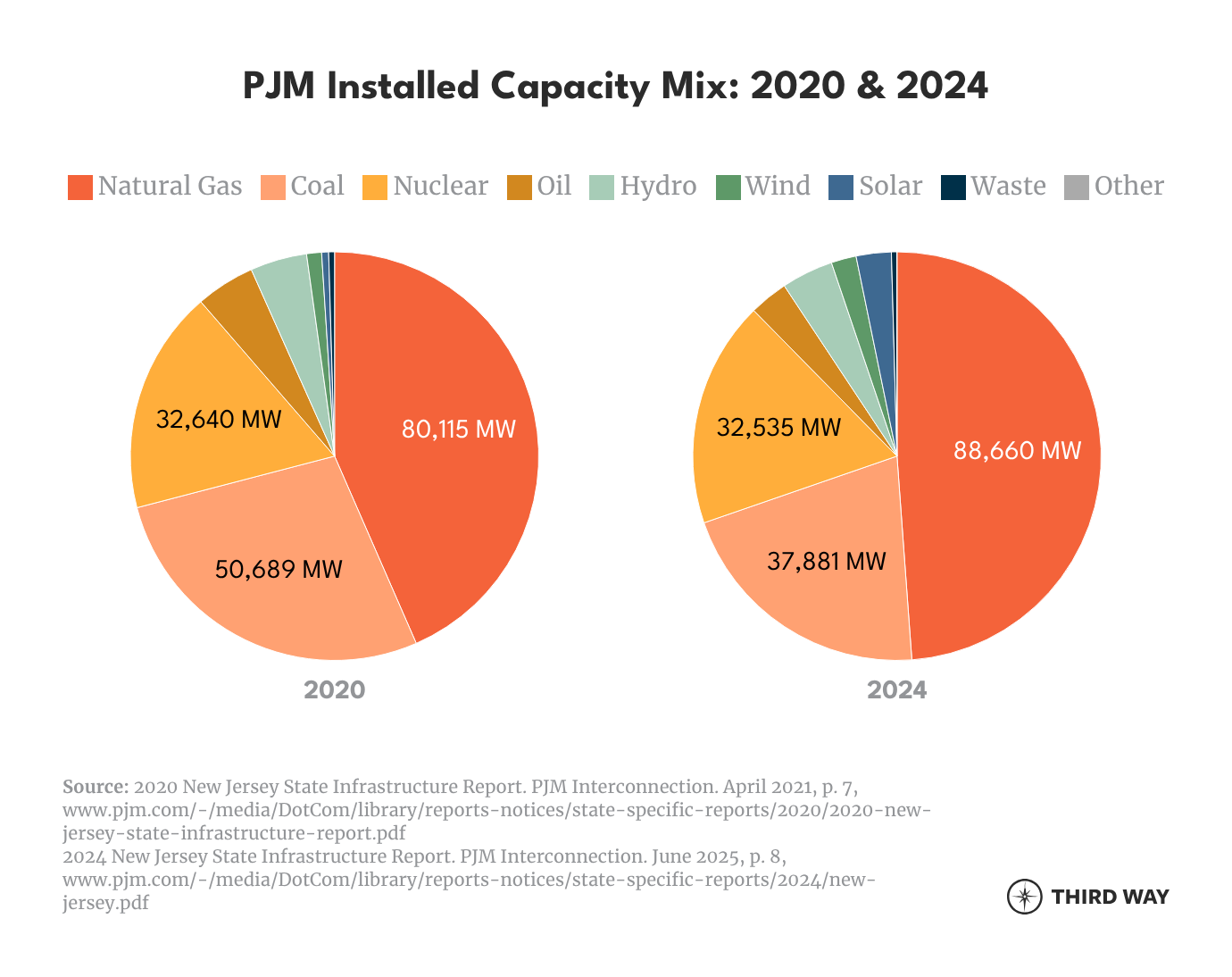
The Current Electricity Mix is Susceptible to Price Spikes: Natural gas generation has an outsized influence on wholesale power prices in Ohio because it accounts for a significant share of PJM generation. When prices are low, as they were five to ten years ago in the midst of the shale boom, natural gas can keep electricity prices low. But when natural gas prices rise–whether because of seasonal demand or global market conditions–wholesale electricity prices increase significantly. These prices are then passed on to retail customers.
New, Diversified, Low-Cost Power Supply is Not Being Connected Fast Enough: Interconnection, the process by which new generation is connected to the grid, is simply moving too slowly across all energy sources, with a particular impact on renewables and batteries. PJM has over 200,000 MW of new generation waiting to be connected, much of which is from low-cost solar and battery storage. But because PJM has chosen to prioritize new fossil fuel deployment, solar, battery, and other renewable projects can sit in the queue far longer than they should, and a smaller share of clean projects are connecting to the grid than one would expect, given the high number of solar and battery projects waiting in the queue. The long delays in connecting new power sources have caused capacity prices–the cost to guarantee that there is enough power to meet demand in the future–to skyrocket.
Rising Demand Putting Upward Pressure on Prices: New demand from data centers, electrification, and manufacturing–at a time when new supply can’t keep pace with that growing demand–is driving prices up. Until recently, electricity demand in the US has been relatively flat, which has meant that slow connection of new supply didn’t have significant price implications. But surging demand, particularly for data centers in Central Ohio and across the PJM region, is contributing to the rising future capacity prices and competition for new supply.
Capacity Market Crunch: PJM ensures that there is enough supply in the future by running a forward capacity market, in which power producers bid to produce energy for PJM at a later date. PJM is essentially making a reservation with a power producer, which guarantees that producer's future income and ensures PJM has access to power when needed.
But because energy demand is growing and new supply isn’t being deployed quickly enough, the cost for that future supply has jumped from $29 per megawatt-day for delivery in 2024/2025 to $330 for 2026/2027. That 11-fold increase in just 2 years is part of the supply price that consumers pay.
The Aging Grid: The grid is aging, power plants are retiring, and new technologies are being introduced that will improve efficiency across the electricity sector. Addressing these deficits and improving grid capacity requires significant investments from utilities, and these problems only get more expensive to fix the longer utilities wait to address them.
At the same time, equipment costs for transmission and distribution have risen significantly since the pandemic and the supply chain disruptions that followed. That combination is causing noticeable cost increases for the delivery costs on customers' bills.
Can Clean Energy Help Reduce Costs?
Despite federal headwinds and county-level restrictions blocking new renewable projects from being built, clean energy deployment is central to affordability and reliability in Ohio. Expanding renewable capacity generation and diversifying the grid’s energy mix would insulate households and businesses in the Buckeye State from the volatile price spikes associated with an overreliance on natural gas.
In addition to stabilizing wholesale electricity price fluctuations, adding new clean energy generation would also ease supply constraints in PJM’s capacity market, easing upward pressure on prices by increasing market competition. Analysis from American Clean Power (ACP) finds that in a world in which no new clean power is allowed to be built, residents in Ohio will see their rates increase 140% by 2032 and end up spending an additional $6000 across the next decade.
Instead of prioritizing the deployment of low-cost energy projects, the Trump administration has slowed or reversed investments in renewable energy while simultaneously spending taxpayer money to keep costly, aging coal plants open well past their anticipated retirement. According to a recent Grid Strategies report, DOE’s decision to extend the lifetime of Miami Fort power station, located in Hamilton County, will cost ratepayers nearly $100 million annually. Further analysis from Energy Innovation also estimates that President Trump's "One Big Beautiful Bill Act" could drive wholesale electricity prices in Ohio up by 17% by 2025 and increase annual household energy bills by $190.
The federal government's current market tampering by constraining new clean energy supply is worsening capacity shortages in the PJM region and propelling Ohio to rely even further on the volatile fossil fuel markets. Local and state dynamics also compound federal interference: the passage of SB 52 in 2021 has empowered nearly 40 counties to block renewable projects outright, while instances of fabricated public opposition and a legacy of pro-fossil fuel policymaking continue to stall clean energy buildout. These intentional choices to arbitrarily pick winners and losers will make electricity more expensive in Central Ohio.