Report Published December 2, 2025 · 11 minute read
What Is Affecting Home Prices?
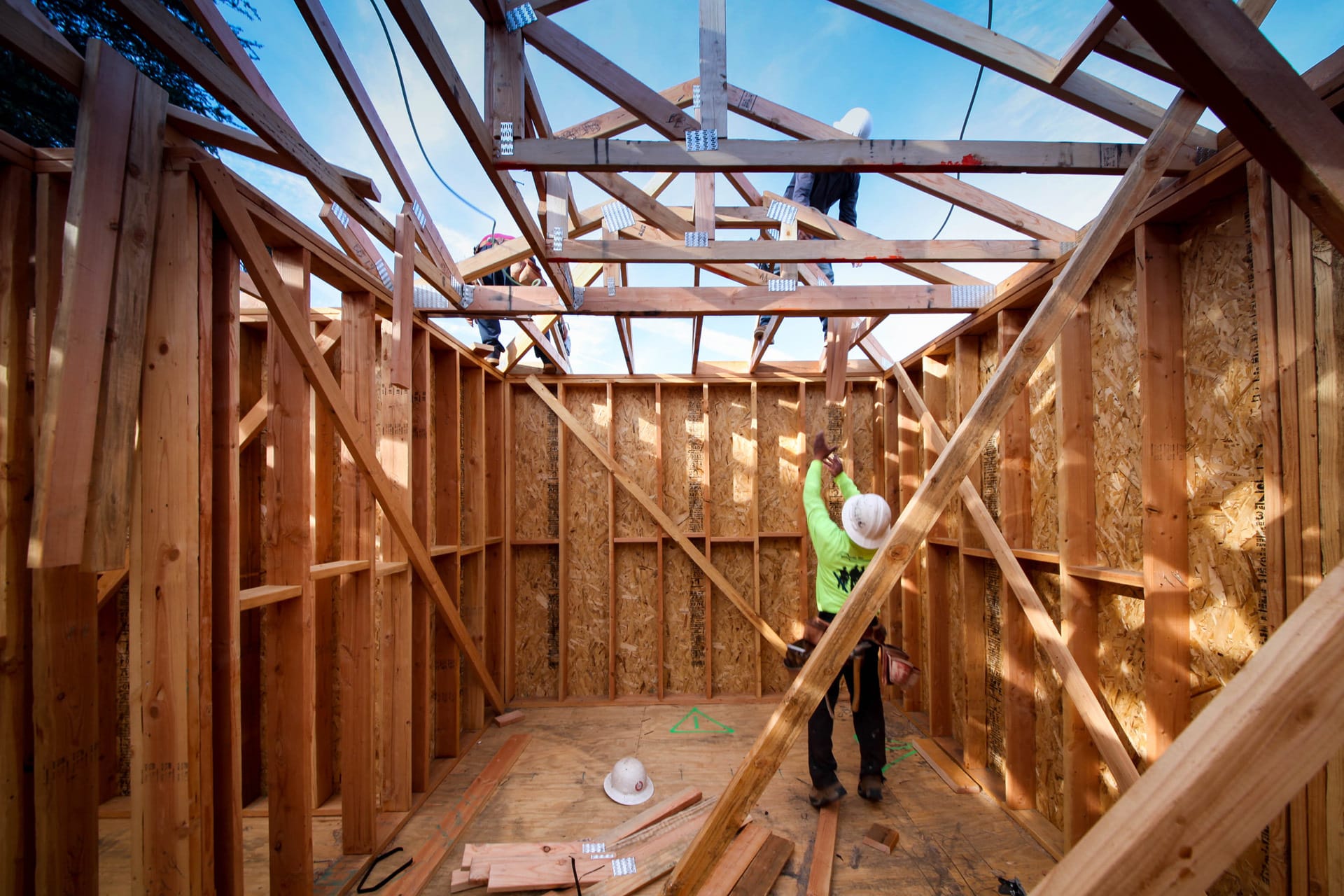
Poll after poll shows the same thing: voters have massive concerns about the cost of key things in their lives. Nowhere is that more apparent than housing. As we recently wrote, the median sales price of a house has tripled since 2000. Rent is up 30% since 2020. Owning a home in this country is often unattainable for families, and renting is regularly destroying family budgets.
Notably, there is not one culprit behind this dramatic increase in housing costs. There are numerous factors out there—some of which have a large impact, others which don’t. In this report, we unpack five of the most talked about issues in housing and explore the extent to which they are driving up costs. Specifically, we explore:
- Restrictive zoning and local regulation (High impact)
- Tariffs on building materials (Medium impact)
- Labor shortages and immigration (Medium impact)
- Interest rates and the lock-in effect (Medium impact)
- Institutional investors (Low impact)
Restrictive Zoning and Local Regulation (High Impact)
The Situation
There is a morass of local regulations that limit the quantity and variety of new housing. Zoning rules can dictate the number of homes in an area, how many families can live there, how tall homes can be, how much parking needs to be included, and more. These regulations can dramatically increase housing costs by slowing or stopping the building of new homes as well as raising the costs of construction or renovation.
The Impact
Restrictive zoning and local regulations create hard supply constraints like single-family zoning, height limits, and parking minimums. Single-family zoning restrictions reduce the ability of denser housing from being built, slowing growth when demand rises.1 Building height restrictions prevent the supply of real estate from responding to increased demand.2 Minimum parking requirements mandate parking development in tandem with new residential or commercial constructions, without consideration of the project’s needs. These requirements reduce the number of homes that can be built and increase unit development costs. For example, structured or underground parking in urban areas typically costs $25,000 to $65,000 per space.3
Restrictive zoning and local regulation increase development costs through lengthy permitting processes and delays. The permitting process for new home construction is often lengthy due to its complexity, bureaucratic inefficiencies, lack of clarity on applicable regulations, and public opposition to new construction. In a survey of housing developers, 83% reported that their project delays were due to issues with obtaining permits.4 The prolonged permitting process and its associated delays add costs to construction, as developers are still on the hook for expenses like property taxes, interest payments, and business operations as projects stall out.5 By increasing the amount of debt that developers incur before project completion, some projects become unviable, contributing to the supply shortage and worsening the affordability issue.
Exclusionary policies favor existing owners in an area. It makes sense that incumbent homeowners have strong financial incentives to protect the value of their property. But not-in-my-backyard (NIMBY) sentiment often pushes local officials to restrict housing development.6 This prevents housing supply from rising to meet demand—artificially raising the property values for incumbent homeowners and keeping first-time buyers and lower-income households from entering the market.7
Restrictive zoning and local regulation create a geographic mismatch as workers get pushed into longer commutes. As housing is limited near urban centers, workers are forced to move further away where more homes are easier to build. This results in higher prices not only in core areas but in surrounding suburbs, as competition intensifies for the limited housing available. Beyond its effect on housing affordability, this results longer commutes, greater pollution, and persistent worker shortages for lower-wage roles near job centers.8
Tariffs on Building Materials (Medium Impact)
The Situation
President Donald Trump has infamously claimed that “tariffs is the most beautiful word in the dictionary.”9 And yet, tariffs on products—from wood and steel to imported tile and flooring—increase the cost of core construction inputs. These costs are passed on to consumers and can disrupt new housing construction.
The Impact
Tariffs increase the cost of a house. Recent tariffs have targeted steel and aluminum, lumber, cabinets, and upholstered wooden furniture—all key components of home construction.10 Sixty percent of home builders report that suppliers have increased or announced increased prices for supplies in response to the steel and aluminum tariffs.11 Builders estimate that tariffs on inputs like lumber and steel add $10,900 per new home.12
Tariffs can reduce project feasibility. Higher construction costs squeeze margins and may threaten the viability of new projects. This is particularly true for affordable housing where units must be sold at particular price points to fulfill project requirements. The unpredictability of construction costs in the ever-changing tariff landscape may turn off investors, further reducing the feasibility of new projects. A reduction in single-family home construction can already be observed in this new tariff environment: single-family home construction starts in April 2025 were down 12% compared to the April 2024 rate.13
Tariffs increase unpredictability and create supply chain issues. Tariffs add unpredictability to the market for housing construction materials and can create supply chain disruptions as markets adapt. This volatility increases costs and completion time for projects. Just think: it’s tough to sell and close on a home that is missing garage doors or sinks. Industry reports have noted that tariffs “lead to significant disruptions in the supply chain… these delays hinder construction timelines, resulting a reduced number of homes on the market.14”
Tariffs are mostly passed through to consumers in the end. Research shows that when housing inputs are affected, suppliers and manufacturers raise prices—even on goods not subject to tariffs. For example, tariffs on washing machine imports in 2018 corresponded with a 12% increase in the cost of both washing machines and of dryers, which were not subject to the tariff.15 Beyond higher costs for housing construction directly, homeowners may also face higher home insurance rates as these policies must account for rebuilding costs.16
Labor Shortages and Immigration (Medium Impact)
The Situation
Simply put: there are not enough people building homes. Under the second Trump Administration, immigration policies have significantly curtailed the labor force. New data estimates that the number of immigrant workers in the United States has dropped by 1.2 million in the first half of this year alone.17
The Impact
There is currently a construction workforce shortage. Hundreds of thousands of construction industry jobs are unfilled as the industry struggles to keep up with demand.18 In 2024, approximately 19,000 single-family homes were not built due to labor shortages, an economic loss of $8.14 billion.19 In the same period, construction times increased by an average of two months due to labor shortages, adding additional costs to project completion.20 The impact is worse in 2025 due to drops in immigration.
Labor force issues could get worse in the future as the workforce ages. The construction workforce is aging significantly.21 The share of construction workers over the age of 55 leapt from 11.5% to 22.7% from 2003 to 2020, a more pronounced increase than other sectors and a signal that elevated retirements will soon begin to further strain capacity.22 While every industry will have to address increased levels of retirement as Baby Boomers continue to phase out of the workforce, the construction industry will be especially hit hard. This will contribute to the ongoing labor shortage, slowing housing production and increasing home prices.
Increasing immigration restrictions are also at play. One-in-four US construction workers are foreign-born.23 Immigration restrictions and deportations constrict the construction labor pool, negatively affecting housing supply and affordability. Today, heightened immigration enforcement has already impacted over a quarter of surveyed construction firms.24 Firms report jobsite visits and workers failing to appear of fear of immigration enforcement action as primary disruptors.25 Mass deportations “could cause the United States to lose between 1.7 and 1.8 million undocumented construction workers.”26
Labor shortages are pushing wages and costs higher. Labor costs account for 20-40% of a home’s overall construction costs.27 The construction labor shortage has driven up wages for workers, as firms compete for a limited and shrinking pool of laborers. Industry analysis reported that seven-out-of-eight surveyed firms increased their base pay for workers in 2025 as much or more than they did in the previous year.28 Average construction wages are now 8.9% higher than the average private sector wage in the United States.29 This trend has particularly affected the less credentialed (often referred to as unskilled) labor force, whose labor is generally cheaper and who firms tend to hire in large numbers. These laborer wages “rose by 2.75% to 3.5% per year- compared with under 2.5% for most skilled roles.”30
Interest Rates and the Lock-In Effect (Medium Impact)
The Situation
Interest rates remain elevated which keeps borrowing costs high across the economy. Nowhere is this more visible than in the housing market where higher mortgage rates have made buying a home more expensive.
The Impact
Higher borrowing costs reduce purchasing power. When mortgage rates increase, monthly payments on a fixed rate loan go up. Buyers are compelled to either spend a greater share of their monthly take-home pay on housing or lower their housing budget. For example, the median home price is $422,600.31 With a 20% down payment and a 30-year loan, the monthly mortgage payment at a 3% interest rate would be $1,780. However, the monthly mortgage payment at a 6% interest rate would jump to $2,381.32
Interest rates can create a lock-in effect. Current mortgage rates are almost double what they were during COVID. This has created a “lock-in effect” where homeowners with low-rate mortgages avoid selling their homes—even when they may be ready to downsize, upgrade, or would otherwise benefit from relocation—so they don’t get saddled with a higher mortgage rate. This keeps homes off the market, lowering available housing supply. A Federal Housing Finance Agency study estimated that the lock-in effect prevented 1.72 million housing transactions from mid-2022 to mid-2024 and led to a 7% increase in home prices.33
Developers also face higher borrowing costs. Higher interest rates also raise the costs of borrowing for developers, reducing project margins and forcing delays or cancellations.34 Homebuilders report that the increased financing costs associated with acquiring land and developing lots under higher interest rates resulted in fewer homes being built in the past year.35 Higher construction costs for developers result in higher mortgage payments for owners which may, in turn, prompt property owners to raise rental rates.36
Institutional Investors (Low Impact)
The Situation
There is increased focus on the extent to which institutional investors (private equity funds, real estate investment trusts, and large investors) are buying residential homes, especially single-family houses. If investors made up a large portion of the market, some fear that it would crowd out individual buyers and raise local prices. However, at this point, institutional investors own fewer than 1% of single-family homes, not nearly enough to increase national prices.
The Impact
At this time, institutional investors have a low national footprint. At the national level, institutional investors own fewer than 1% of single-family homes.37 In fact, 1.2% of all home sales were purchased by very large investors (owners of more than 1,000 homes), 0.5% by other large investors (owners of 100-1,000 homes), 2.7% by medium-sized investors (owners of 10-99 homes), and 27.7% by smaller landlords.38 Further, institutional investors have recently been selling more homes than buying, with large investors retreating on sales for the last year and a half.39 Across most of the country, price growth has been driven by a shortage of homes, not by large investor purchases. Institutional investors are simply too small a share of the market to be a major driver of the national affordability crisis.40
Effects may be felt in specific areas. Institutional ownership is not uniform across the country. The Urban Institute notes that the largest investors (those owning 1,000+ homes) concentrate roughly half their holdings in just six metro areas: Atlanta, Phoenix, Dallas, Charlotte, Houston, and Tampa.41 In specific neighborhoods, this competition could raise prices in the short term by increasing demand for the same limited supply of homes. These investors tend to have more attractive bids with limited or no need for financing and fewer contingencies.42 For individual buyers, this competition may make the difference between winning or losing a bid. However, Brookings and American Enterprise Institute researchers have found that, in most regions, the rise in housing costs correlates closely with undersupply, rather than institutional investor activity.43
Institutional investors can actually lower rent for single family homes. Interestingly, investors can also increase rental supply. Homes purchased by institutional firms rarely sit empty—they often reenter the market as rental units. In some areas, this shift can increase the availability of rental housing and help moderate rent growth by expanding options for households that cannot afford to buy.44 Other economic research says this may have positive impacts on inequality as the increase in single-family rentals can be a bridge to the American Dream, including by allowing lower-income families to access neighborhoods with stronger schools.45