Memo Published August 29, 2024 · 4 minute read
Getting the Most out of Medical Debt Relief
Kylie Murdock, David Kendall, & Jim Kessler
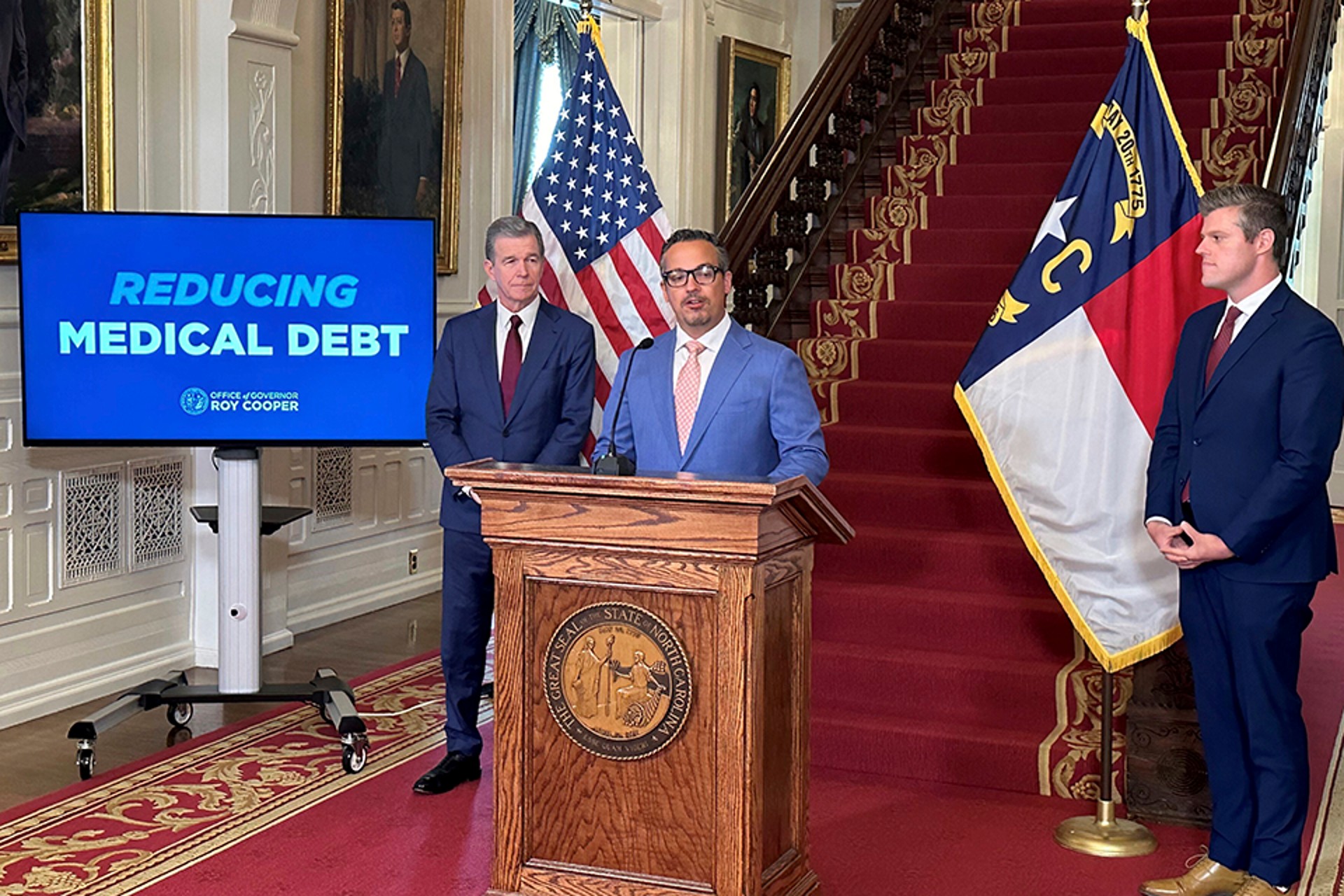

Medical debt is an issue that affects over 100 million Americans, and Vice President Harris has made ending it a key part of her economic platform. Americans are sick and tired of high health care costs, crushing debt, and deteriorating coverage. Ending medical debt is a winning issue, and Democrats should lean in.
Third Way has been working on medical debt relief for two years, both on the substance and the politics. We have conducted qualitative and quantitative public opinion surveys that show both the political benefits and the traps for this game-changing policy idea. We offer four recommendations for how Democrats can make the most of this issue and avoid the traps.
1. Frame medical debt as “it can happen to you.”
Health care costs are too high, insurance coverage is often thin, and catastrophic accidents and illnesses can happen to anyone. As a result, over 100 million Americans (4 in 10 adults!) have medical debt, with nearly two-thirds owing more than $1,000. It affects people of all genders, races, political beliefs, incomes, and backgrounds.
The consequences of medical debt can be devastating. People deplete their life savings, take hits to their credit, stop seeking medical care, declare bankruptcy, and lose their homes. Notably, medical debt disproportionately affects middle- and working-class families. Nearly 17% of middle-class households and 15% of low-income households had medical debt in 2021, compared to just under 10% of high-income households. And this is likely an underestimation due to the difficulty of tracking medical debt. This creates a stark contrast to the student loan forgiveness conversation, where the main beneficiaries are college-educated and usually have higher incomes. Ending medical debt would be a major boost for middle- and working-class families.
2. Address the traps upfront.
Like student loan forgiveness, medical debt relief can be open to the charge of incentivizing irresponsible behavior and abuse. If people can always have their medical debts wiped clean, some people might not get health insurance, which would increase health insurance premiums for everyone. That’s why medical debt relief must go hand in hand with making sure everyone has health coverage. In the near term, it is important to give people a clean slate, but once coverage is truly affordable and adequate, debt relief should be tied to having coverage.
Unlike student loan debt, medical debt is involuntary. People decide whether or not to go to college or graduate school; they don’t decide whether or not to get sick or have a medical emergency. That’s why medical debt relief should only be for medically necessary procedures, not elective procedures like cosmetic surgery.
3. Hospitals are key to the problem and solution.
Big hospital systems are overcharging patients for services and then often coercing patients to pay up—even when they can’t afford it. At the same time, big hospitals are making record profits. They flourish while the middle class gets hammered.
It is only fair for hospitals to offer financial assistance to people who cannot afford the care, either because they do not have insurance or their coverage is insufficient. For those that do incur debt from hospitals, debt relief should only pay providers pennies on the dollar for outstanding bills. This will make sure hospitals don’t abuse debt relief by billing even more for care. Non-profit hospitals, the most common type of hospital, especially need to step up. Right now, they give less charity care than for-profit hospitals, despite receiving billions of dollars in breaks from federal, state, and local taxes.
Voters are most worried about costs and inflation. Policymakers can make the medical debt conversation about the high cost of health care.
4. This is the next step for the ACA.
Preventing medical debt in the long-term means ensuring that everyone has affordable, adequate coverage. The Biden-Harris Administration has made health insurance far more affordable by expanding the Affordable Care Act (ACA). There’s still more work to be done to improve coverage for people with high deductibles, including millions of workers with low- and moderate-income jobs that often have poor coverage.
Deductibles and caps on patients’ costs should fit each person’s budget. Washington needs to improve the ACA’s cost caps on premiums and out-of-pocket costs—and apply them to everyone. They also need to expand Medicaid in holdout states so that working-class families can afford the care they need.
Done right, medical debt relief should make our health care system better and less expensive for everyone—more people would be insured, hospitals and providers would reform their pricing, and millions of Americans would be relieved of billions of dollars of oppressive debt. We want a future where no one in the United States is burdened by medical debt.