Report Published May 27, 2025 · 9 minute read
The Increased Risk of Waste, Fraud, and Abuse in Trump 2.0
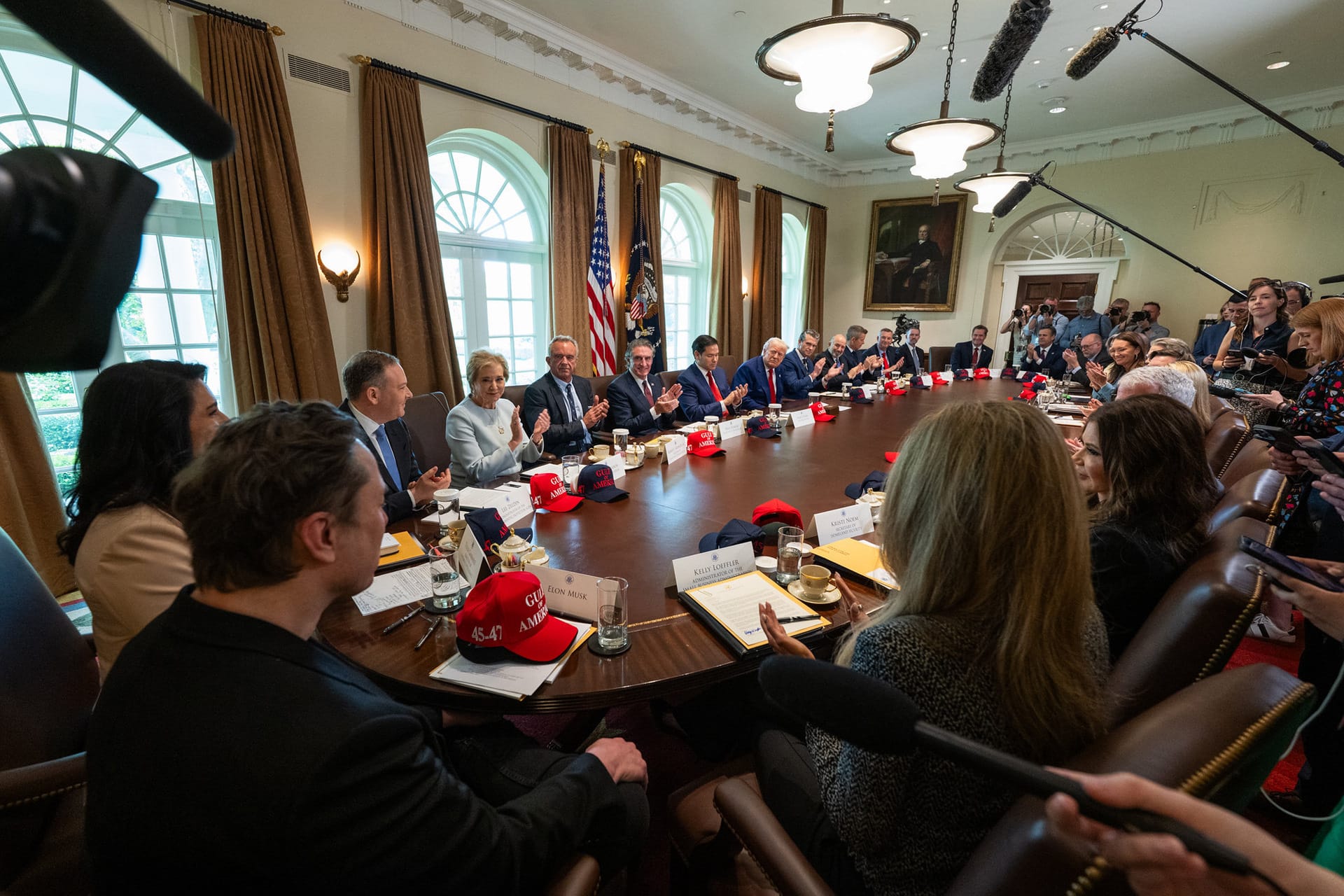

“Waste,” “fraud,” and “abuse” are not just tired old words in Washington anymore. They are the bumper stickers for the second Trump Administration. If you thought waste and fraud were problems in Trump 1.0, the new administration is destroying guardrails and slashing government processes in the name of efficiency. In the end, however, it will likely cause more problems than solutions.
As policymakers look to root out waste, fraud, and abuse—a critical task no matter the administration—they should focus less on dismantling the IRS and Social Security Administration and more on two big problems the Trump Administration is causing:
- Indiscriminate cuts lead to more waste, fraud, and abuse.
- Elon Musk is supersizing the risk of corruption.
Over the last year, Third Way has highlighted opportunities to improve government efficiency and reduce waste, fraud, and abuse—often referred to as program integrity initiatives. We’ve explained how current program integrity efforts work and how they are underfunded. We have also explored specific challenges in improving unemployment insurance and suggested ways program integrity could be expanded. For more on this topic, see our collected work here.
Indiscriminate Cuts = More Waste, Fraud, and Abuse
Donald Trump came in on a wrecking ball. In his first few weeks in office, he removed dozens of senior career officials, including many inspector generals, and gave the Department of Government Efficiency (DOGE) free reign to slash payments and fire workers. Trump and DOGE chief Elon Musk are sidelining those with the knowledge and position to truly enact good government reform. Yet, these actions will actually increase waste, fraud, and abuse and distract from reliable efforts to counter it.1 The Trump administration, aided by Musk, says that they are achieving their goals, although multiple credible sources have questioned the accuracy and scope of these claims. In fact, their actions could end up helping frauds and cheats in the long run. Here are five examples of how indiscriminate cuts lead to more waste and fraud:
1. “Cancelling” IG Watchdogs: Trump fired 17 inspectors general in January, and lawsuits seeking to reinstate them are winding their way through the federal courts.2 Inspectors general are on the front lines of combatting waste and fraud—and saving the government money. With a collective budget of $3.5 billion, the 74 Offices of Inspector General produced an estimated $93.2 billion in savings in FY 2023—a return of $26 for every dollar spent.3
2. Making it easier to cheat on taxes: While millions of people pay their taxes correctly and on time, some don’t. The tax gap (the difference between what is owed and what is collected) is growing and was estimated at $606 billion for the 2022 tax year.4 That’s why Internal Revenue Service (IRS) enforcement is critical—to ensure people pay what they owe and to ensure the government gets funded. Congress initially dedicated $79 billion in new funding to IRS modernization in the Inflation Reduction Act (IRA).5 The IRS has used the funds to improve taxpayer services, update computer systems, and increase tax compliance. For example, the IRA funds helped pay for more 16,000 employees in FY 2024.6 But DOGE is upending that work, laying off 7,000 probationary employees in February, putting 50 IT executives on administrative leave in March, and facilitating around 4,000 in buyouts.7 Former IRS officials have said the disruption would benefit “sophisticated” taxpayers who are skilled at dodging taxes.8 The federal government could lose at least $400 billion—and as much as $2 trillion—over the next decade if 50% of the IRS workforce is cut.9
3. Weakening cyber and critical infrastructure: Federal cybersecurity initiatives and other critical infrastructure protections need to be expedited. These efforts protect products and programs that are essential for the daily life of Americans, ranging from financial services to drinking water systems.10 That’s why the US Government Accountability Office (GAO) recommended that the government undertake specific critical actions to “address cybersecurity workforce management challenges” and “appropriately limit the collection and use of personal information and ensure that it is obtained with appropriate knowledge or consent.”11
Unfortunately, DOGE has been more focused on breaking IT infrastructure to give its team access to private data on American citizens than toughening cyber resistance to foreign adversaries. It depleted cybersecurity staff at critical agencies and forced its way into sensitive and critical data systems that include personal information on millions of Americans.12
4. Setting VA health care and cost control back: Substantial amounts of health care spending within the US Department of Veterans Affairs (VA) is automatic and growing. The Veterans Health Administration is expected to grow from $138 billion in FY 2024 to $198 billion within 10 years.13 Of that around 93% is for health services—not paperwork.14 But the systems that back this veterans’ service will have major challenges in the coming years. For example, there are failures in electronic health record modernization, and DOGE reportedly cancelling related contracts won’t help.15 In addition, oversight will be needed in the growing costs of providing long-term and community care.16
However, DOGE has laid off nearly 2,000 VA employees and plans to get rid of 81,000 more.17 This means fewer resources to work on increasingly complex and expensive challenges. DOGE’s actions may even be threatening patient safety. VA employees have highlighted that canceled contracts related to sterility certification for hospital operations, facility air quality, and services to decontaminate medical equipment are all in jeopardy.18
5. Introducing more risk for federal contractors: In just over three months, DOGE has already caused considerable disruption to government services through layoffs and canceled contracts. Canceling contracts creates risk for US contractors and collaborators—and risk is expensive. So is cancelling a contract. Existing law requires the federal government to pay for three things: the initial costs of cancelled work, work already provided, and additional settlement costs.19 The law also provides a right to appeal, so administrative bodies and courts that deal with contractor appeals are likely to be very busy in the coming months—more waste funded by US taxpayers.20
Elon Musk is Supersizing the Risk of Corruption
Elon Musk is a successful billionaire whose companies collect billions of taxpayer dollars through government contracts. Many of his first actions working with the Trump Administration involved cutting the agencies that he contracts with, suggesting serious conflicts of interest and undermining his claimed mission to reduce waste, fraud, and abuse.21
It’s hard to recall another presidential administration when a single wealthy individual simultaneously possessed so much political power and so much market power. Musk’s time as a “special government employee” may be over, but that doesn’t mean he won’t be made one again or that he doesn’t still have close contacts with the President and DOGE. Here are three ways his access and influence increase the risk of corruption:
1. Circumventing appropriations: Elon Musk is superseding a democratically-elected Congress in matters of federal spending, upending the balance of powers set out in the Constitution. When appropriations committees write spending bills, lawmakers specify staffing levels and activities covered by the funds. Despite shortcomings in the budget and appropriations process, every Member of Congress weighs in—as the Framers intended.
Musk and key Trump administration operatives are essentially pursuing impoundment, a procedure that allows a President to withhold funds he doesn’t agree with—a practice that was broadly restrained following the Nixon administration and the 1974 Congressional Budget and Impoundment Control Act.22 The result? A complete neutering of a branch of government—allowing a single person to void the work of the peoples’ representatives.
2. Elon and friends get federal money: Contracts make up around 12% of federal spending. In FY 2023, the federal government spent $759 billion on contracts out of $6.1 trillion in total spending—more than half of which goes to the Department of Defense.23 Companies connected to Musk have already been awarded at least $38 billion in federal contracts over the past two decades.24 Many now expect that reach to expand: Starlink within the Federal Aviation Administration, Tesla within the Department of State, and SpaceX within the Department of Defense, among others.25 Congressional investigators have argued that Musk’s businesses are more reliant on government funds than many of his competitors, and Musk is in a position to influence policies in a way that hurt his competitors. This creates a clear conflict of interest.26
In March, Trump issued an executive order consolidating federal contracting under the General Services Administration (GSA), a process that is expected to extend into the summer.27 This centralized control could make it easier for the administration to extend favors to industries where Trump has key allies and donors. This includes the top five highest-value procurement categories: facilities and construction, professional services, IT, medical, and transportation and logistics.28 Examples have already emerged: GSA selling publicly-owned buildings to private companies while the brother of the acting head of Trump’s GSA bids for federal property and enhanced use of private security firms for defense and immigration functions including proposals from Trump orbiter and defense contractor Erik Prince.29
3. Crushing investigations in his companies: Musk has also targeted regulatory agencies that have launched investigations into his companies.30 SpaceX has been subject to investigations and regulatory battles from the Departments of Transportation, Interior, and Justice, as well as the National Labor Relations Board (NLRB). Tesla has been subject to actions from the Consumer Financial Protection Bureau, the Equal Opportunity Employment Commission, and NLRB. Combined, these departments and agencies SpaceX has been subject to investigations and regulatory battles from the Departments of Transportation, Interior, and Justice, as well as the National Labor Relations Board (NLRB). Tesla has been subject to actions from the Consumer Financial Protection Bureau, the Equal Opportunity Employment Commission, and NLRB. Combined, these departments and agencies have lost at least 4,200 employees under DOGE.31 While several federal investigations into Musk’s companies are ongoing, the connections between agency oversight and DOGE layoffs have been notable enough to elicit concern from senators and members of the House Judiciary Committee.32 The inspector general for USAID, an agency which was effectively dismantled by DOGE, launched an investigation into Starlink’s activities in Ukraine in May 2024, and the IG himself was fired.33
Conclusion
Policymakers should limit the damage the Trump administration is inflicting on the proper functioning of government. It may be claiming to act in the name of efficiency, but picking up the pieces will waste time, effort, and money.
Government inefficiency is a long-running trope, but, for all our imperfections, our agencies have been the envy of much of the world—professional, nonpartisan, and cost-effective. Now the federal government’s capacity to serve the people of this country is being curtailed and corrupted. We reduce waste, fraud, and abuse by doing better—not by abandoning our responsibilities to each other.