Report Published January 2, 2013 · Updated January 2, 2013 · 8 minute read
Fuel Costs Squeeze Defense Budget
Mieke Eoyang, Julie Zelnick, & Ryan Fitzpatrick
Takeaways
In this digest, we:
- Outline how rising fuel costs threaten DOD’s budget; and
- Identify solutions that could help the Department cut oil consumption while preserving or enhancing mission capability.
The Department of Defense is the single largest consumer of liquid fuels in the world, and its fuel costs are rising at an alarming rate. Under current legislation, the defense budget will be virtually flat over the next 10 years. If the Pentagon does not fully embrace energy efficiency, fuel costs will make up an increasing share of its budget, crowding out other priorities.
Given the stakes, Congress should consider DOD fuel efficiency a national security priority, and it should use its budgetary and oversight functions to ensure that the Pentagon is proceeding aggressively with an effort to cut its fossil fuel consumption. Cutting funds for efficiency initiatives would be a mistake.
DOD’s Fuel Problem
In 2011, Congress passed the Budget Control Act, which put long-term limits on defense spending as part of a broader effort to curb the federal budget deficit. Though the Department of Defense (DOD)’s budget will grow over the next 10 years, it will rise at a smaller rate than previously projected. In real terms, this means DOD’s buying power remains constant, and rising costs in one area will come at the expense of others.1
As someone who now faces a budget shortfall exceeding $3 billion because of higher-than-expected fuel costs, I have a deep interest in more sustainable and efficient energy options.
— Leon Panetta, Secretary of Defense, May 2, 20122
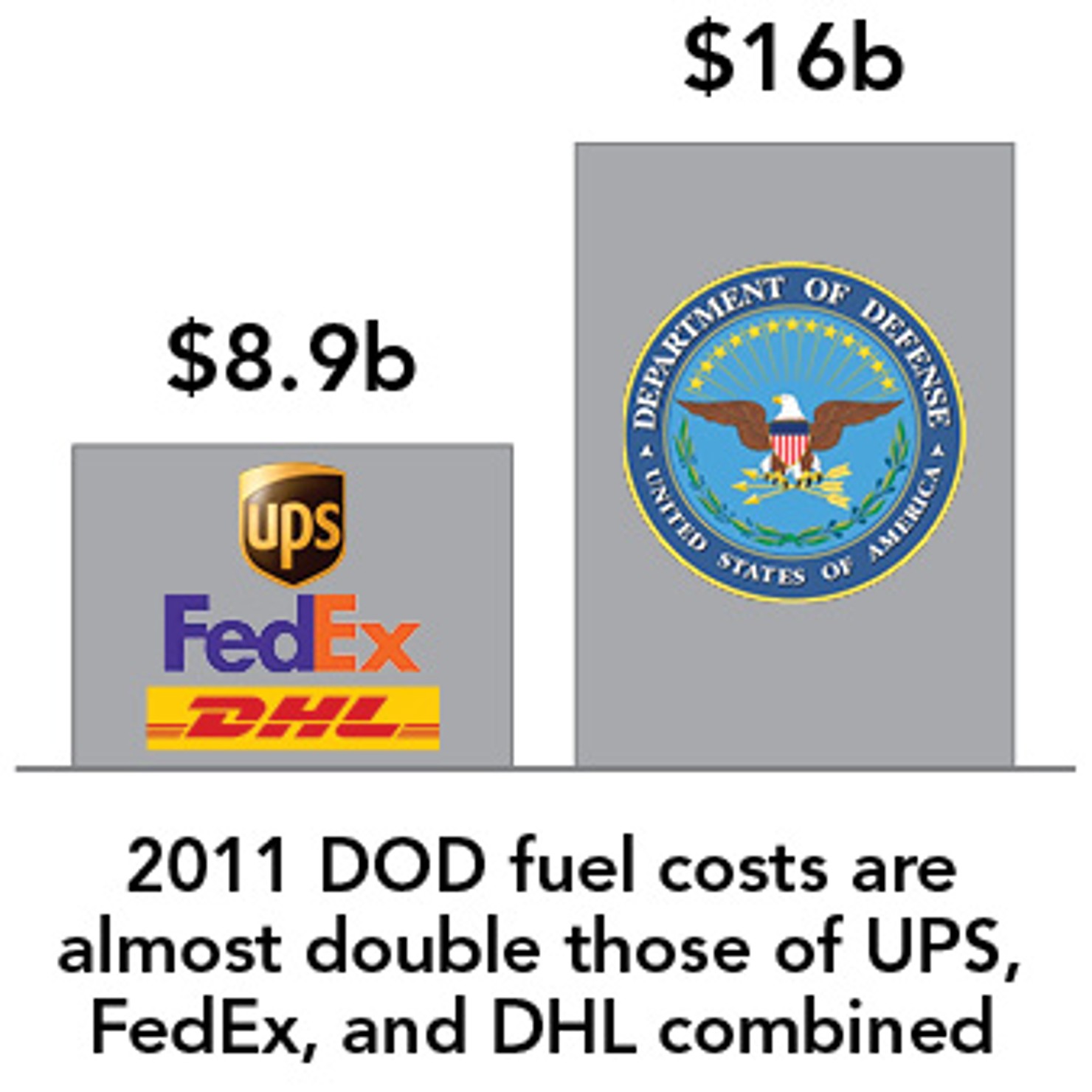
Given this budget reality, DOD must find efficiencies where it can. One place to do so is fuel—a critical component of military operations, especially for ground vehicles, ships, and aircraft. DOD spends about $16 billion on fuel each year—almost double what UPS, FedEx, and DHL spend on global shipping operations combined.3
With such extraordinary levels of consumption, even small fluctuations in oil prices impact the defense budget. An increase of $10/barrel of oil, if sustained for a year, will cost the Department $1.3 billion.4 This sensitivity presents a national security risk and underscores DOD’s serious need for energy efficiency.5
Rising oil costs will crowd out other DOD priorities, like training and weapons aquisition.
Solutions to the Fuel Crunch
DOD recognizes that its reliance on fossil fuels poses a threat, both to military capability and to its tightening budget. To solve this problem, each service has committed to reducing its dependence on oil by investing in new technologies. Cutting these would be a mistake.
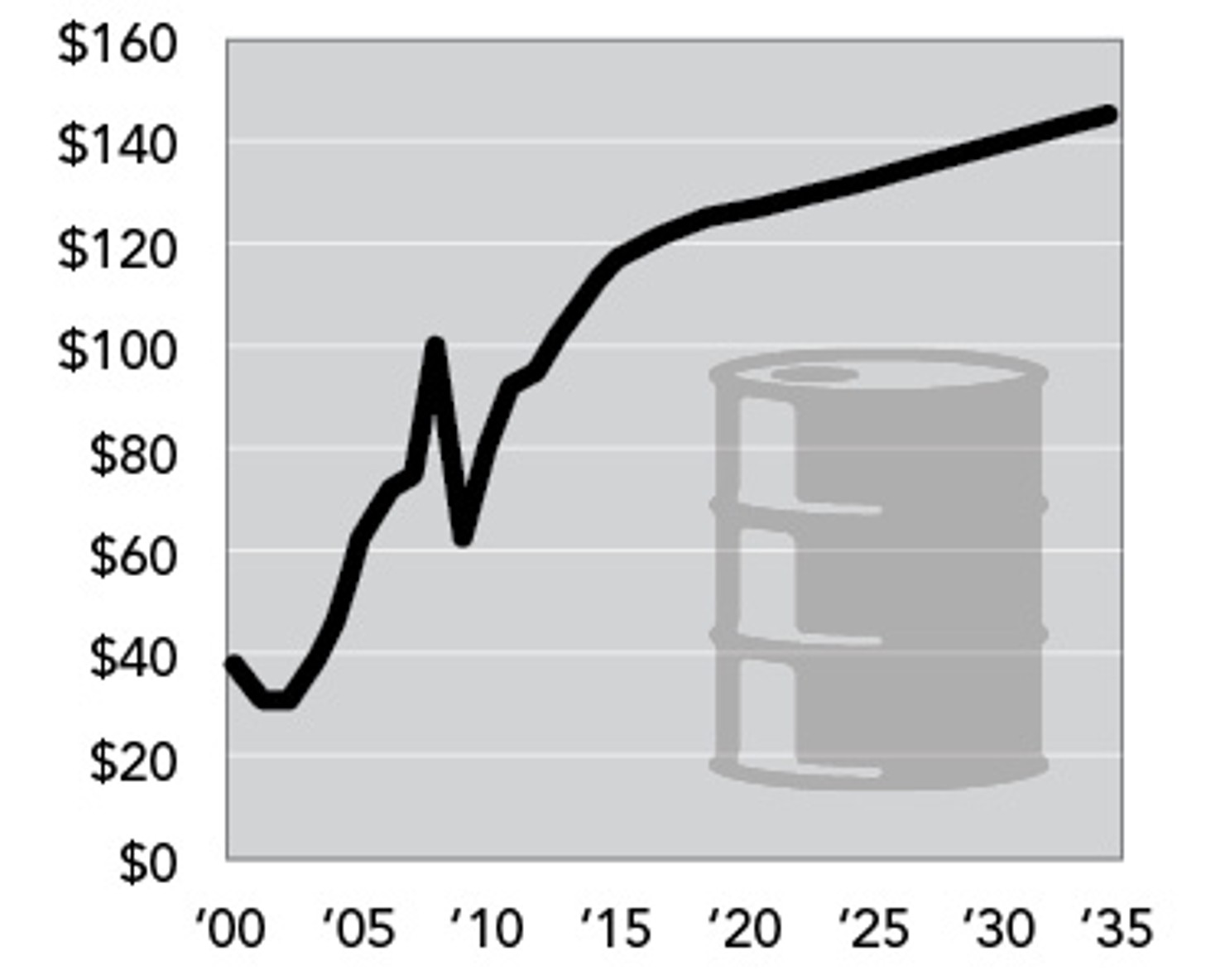
Rising Oil Cost (real 2010 dollars per barrel)6
There are at least three areas of improvement where the Department can reduce its demand for fuel in ways that either assist or leave unchanged the tools available to our warfighters:
1. Making small changes in behavior to yield fuel savings
Major shipping companies already know that changes in behavior—like shifting routes and checking tire pressure—can yield big savings in fuel costs.7 While DOD faces different challenges, it too can look for changes in the way it operates to save fuel. For example, the Air Force uses 64% of DOD’s petroleum (mainly jet fuel). To cut costs, the Air Force is increasing its use of simulators to replace time in the air burning fuel. It has made diplomatic arrangements to fly over foreign countries to cut flight times, changed flight speeds, and even moved cargo to different parts of its aircraft to conserve fuel.8 Currently, the Air Force is on track to save a total of $500 million over the next five years through reduced fuel costs.9
2. Investing in fuel-saving technologies and oil alternatives
DOD has spent millions of dollars developing technologies that will reduce its reliance on petroleum and has identified specific technologies that could drastically increase efficiency and lower fuel expenses.10
- DOD created the Adaptive Versatile Engine Technology (ADVENT) program, partnering with major engine producers to develop more fuel efficient engines that can be used in existing aircraft.
- The Army, through its Tank Automotive Research and Development Engineering Center, is developing vehicle fuel cells, hybrid engines, and batteries.
- The Navy has developed an Amphibious Assault Ship with a hybrid electric drive system that saved $2 million in fuel costs on its maiden voyage and is expected to save $250 million over the life of the vessel.11
- Fuel conservation even took place off the battlefield. The Army recently invested $108 million in more efficient power production and distribution across its bases in Afghanistan.12 These projects are expected to replace over 500 generators, saving 17.5 million gallons of fuel annually (the equivalent of removing more than 7,000 fuel trucks from dangerous roads). The investment should pay for itself in less than one year, according to DOD officials.
- DOD has invested in testing advanced biofuels.13 Its goal is to ensure military readiness and improve flexibility on the battlefield. The military services are positioning themselves to take advantage of these fuels when they are cost-competitive with conventional fuels, which will provide greater security from foreign oil volatility and savings in the long term. While some in Congress object to the high initial costs of developing these fuels, the expenditures represent less than 10% of DOD’s operational energy improvements.14
Crude oil prices are expected to rise 23% by 2016.15 Investing now in oil alternatives will help drive down long-term costs.16
3. Considering Fuel Costs in the Acquisition Process
DOD can also change its buying practices. Right now, DOD doesn’t have the data-collection tools in place to measure how much fuel its services consume. It’s hard to identify savings when the total fuel budget is a mystery, and DOD needs a method for measuring energy consumption and then making informed decisions.17 DOD’s Office of Operational Energy Plans and Programs has begun to implement such a method, but it must remain a high priority for the entire Department.18
Air Force Fuel Budget (in millions)19
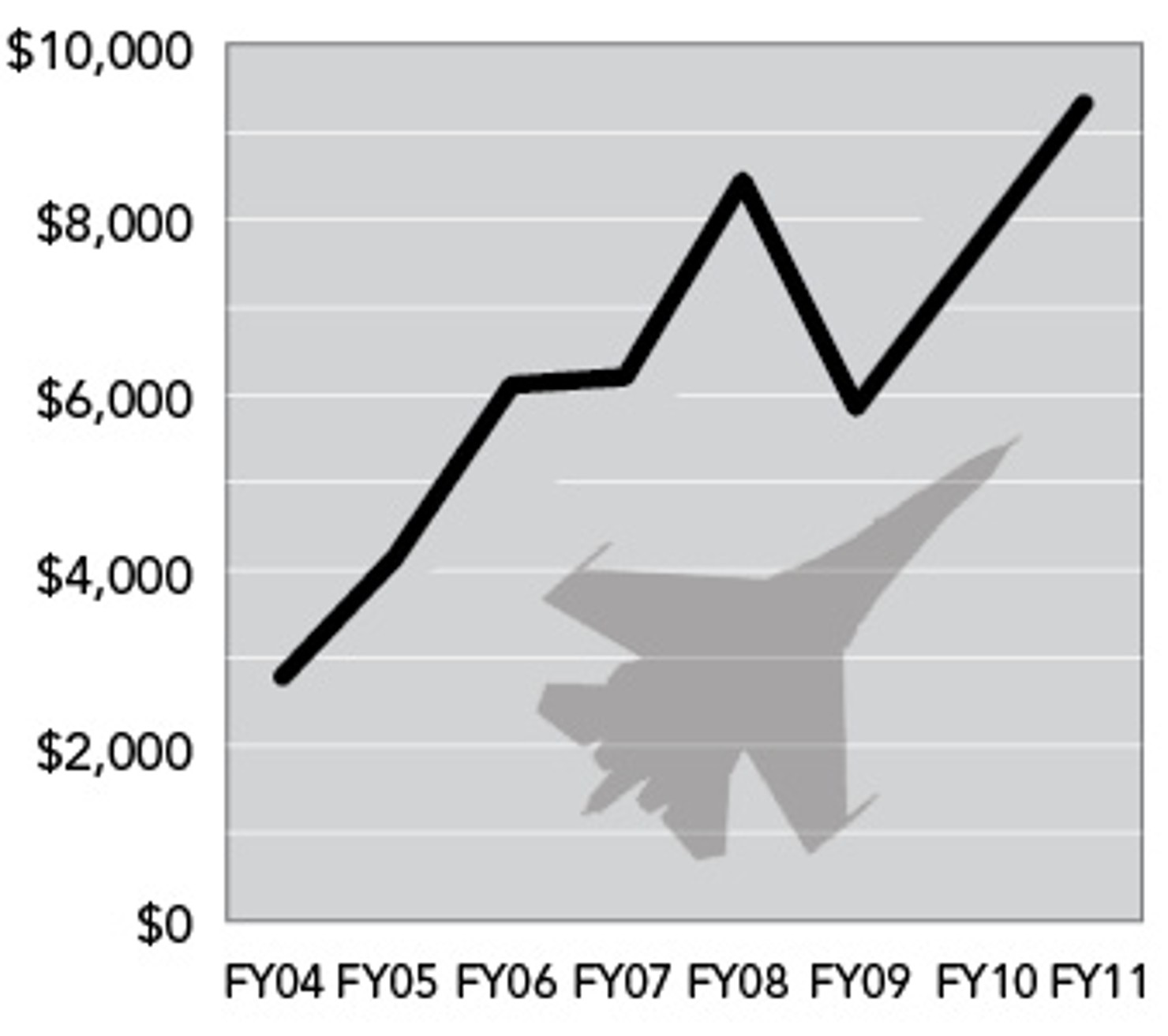
DOD can also do a better job of understanding its fuel costs. The military, after all, doesn’t simply pull into a local gas station and pay the price at the pump. It has to bear the additional costs of delivery to some of the most remote places in the world, all the while facing threats to fuel convoys. Though the commodity cost of jet fuel might be less than $3/gallon on a given day, the “fully burdened cost” of that fuel could end up being as high as $50/gallon.20 Taking this total cost (transportation and security) into account when planning missions and purchasing equipment should encourage DOD to place a higher value on energy efficient technology.21
DOD Goals and Metrics for Energy Efficiency22
Army | 16 Net zero energy, waste, and/or water installations by ‘20, and 25 at home and/or abroad by ‘30. |
Navy | Increase efficiency, reduce fuel consumption afloat 15% by ‘20. |
Air Force | Increase aviation energy efficiency by 10% by ‘20. |
Marine | Increase energy efficiency on the battlefield to cut fuel consumed per Marine per day 50% by ‘25. |
Americans know that over time, a more efficient car with a slightly higher sticker price can cost less than a cheaper gas-guzzler. The military should consider the price of its systems the same way—not just the “fly-away” cost, but the systems’ lifetime costs. If DOD made “life-cycle costs” part of the decision-making process for acquiring new platforms, it would save it—and the taxpayer—money.
Congress and DOD Fuel Efficiency
Congress has already taken steps to support this effort. In 2010, it created the position of Assistant Secretary of Defense for Operational Plans and Programs, which oversees DOD’s use of energy to improve military capabilities and lower costs.23
However, some in Congress have failed to recognize the urgent national security priority of reducing DOD’s oil consumption and have failed to support—or have even attacked—these efforts on partisan or ideological grounds. At a March 2012 House Armed Services Committee hearing, one Republican Member accused the Department’s leadership of an “anti-fossil fuel attitude."24
This is the opposite of what pro-defense Members should be doing. Congress must recognize that America’s military strength increasingly will rely on our ability to diversify our fuel supply, operate more efficiently, and cut military fuel costs.
Fuel efficiency is fundamentally a national security priority. Without it, DOD will spend an ever-increasing percentage of its budget on oil—at the expense of other priorities. The Pentagon has plenty of ways to improve efficiency while maintaining the effectiveness and lethality of our military. Indeed, in many cases, fuel efficiency improves our fighting capability. Congress must support the Department in these efforts.