Beyond the Midterms: What Battleground Latino Voters Want From the 2028 Field
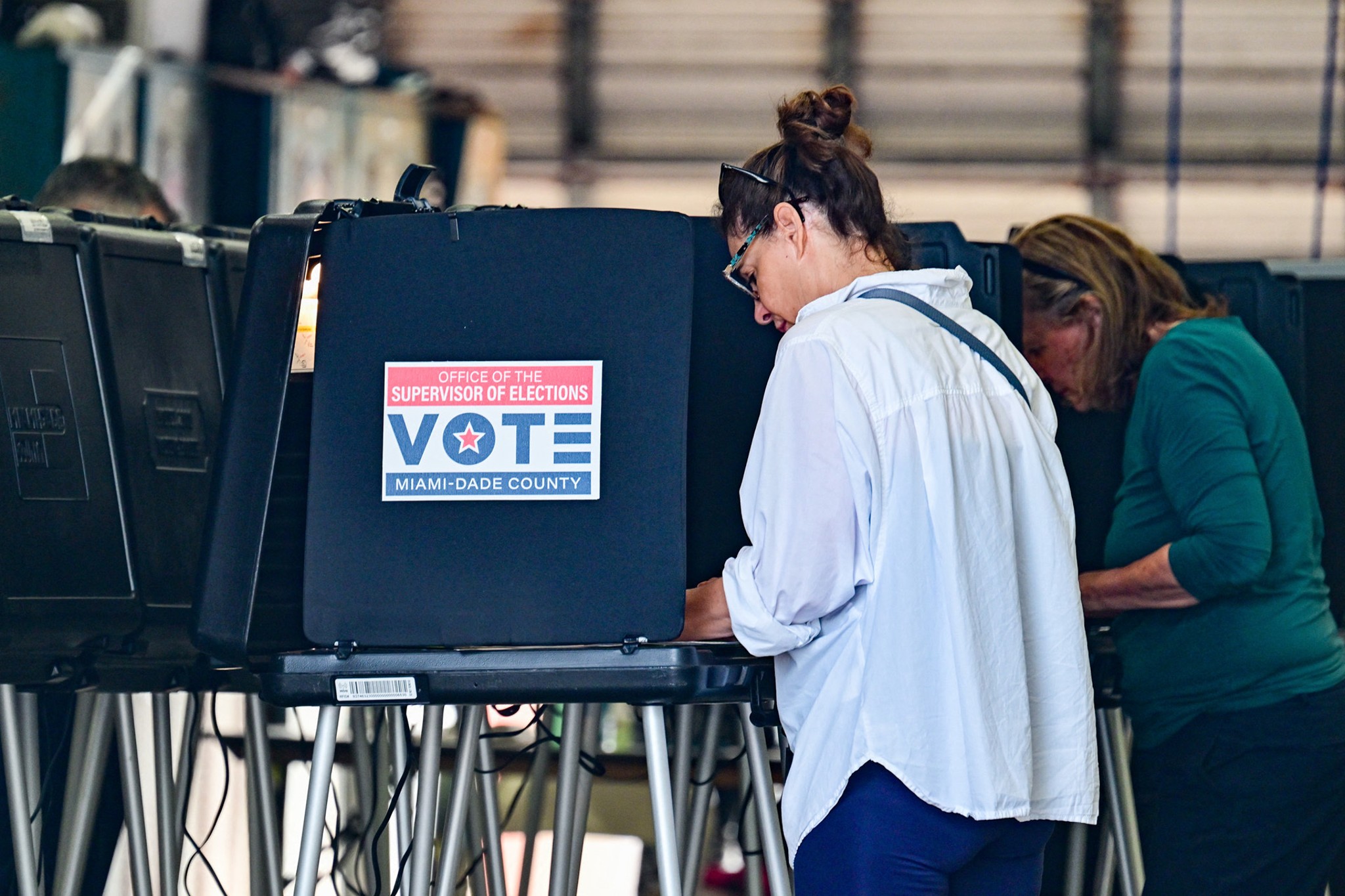
Two years after Donald Trump made historic gains with Latino voters, the 2026 midterms brought a sharp reversal. Latino voters swung back toward Democrats amid deep frustration with the cost of living, growing anger over the Administration’s sweeping immigration enforcement campaign, and overall a pervasive sense that the president and his party were focused on the wrong priorities. While immigration was not their top priority, there is emerging evidence that the Administration’s aggressive and indiscriminate enforcement practices helped change Latino voters’ sentiment toward Trump and his party. By failing to keep his promise to focus enforcement on the “worst of the worst” and instead making immigration enforcement a concern for entire communities, regardless of individual immigration status, the Administration made the issue personal for millions of Latinos.
But as the 2028 presidential primaries kick off, Democrats should not confuse a backlash against Trump with either a rejection of immigration enforcement or a full restoration of their own credibility on the issue. In September, Third Way worked with Normington Petts to survey 700 registered voters in the seven presidential battleground states of Arizona, Georgia, Michigan, Nevada, North Carolina, Pennsylvania, and Wisconsin. This survey also included an oversample of 200 Latino voters and reveals a nuanced picture. Most Latino voters in these battleground states disapprove of Trump’s enforcement approach, but continue to support border security and targeted deportations. And despite their dissatisfaction with Trump, they remain divided over which party they trust to handle immigration.
Perhaps most strikingly, our polling reveals broad agreement among Latinos across party lines on what they want instead: an immigration system that combines border control, targeted enforcement, and opportunities for long-term immigrants to earn legal status. The results help distinguish what Latino voters rejected in 2026 from the policies they continue to support headed into 2028.
Buyer’s Remorse: From Border Confidence to Enforcement Backlash
The 2026 midterm election results show a steep drop in Latino support for Donald Trump and his party, driven in part by his chaotic and indiscriminate mass deportation campaign. Many Latino Trump supporters expected immigration enforcement to focus on recent arrivals and dangerous criminals. Instead, they witnessed sweeping enforcement that created fear across Latino communities.
Trump’s 2024 gains among Latino voters reflected, in part, confidence in his ability to secure the border. In September 2024, 47% of registered Latino voters in an NBC News/Telemundo/CNBC poll believed Trump would do a better job securing the border and controlling immigration, compared with just 34% for Kamala Harris. Just two years later, that confidence has given way to widespread dissatisfaction: in an October 2026 NBC News/Telemundo poll, 67% of the registered Latino voters said Trump’s immigration enforcement had gone too far.
Sixty-six percent of Latino 2024 Trump supporters surveyed by Equis Research had believed he would narrowly target enforcement on new arrivals and violent criminals. Instead, what they experienced was an indiscriminate approach to immigration enforcement, which has leaned heavily on racial profiling and has led to the detention of more than 500 U.S. citizens. It made immigration a personal concern for many Latinos regardless of their own immigration status. The same NBC News/Telemundo poll found that 31% of Latino voters said they or someone close to them had started carrying identification out of fear of ICE, while 27% knew someone who had been detained or deported by ICE in the past two years. In its post-election poll, UnidosUS found that 63% of Latino voters worried that they, their families, or their communities could be targeted by the government based on characteristics such as race, language, or national origin.
Third Way and UnidosUS polling conducted in March of this year found that 70% of Latino voters surveyed agreed with the statement that “President Trump and Republicans have gone too far. We need an effective border and immigration system, with enforcement that respects the rights and safety of American citizens and non-citizens alike.”
Presidential battleground Latino voters were more critical than the broader electorate, though only modestly: 61% of presidential battleground Latino voters in Third Way’s poll disapproved of Trump’s immigration enforcement compared to 58% of all presidential battleground voters. And when asked about ICE, 60% of presidential battleground Latino voters viewed ICE unfavorably, compared with 53% of the broader presidential battleground electorate.
A Latino Rebound Is Not the Same as Restored Trust in Democrats
Democrats regained substantial Latino support in 2026. But the results are not proof that voters have regained confidence in the party’s ability to manage immigration. Third Way’s September polling found presidential battleground Latino voters essentially split on which party they trust on immigration: 43% Republicans, 40% Democrats. On the issue of border security, Republicans held a 21-point advantage.
Despite widespread dissatisfaction with the Trump Administration’s approach to immigration enforcement, Latino voters are still split on who they trust on immigration, with Republicans maintaining an advantage on border security. Democrats have an opportunity to earn that trust by embracing a clear vision for immigration and border security that prioritizes both order and fairness, and by demonstrating that they can deliver meaningful change.
After the election, Equis Research president Stephanie Valencia told USA Today that Democrats are entering a “probationary period” and will need to deliver on prices, immigration, and the wars abroad. The warning captures the difference between gaining voters in a midterm backlash and earning sustained confidence. Neither party can assume that a favorable election result settles those questions.
Across Party Lines, Latino Voters Want Both Order and Opportunity
While Latino voters are dissatisfied with Trump’s enforcement approach and remain skeptical of Democrats’ ability to handle immigration, they are remarkably consistent in what they want from the immigration system: both order and opportunity.
Third Way’s polling makes clear that opposition to Trump’s enforcement campaign is not necessarily opposition to immigration enforcement itself. While 38% of presidential battleground Latino voters supported abolishing ICE, 29% preferred major reforms to the agency and 33% said ICE should continue deporting people who are in the country illegally. And the vast majority of voters who say ICE should be abolished say that means there should be a different approach to immigration enforcement, not an end to it entirely. From March 2026 polling by Equis, among those who believe ICE should be abolished, 85% of Hispanics and 82% of non-Hispanics say that this should mean either redirecting ICE funds to other agencies or starting a new immigration enforcement agency. Just 14% of Latinos and non-Latinos who say they think ICE should be abolished believe “there should no longer be any form of immigration enforcement.”
Earlier Third Way and UnidosUS polling found that 68% of Latino voters supported targeted enforcement to remove undocumented immigrants with a criminal record or those who are recent arrivals without legal basis to stay.
The strongest agreement emerged when voters were presented with an affirmative vision for immigration reform. Of the nine messages Third Way tested, Latino voters gravitated to those emphasizing both order and opportunity. The two most popular messages among presidential battleground Latino voters paired border security and consequences for immigrants who have been convicted of violent crimes with pathways for long-term immigrants to earn legal status. The top performing messages for Latino voters were also the top two messages for the broader battleground electorate.
Critically, these messages also cast immigrants as contributors. The top two messages identified pathways to legal status for “people who have been contributing to our communities for years” and for “long-term immigrants who contribute to our country.” Both messages received support from at least 80% of Latino voters and the broader presidential battleground electorate.
These messages also had broad cross-partisan support among Latino voters. The “Back to Basics” message had support from 84% of Latino Democrats, 82% of Latino independents, and 83% of Latino Republicans. The “Nation of Laws, Nation of Immigrants” message had support from 86% of Latino Democrats, 77% of Latino independents, and 83% of Latino Republicans.
New post-election polling from UnidosUS reinforces these findings. An overwhelming 90% of Latino voters supported a balanced immigration system combining border security, accountable enforcement, legal immigration pathways, and opportunities for long-term immigrants to earn citizenship. That included 88% of Latino Republicans.
Latino voters may disagree about which party they trust to handle immigration, but they express remarkably similar views about what a functioning immigration system should look like. Across party lines, they want a secure border, enforcement focused on genuine threats, and realistic ways for people who contribute to the country to gain legal status.
Conclusion
The 2026 midterms exposed the political costs of an immigration enforcement campaign that went far beyond what many Latino voters expected. But the election results should not be mistaken for a wholesale rejection of immigration enforcement or proof that Democrats have restored Latino voters’ confidence in their ability to effectively manage the immigration system and secure our borders.
Third Way’s polling reveals a more nuanced picture. Latino voters want a government that can maintain control of the border, enforce immigration laws responsibly, and create opportunities for immigrants who contribute to the country. These preferences are remarkably consistent across partisan lines, even as trust in the parties remains divided.
In the 2026 election, Latino voters shifted their support back to Democrats, but it did not settle the question of which party can deliver the immigration system they want. For the emerging 2028 presidential field, the lesson is clear: Latino voters are not asking candidates to choose between border security and immigrant opportunity. They want both. The candidates who can credibly promise—and ultimately deliver—an immigration system built on those principles will be better positioned to earn their trust.



Latest Publications
Don’t Raise Your Hand, Raise Your Game: The 2028 Primaries Will Define the Democrats’ Next Immigration Agenda
Immigration First: How a $240 Billion Surge is Reshaping Criminal Justice
Winning the Fight on Crime and Public Safety
Battleground Democrats Aren’t Ducking the Immigration Fight
Never Miss an Update
Sign up for updates on the pragmatic, center-left ideas shaping the future of American policy.