What Do Americans Want From Permitting Reform?
Takeaways
- Americans are feeling squeezed by rising energy costs. 78% say their household energy bills have increased over the past year.
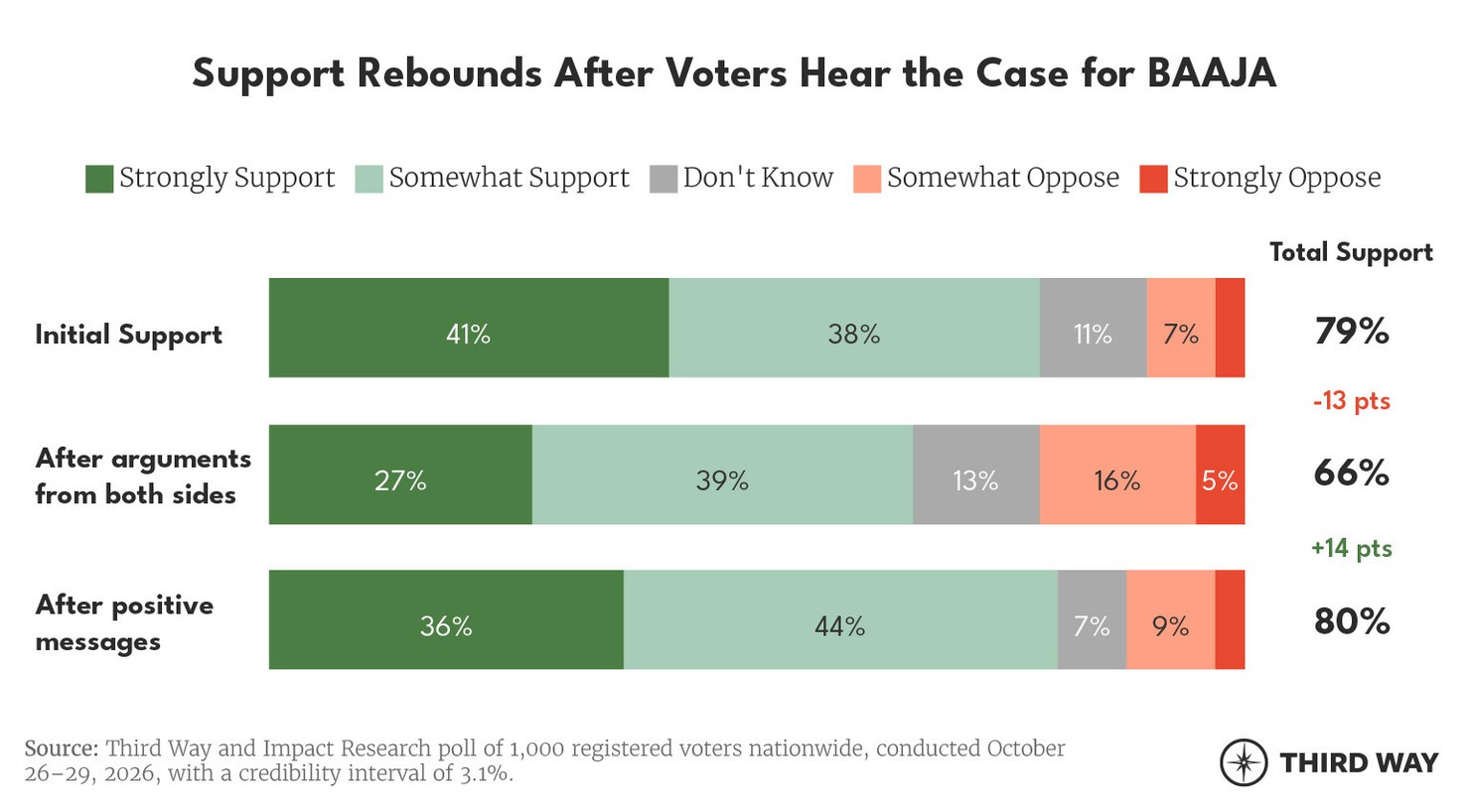
- BAAJA has broad bipartisan appeal. After an initial description, 79% of voters support the permitting reform bill, and even after hearing arguments against it, 66% of voters support the bill.
- The benefits that resonate most with voters are those they can see in their own lives. That includes lower bills, more jobs, better infrastructure, and ensuring data centers pay their fair share.
Electricity bills are rising across the country, and the Senate is currently weighing a bipartisan bill to help bring them down. The Bipartisan American Affordability and Jobs Act (BAAJA), introduced by Senators Sheldon Whitehouse (D-RI), Martin Heinrich (D-NM), Shelley Moore Capito (R-WV), and Mike Lee (R-UT), would speed up federal permits for power lines and energy projects and require data centers to pay for the grid costs they trigger.
While permitting reform may be a priority for Washington, it is hardly a familiar household issue. The question is whether Americans see value in the legislation’s promises and predicted outcomes. New research from Third Way shows that the answer is a resounding yes.
To better understand whether Americans see value in permitting reform and which aspects of the legislation resonate most, Third Way partnered with Impact Research to survey 1,000 likely voters nationwide. We saw broad support for BAAJA, with voters responding most strongly to arguments about holding data centers accountable, creating jobs, and improving critical infrastructure.
Energy Costs Are Up, and Americans Have Noticed
Affordability is the defining concern for Americans, with a plurality (39%) identifying inflation and lowering the cost of living as their top priority for Congress. Rising energy bills are only adding to that pressure: 78% of respondents say that their household energy bills, including electricity and heating, have increased over the past year, and 63% are concerned about their ability to afford utility bills in the year ahead.
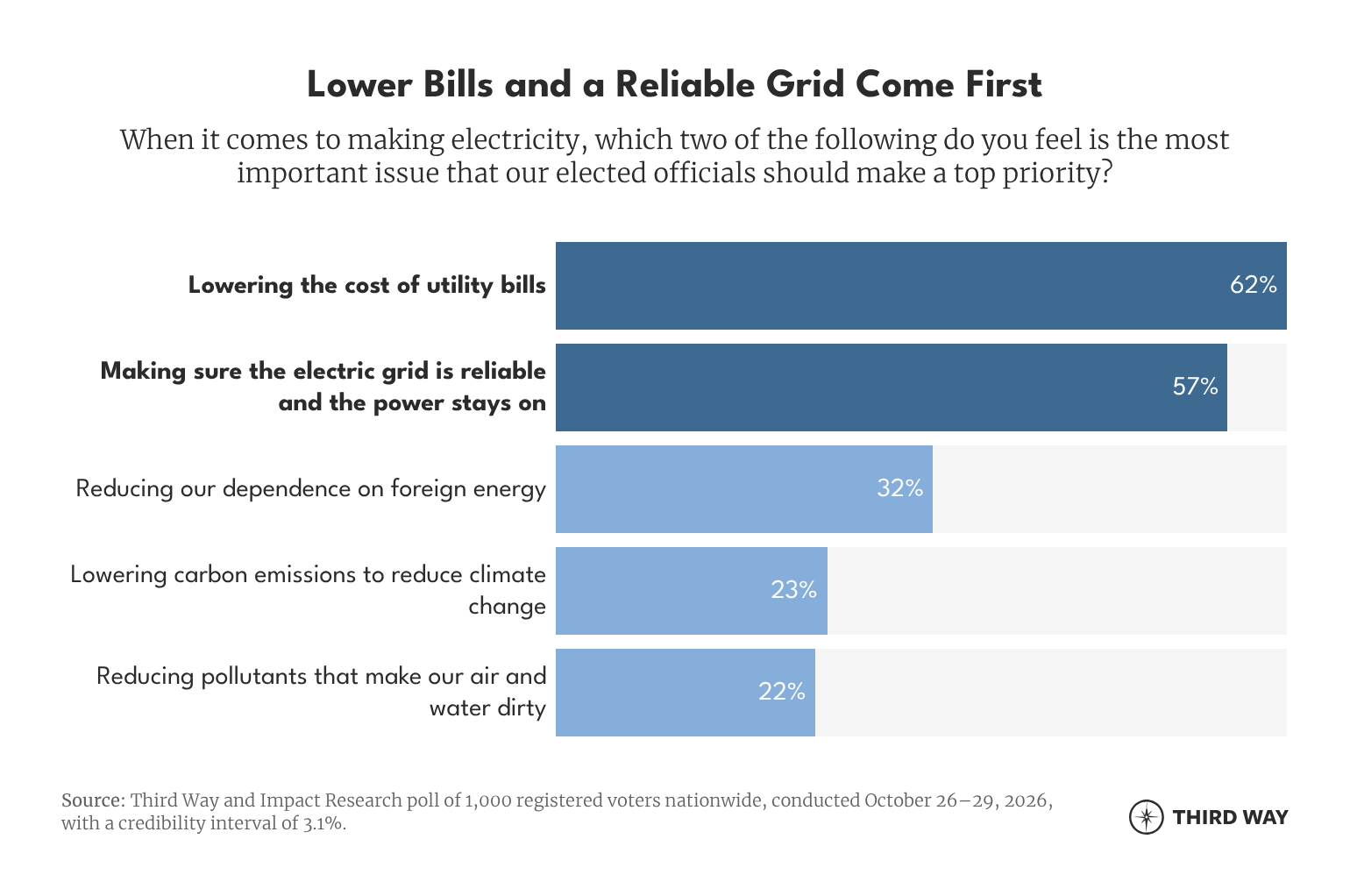
Against this backdrop, it’s little surprise that lowering utility bills (62%) and keeping the power on (57%) are voters’ top priorities when it comes to electricity. Both rank well ahead of reducing dependence on foreign energy (32%), lowering carbon emissions (23%), and reducing pollutants (22%).
Right now, Congress has an opportunity to respond. The Bipartisan American Affordability and Jobs Act (BAAJA) would make it faster and less expensive to build and repair energy projects, power lines, and other critical infrastructure. It would also require utilities to make better use of existing transmission lines to help keep costs down and ensure data centers pay for the additional grid infrastructure they need.
The potential savings are significant: modeling from C2ES and Greenline Insights estimates that making it easier to build new power lines and connect energy projects to the grid could save households $19 billion on their electricity bills through 2040.
Voters Back BAAJA, Even After Hearing Both Sides
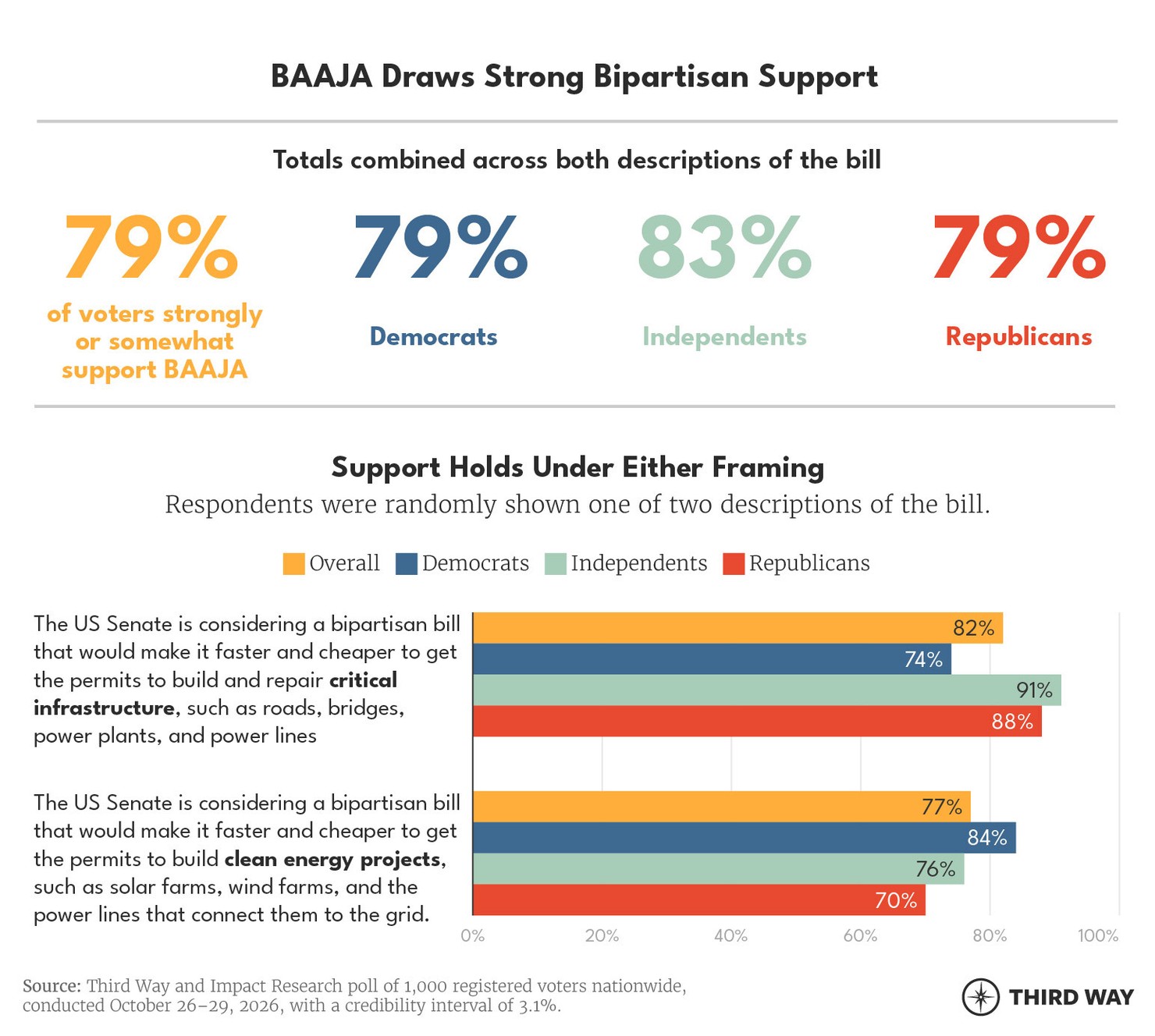
While Americans are familiar with the problems BAAJA aims to address, more than half say they know little or nothing about permitting reform itself. But lack of familiarity doesn’t translate to opposition. In fact, BAAJA draws overwhelming support (79%) across party lines. When framed around speeding up permits for critical infrastructure like roads, bridges, power plants, and power lines, 82% of voters support the legislation. Support is also strong when the descriptions of the bill focus on clean-energy projects such as wind and solar farms (77%).
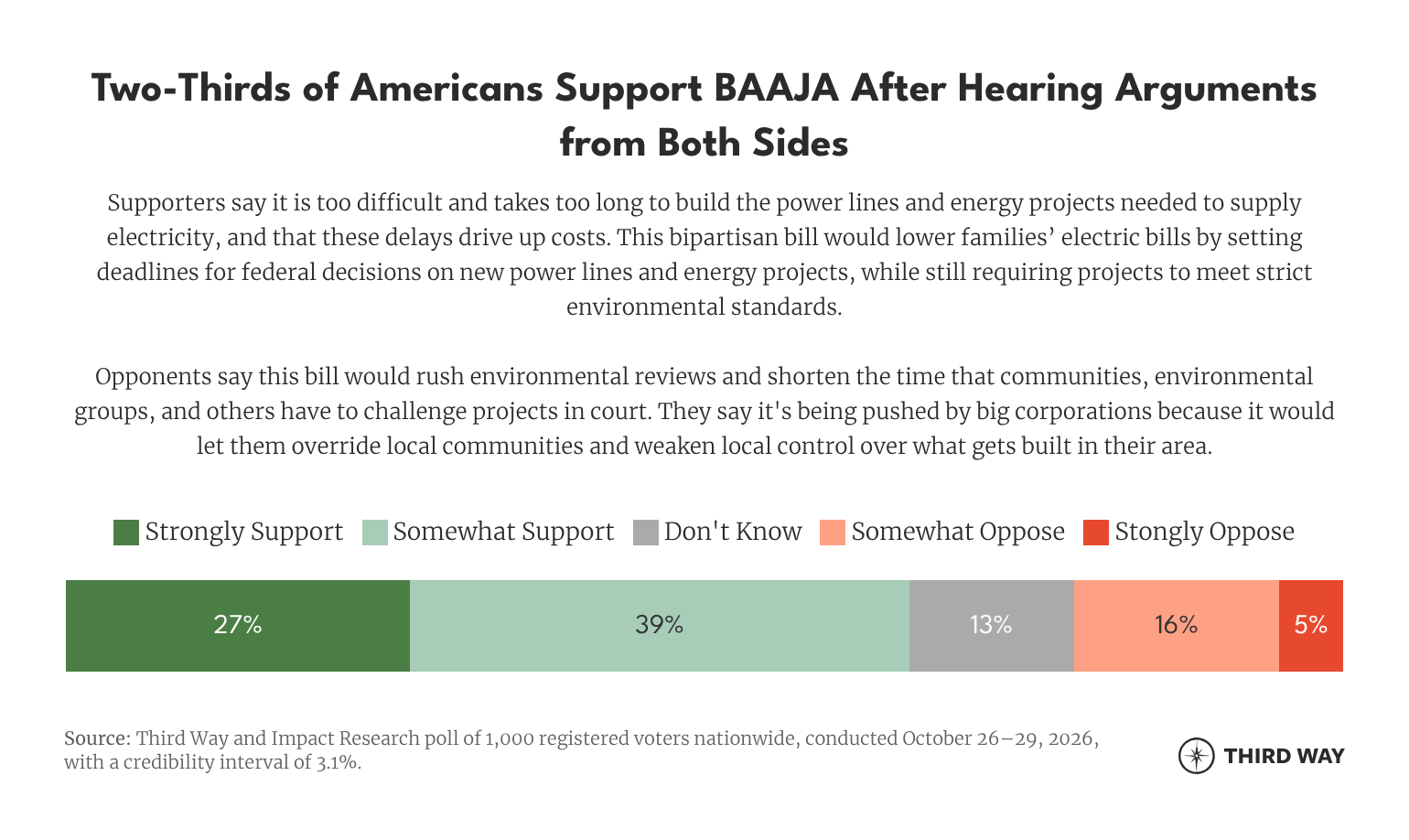
Support drops after voters hear arguments both for and against the legislation, but the bill still has a clear majority behind it. Two-thirds of voters (66%) support BAAJA after hearing concerns about its potential impact on environmental protections and local communities, while just 21% oppose it.
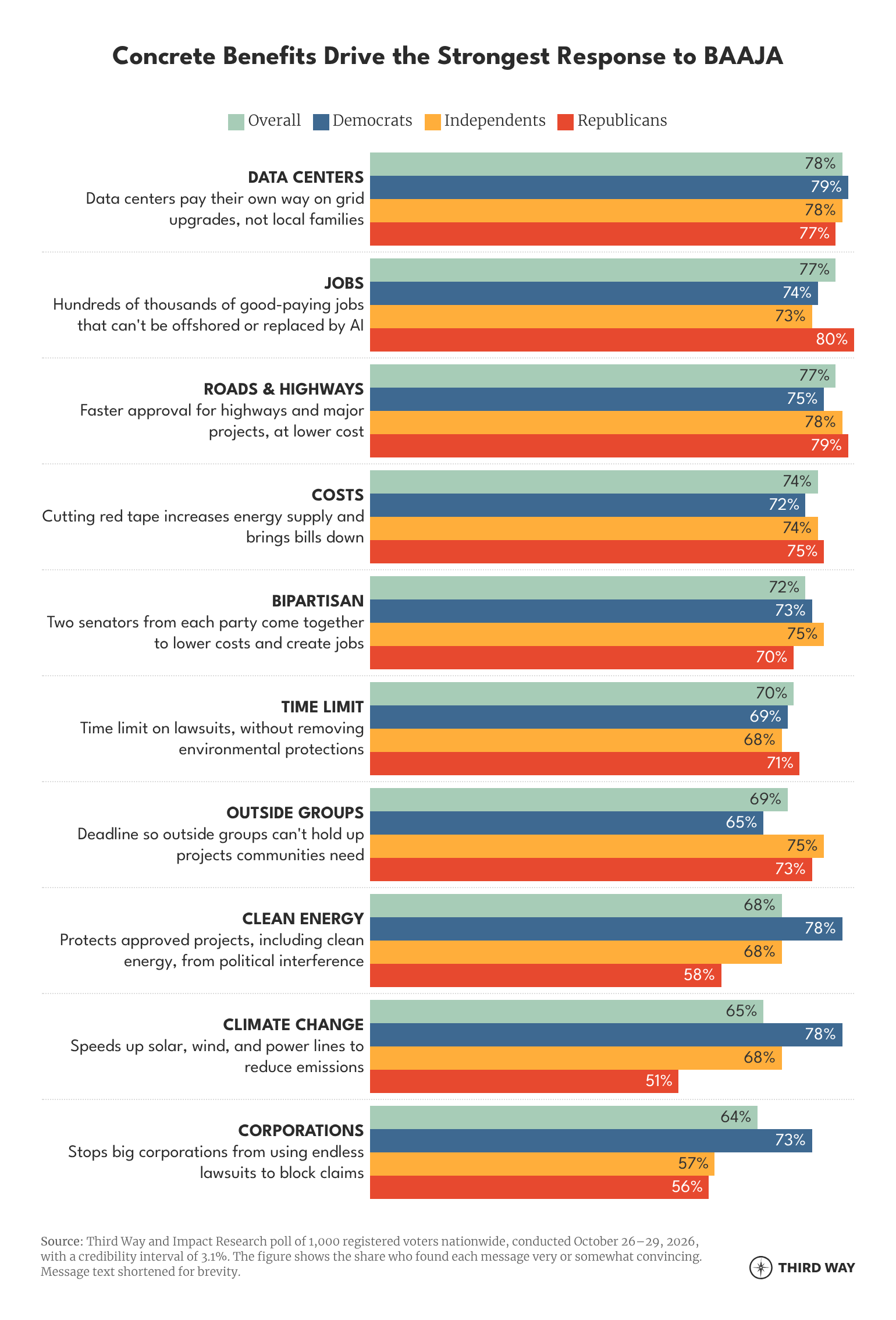
To understand what voters find most compelling about BAAJA, we tested a range of arguments highlighting the legislation's different benefits. The strongest case was requiring data centers to pay for the additional infrastructure they need (78% very or somewhat convincing), followed by arguments about creating American jobs (77%), improving roads and highways (77%), and lowering costs for Americans (74%). Arguments focused on addressing climate change (65%) and building more clean energy (68%) were among the least convincing, though both still resonated with nearly two-thirds of voters.
And after voters heard more about BAAJA’s benefits, support bounced back to 80% in favor of the bill overall.
Conclusion
Americans want more affordable, reliable energy, and they see the value in legislation that could help deliver it. BAAJA draws broad support across party lines, even after voters hear arguments against it. The benefits that resonate most with voters are those they can see in their own lives: lower bills, more jobs, better infrastructure, and ensuring data centers pay their fair share.
The case for BAAJA is strongest when it starts with what Americans stand to gain. For policymakers, that means leading with what permitting reform can deliver, not the process it will change: lower energy bills and a more reliable grid, showing how the bill would make data centers pay for the infrastructure they need, and connecting new energy projects to American jobs. To help policymakers and advocates make the case, Third Way has outlined key talking points for communicating the benefits of BAAJA.
Methodology
From October 26 to October 29, 2026, Third Way and Impact Research conducted polling via an online panel of 1,000 likely voters nationwide, with a credibility interval of 3.1%.


Downloads
Latest Publications
BAAJA Sets a New Standard for Data Center Accountability
The Energy Midterms and the All-Of-The-Above Democrats
On the Grid: The Price is Not Right
On Permitting Reform: How To Talk About BAAJA
Never Miss an Update
Sign up for updates on the pragmatic, center-left ideas shaping the future of American policy.