Wake up: The Worst Humanitarian Crisis on Earth is in Sudan
Shirley Martey Hargis, Mike Sexton
Takeaways
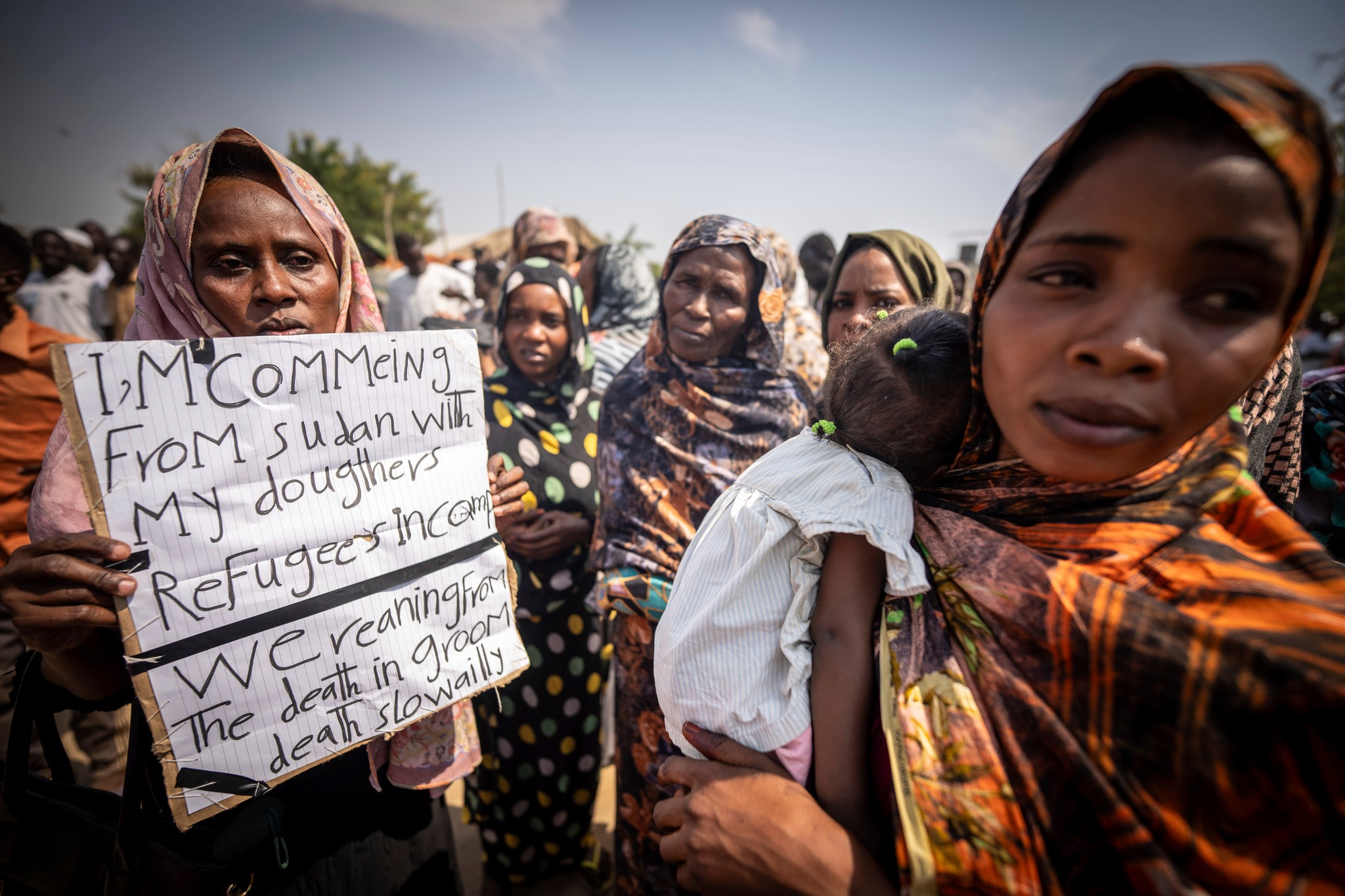
- The worst humanitarian catastrophe on Earth right now is in Sudan.
- 8.8 million people have been displaced5 —the worst such crisis in the world.6
- 2.5 million people are expected to die of starvation by September 2024.7
- The current reported death toll of 15,000 is not credible—the US envoy to Sudan estimates it to be as high as 150,000.8
- The warring factions—the Sudanese Armed Forces and Rapid Support Forces—are committing the most brutal war crimes imaginable against Sudanese civilians.
- Human rights groups, journalists, and the international community have profoundly failed to report—let alone prevent—these atrocities.
- American action is needed now to prevent calamity on a scale surpassing the Rwandan genocide.
We Should Care About Sudan
For the entire month of May as blood was spilled, we could not find a single article about Sudan in the New York Times, but we read three articles about sunscreen9 and ingrown hairs.10 It wasn’t until June that the New York Times Africa section had even a mention of Sudan.11 The Washington Post noted the bloody civil war just twice in May.12 The Wall Street Journal only three times in the last two months (to their credit, they published a front page story in June, as did the New York Times several days later).13
Congress is only marginally paying attention with a handful of hearings in the relevant committees. In May, the American envoy to Sudan, Tom Perriello said to the Senate Foreign Relations Committee: “As we speak, Sudan faces two distinct but accelerating trajectories—one towards famine and possibly a failed state, and the second towards peace and a democratic future. The only two barriers to ending this war are, first, the political will of two Generals and those fueling this horrific war, and second the absence of enough political will by those of us who could compel a peace.”14 Perriello also testified that he estimates the death toll to be around 150,000.15 That is far higher than the guesstimate from the Armed Conflict Location and Event Data Project which reported only 15,000.16
As for political organizing against the ensuing Sudanese genocide, there is almost none. The English took to the streets in London on May 18 to protest the media's failure to cover Sudan,17 which, unsurprisingly, went uncovered by western media. A sad trend we have seen repeated time and time again. While there has been extensive coverage of several other global humanitarian crises, Sudan’s streets are saturated with blood, and it has been met with silence.
This matters because this disregard does not align with the supposed lessons learned from the initial silent response to the 100-day Rwanda genocide that former U.S. ambassador to the United Nations, Samantha Power, called “the fastest, most efficient killing spree of the twentieth century.”18 American activism helped spur action to limit atrocities in Sudan two decades ago. But outside of scattered protests with activists numbering, at most, in the hundreds, that activism is absent today.
What is Happening in Sudan
Sudan’s warring factions are the predominantly Sunni Arab militia known as the Rapid Support Forces (RSF) and the governmental Sudanese Armed Forces (SAF). They previously united in a 2019 coup to oust Omar al-Bashir, a dictator who ruled Sudan for three decades.19 Al-Bashir’s tenure included the 2011 secession of South Sudan and 2003-2008 war and genocide against non-Arab and non-Sunni minorities in Darfur, resulting in 300,000 deaths.20
Mohamed Hamdan “Hemedti” Dagolo leads the 100,000-strong Rapid Support Forces, which he formed in 2013 out of the Janjaweed militias. His Janjaweed rose to notoriety in the mid-2000s as al-Bashir’s proxy force perpetrated the systematic rape, looting, and killing in Darfur.21 Hemedti built a fortune illegally seizing Sudanese gold mines and hiring out mercenaries to fight on behalf of Saudi Arabia and the United Arab Emirates in Yemen.22 The RSF is following in the Janjaweed’s footsteps in Darfur—again—slaughtering ethnic minorities and burning whole villages to the ground.23
The 200,000-strong Sudanese Armed Forces,24 led by General Abdel Fattah al-Burhan, is not much better. They stand accused of blocking humanitarian aid from RSF-controlled territory25 as well as looting, raping, and massacring civilians, albeit on a lesser scale than the RSF.26 After clashes began in April 2023, the SAF quickly escalated the conflict by abandoning peace talks in Jeddah, Saudi Arabia,27 and declaring the UN envoy to Sudan persona non grata.28 In response, the US imposed sanctions on both factions of the civil war.29
As a result of both militaries’ scorched-earth campaign, 25 million Sudanese are in urgent need of humanitarian aid30 —more than the population of Florida.31 8.8 million have been displaced—more than the population of Virginia.32 2.5 million are projected to die of starvation by September—more than the population of New Mexico.33 The civil war’s reported death toll of 15,55034 is widely recognized as a dramatic understatement.35 The reality is there is no one counting the bodies. The true scale is likely closer to the ’03-’08 Darfur genocide and on track to eclipse the Rwandan genocide by autumn.
The Sudanese people did not ask for this war. The ethnic tensions, while real, did not instigate this horrific violence. This war is the choice of two unscrupulous, power-hungry warlords—Hemedti and al-Burhan—who would rather commit atrocities than share power because the press and the powerful have chosen not to care what happens to Sudanese civilians.
What is Needed from American Leadership
The Sudanese people need humanitarian aid: food, medicine, refuge, and jobs. Neighboring countries like Chad, South Sudan, Uganda, and Ethiopia need more accommodation for refugees.36 Sudanese civilians inside and outside the country need clean water and medical attention to recover from the violence and stave off outbreaks of cholera and other disease. Food aid is necessary—and the warring parties must desist from blocking it. The 50% of displaced Sudanese who are children need education, and the 50% of Sudan that is unemployed need economic opportunity.37
Congress and the President should hold the RSF and the SAF accountable by calling out their atrocities on the global stage, including a demand for an immediate ceasefire and the protection of civilians. Policymakers can task the intelligence community to investigate the short-, medium-, and long-term consequences of the genocide and provide solutions for ways that policymakers can more effectively address the crisis.
The US should call on the United Nations to be more involved and help to achieve that. As Julie Gregory of the Stimson Center wrote in April: “For the first time in nearly 20 years, Sudan is without a UN peace operation that enables or supports the protection of civilians, increasing the likelihood that the already severe protection gaps in country will worsen.”38 Making it safer for UN offices to return to Sudan should be a priority for the US.
The US should work with the African Union and other regional powers to create humanitarian corridors and to develop a plan for a ceasefire and lasting peace. “The international community must now organize itself with a hitherto unprecedented political and operational efficiency commensurate to the grave dangers of the moment. This calls for the engagement of very senior officials, representing a few key countries and organizations with an ability to execute policy in the humanitarian and security sectors and in any forthcoming political negotiations.” This was the warning issued by the United States Institute of Peace 13 months ago.39
The lack of knowledge and understanding of Africa in America is crippling. US interest-based relationships with the United Arab Emirates, Saudi Arabia, and other Gulf countries are tied to long-run Middle East stability goals.40 The strategic competition landscape with Russia and China entails the reality of bidding for the allegiance of unsavory characters to stave off continued coups and resource extraction dominance by the Kremlin and the Chinese Communist Party. We must hold these realities simultaneously while advocating for human rights.
But first and foremost, the world must care and Americans must care.41 The attention paid to Sudan’s civil war is infinitesimal in proportion to the magnitude of its human suffering. US media are too silent; they were silent on Rwanda, too.42 It is up to those who care deeply about human rights to make sure political leaders and the press pay attention before it is too late.
Endnotes
“Sudan.” United Nations Office for the Coordination of Humanitarian Affairs, 16 May 2024, https://reports.unocha.org/en/country/sudan/. Accessed 28 May 2024.
“Civil War in Sudan.” Global Conflict Tracker, 19 Apr. 2024, https://cfr.org/global-conflict-tracker/conflict/power-struggle-sudan. Accessed 29 May 2024.
Gaasbeek, Timmo. “Sudan: From Hunger to Death.” Clingendael Institute, 24 May 2024, https://www.clingendael.org/publication/sudan-hunger-death. Accessed 28 May 2024.
“US Senate Hears Urgent Plea from Envoy to Sudan.” Dabanga Radio TV Online, 2 May 2024, https://www.dabangasudan.org/en/all-news/article/senate-hears-urgent-plea-from-u-s-envoy-on-sudan. Accessed 29 May 2024.
“Sudan.” United Nations Office for the Coordination of Humanitarian Affairs, 16 May 2024, https://reports.unocha.org/en/country/sudan/. Accessed 28 May 2024.
“Civil War in Sudan.” Global Conflict Tracker, 19 Apr. 2024, https://cfr.org/global-conflict-tracker/conflict/power-struggle-sudan. Accessed 29 May 2024.
Gaasbeek, Timmo. “Sudan: From Hunger to Death.” Clingendael Institute, 24 May 2024, https://www.clingendael.org/publication/sudan-hunger-death. Accessed 28 May 2024.
“US Senate Hears Urgent Plea from Envoy to Sudan.” Dabanga Radio TV Online, 2 May 2024, https://www.dabangasudan.org/en/all-news/article/senate-hears-urgent-plea-from-u-s-envoy-on-sudan. Accessed 29 May 2024.
Conte, Annemarie. “Putting Sunscreen on Squirmy Kids Is Hard. And This Viral Doodad Doesn’t Really Help.” New York Times, 29 May, 2024, https://www.nytimes.com/wirecutter/reviews/solar-buddies-sunscreen-applicator/?searchResultPosition=3. Accessed 1 June 2024.
Sweeney, Erica. “Are Ingrown Hairs Preventable?” The New York Times, 21 May 2024, https://www.nytimes.com/2024/05/21/well/live/are-ingrown-hairs-preventable.html. Accessed 02 June 2024.
"Africa." New York Times, 5 June 2024, https://www.nytimes.com/section/world/africa.Accessed 1 June 2024.
Houreld, Katharine. “Hospitals overflowing in besieged Sudanese city as final battle looms.” The Washington Post, 12 May 2024, https://www.washingtonpost.com/world/2024/05/12/sudan-war-rsf-el-fashir/. Accessed 2 June 2024.
Bariyo, Nicholas and Wexler, Alexandra. “How Soda, Chocolate and Chewing Gum Are Funding War in Sudan.” The Wall Street Journal, 23 May 2024, https://www.wsj.com/world/how-soda-chocolate-and-chewinggumare-funding-war-insudan-535a7686?mod=africa_news_article_pos3. Accessed 2 June 2024.
“U.S. Senate Foreign Relations Committee hearing on conflict and humanitarian emergency in Sudan – May 2024.” Operation Broken Silence, 6 May 2024, https://operationbrokensilence.org/blog/us-senate-foreign-relations-committee-hearing-on-sudan-may-2024. Accessed 2 June 2024.
Perriello, The Honorable Tom. “Conflict and Humanitarian Emergency in Sudan: An Urgent Call to Action.” Foreign Relations Committee, 1 May 2024, https://www.foreign.senate.gov/hearings/conflict-and-humanitarian-emergency-in-sudan-an-urgent-call-to-action. Accessed 2 June 2024.
“One Year of War in Sudan.” ACLED, 14 April 2024, https://acleddata.com/2024/04/14/sudan-situation-update-april-2024-one-year-of-war-in-sudan/#:~:text=Since%20fighting%20first%20broke%20out,15%2C550%20reported%20fatalities%20in%20Sudan. Accessed 02 June 2024.
“London Youth Protest ‘media Neglect’ of Sudan Conflict.” Dabanga Radio TV Online, 15 May 2024, https://www.dabangasudan.org/en/all-news/article/london-youth-protest-media-neglect-of-sudan-conflict. Accessed 20 June 2024.
Power Samantha. “Bystanders to Genocide.” The Atlantic, September 2001, https://www.theatlantic.com/magazine/archive/2001/09/bystanders-to-genocide/304571/. Accessed 5 June 2024.
“Civil War in Sudan - Global Conflict Tracker.” Council on Foreign Relations, 19 Apr. 2024, https://cfr.org/global-conflict-tracker/conflict/power-struggle-sudan. Accessed 30 May 2024.
“Darfur - Holocaust Encyclopedia.” United States Holocaust Memorial Museum, 21 Dec. 2023, https://encyclopedia.ushmm.org/content/en/article/darfur. Accessed 30 May 2024.
“Sudan Unrest: What Are the Rapid Support Forces?” Al Jazeera, https://www.aljazeera.com/news/2023/4/16/sudan-unrest-what-is-the-rapid-support-forces. Accessed 30 May 2024.
Abdelaziz, Khalid; Georgy, Michael; and El Dahan, Maha. “Exclusive:Sudan Militia Leader Grew Rich by Selling Gold.” Reuters, 26 Nov. 2019. www.reuters.com, https://www.reuters.com/article/idUSKBN1Y01DQ/. Accessed 30 May 2024.
Samy Magdy. “UN Says More than 800 People Reportedly Killed in Attack on Darfur Town amid War in Sudan.” PBS NewsHour, 11 Nov. 2023, https://www.pbs.org/newshour/world/un-says-more-than-800-people-reportedly-killed-in-attack-on-darfur-town-amid-war-in-sudan. Accessed 30 May 2024.
“Military and Security Service Personnel Strengths.” CIA World Factbook, https://www.cia.gov/the-world-factbook/field/military-and-security-service-personnel-strengths/. Accessed 31 May 2024.
“Condemning the Obstruction of Humanitarian Assistance and Closing of Civic Space in Sudan.” United States Department of State, 23 Feb. 2024, https://www.state.gov/condemning-the-obstruction-of-humanitarian-assistance-and-closing-of-civic-space-in-sudan/. Accessed 3 June 2024.
“Sudan: ‘Death Came to Our Home’: War Crimes and Civilian Suffering in Sudan.” Amnesty International, https://www.amnesty.org/en/documents/afr54/7037/2023/en/. Accessed 3 June 2024.
“Sudan Army Suspends Participation in Jeddah Ceasefire Talks | News | Al Jazeera.” Al Jazeera, 31 May 2023, https://www.aljazeera.com/news/2023/5/31/sudan-army-suspends-participation-in-jeddah-ceasefire-talks. Accessed 3 June 2024.
Law, Heather and Roth, Richard. “UN Chief ‘Shocked’ by Letter from Sudan’s Military Ruler Asking to Replace UN’s Special Envoy in Sudan.” CNN, 27 May 2023, https://www.cnn.com/2023/05/26/middleeast/sudan-perthes-burhan-intl/index.html. Accessed 3 June 2024.
“U.S. Measures in Response to the Crisis in Sudan.” United States Department of State, 1 June 2023, https://www.state.gov/u-s-measures-in-response-to-the-crisis-in-sudan/. Accessed 3 June 2024.
“Crisis in Sudan: What Is Happening and How to Help.” International Rescue Committee, 12 Apr. 2024, https://www.rescue.org/article/fighting-sudan-what-you-need-know-about-crisis. Accessed 3 June 2024.
“Florida - Census Bureau Profile.” United States Census Bureau, https://data.census.gov/profile/Florida?g=040XX00US12. Accessed 3 June 2024.
“Virginia - Census Bureau Profile.” United States Census Bureau, https://data.census.gov/profile/Virginia?g=040XX00US51. Accessed 3 June 2024.
“New Mexico - Census Bureau Profile.” United States Census Bureau, https://data.census.gov/profile/New_Mexico?g=040XX00US35. Accessed 3 June 2024.
Eltayeb, Nohad and Ali, Ali Mahmoud. “Sudan Situation Update: April 2024 | One Year of War in Sudan.” ACLED, 15 Apr. 2024, https://acleddata.com/2024/04/14/sudan-situation-update-april-2024-one-year-of-war-in-sudan/. Accessed 3 June 2024.
“US Senate Hears Urgent Plea from Envoy to Sudan.” Dabanga Radio TV Online, 2 May 2024, https://www.dabangasudan.org/en/all-news/article/senate-hears-urgent-plea-from-u-s-envoy-on-sudan. Accessed 29 May 2024.
Ulrich, Jsarh Ngarndey and Donati, Jessica. “Refugee Camps in Chad Are Overcrowded and Running out of Aid, and Sudanese Refugees Keep Coming.” AP News, 22 Mar. 2024, https://apnews.com/article/refugee-camps-chad-sudan-funds-d94cd10068c53922db5a70eefeaadd62. Accessed 3 June 2024.
“Crisis in Sudan: What Is Happening and How to Help.” International Rescue Committee, 12 Apr. 2024, https://www.rescue.org/article/fighting-sudan-what-you-need-know-about-crisis. Accessed 3 June 2024.
Gregory, Julie. “One Year Ago, War Broke Out in Sudan. What Can Be Done to Prioritize Protection of Civilians?” Stimson, 15 April 2024, https://www.stimson.org/2024/one-year-ago-war-broke-out-in-sudan-what-can-be-done-to-prioritize-protection-of-civilians/. Accessed 15 April 2024.
Rondos, Alex. “What Sudan Needs Right Now.” United States Institute of Peace, 11 May 2023, https://www.usip.org/publications/2023/05/what-sudan-needs-right-now. Accessed 11 June 2024.
Gramer, Robbie. “Why Is the World Ignoring a Looming Genocide in Sudan?” Foreign Policy, 28 May 2024, https://foreignpolicy.com/2024/05/28/sudan-war-genocide-el-fasher-humanitarian-aid-crisis/. Accessed 3 June 2024.
Gramer, Robbie. “Why Is the World Ignoring a Looming Genocide in Sudan?” Foreign Policy, 28 May 2024, https://foreignpolicy.com/2024/05/28/sudan-war-genocide-el-fasher-humanitarian-aid-crisis/. Accessed 3 June 2024.
Thompson, Allan. “The Media and the Rwanda Genocide.” JSTOR, 2007, https://idrc-crdi.ca/en/book/media-and-rwanda-genocide. Accessed 11 June 2024.


Latest Publications
Trump’s Failure in Iran: A Foolish War Waged by a Foolish President with Americans Paying the Price
Trump Is Laying the Groundwork to Attack Cuba. Democrats Should Push Back.
Democrats aren’t winning the foreign policy argument, group says (external link)
Calm in Crisis, Clear in Purpose: Americans Want a New Foreign Policy Direction
Never Miss an Update
Sign up for updates on the pragmatic, center-left ideas shaping the future of American policy.