Memo Published May 21, 2024 · 7 minute read
The US Economy Needs Paid Leave
Curran McSwigan, Anthony Colavito, & Zach Moller
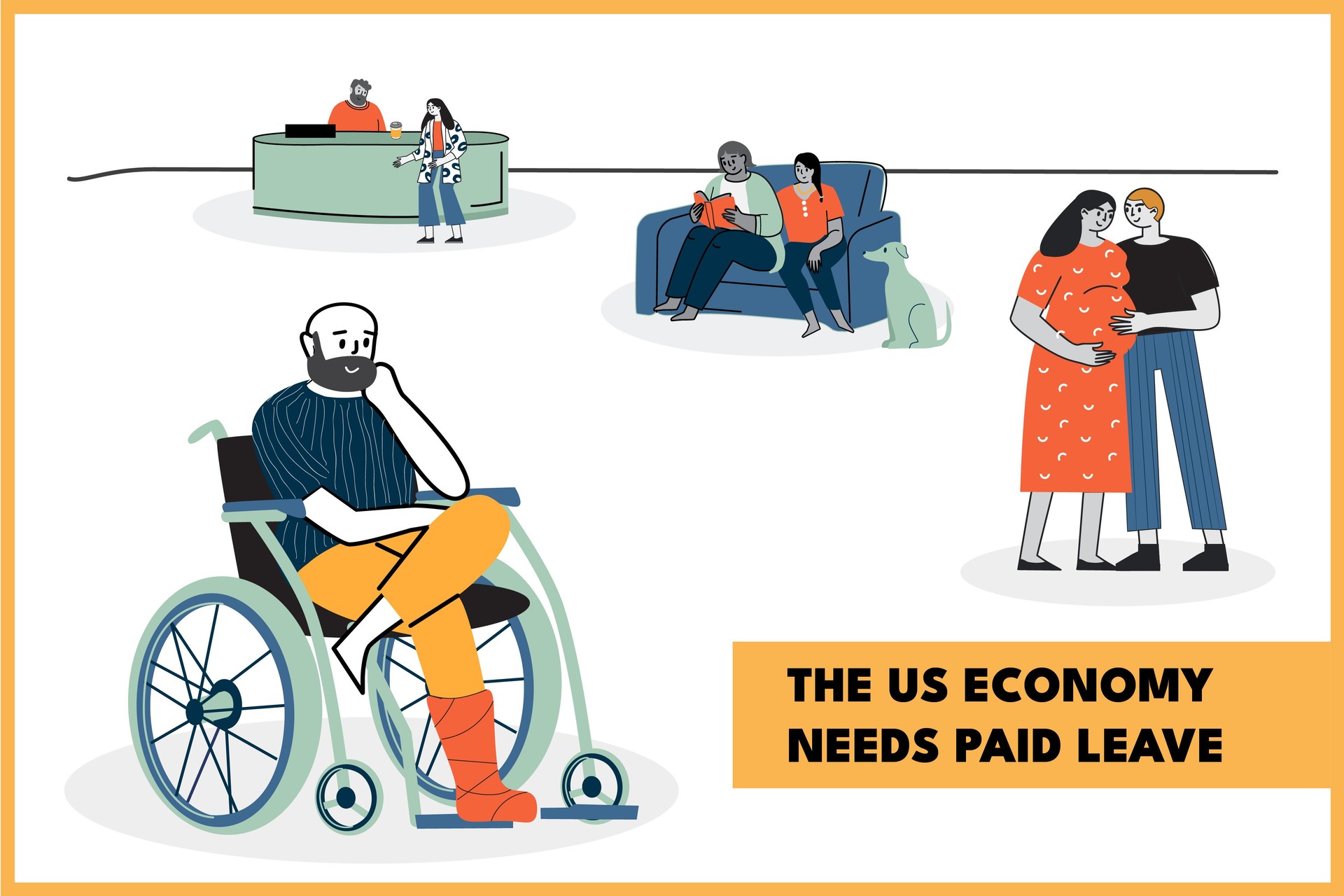
Poll after poll shows the American public crying out for paid leave. That’s because, at some point, it is likely an individual will need to take time to care for themselves, an aging parent, or a new baby. When that moment happens, they want to feel economically secure.
The American economy is also crying out for paid leave. That’s because paid leave fuels economic growth, bolsters American businesses, and lowers the need for other federal spending. In this memo, we explore how paid leave is a policy that strengthens, not burdens, the US economy, by helping to lift up both employers and workers.
Paid Leave Fuels Economic Growth
Paid leave bolsters economic growth in the short and long term by helping more workers get in and stay in the labor force, easing pressures on inflation and keeping households financially secure. Here’s why:
Increases labor force participation: Female labor participation rates continue to hit record highs, but many new mothers must exit the workforce to care for their newborns.1 However, paid leave policies help many women take the time off they need to care for their child while also maintaining their job. States with paid leave programs experienced a 20% reduction in the number of female employees leaving their jobs in the first year after a birth.2 Strengthening female labor force participation has huge economic impacts—some economists estimate that enacting a suite of family-friendly policies, including paid leave, could boost GDP by as much as $1 trillion.3
Paid leave is for more than just new parents; these policies also help workers navigate the responsibilities of caring for a loved one. One study found that paid leave reduced the likelihood that caregivers cut their work hours in order to care for a spouse that had a disability or experienced a health shock.4 And paid leave policies help those with serious health conditions keep their jobs and continue working. This is especially important for workers of color who are more likely to face serious medical conditions requiring time off work, in large part due to disparities in access to quality care.5
Curbs long-term inflation: Paid leave expands the pool of available workers, in large part by supporting those populations who have traditionally had trouble staying attached to the labor force. Not only does this increase the financial security of individual workers, but it also reduces potential inflationary pressure associated with workforce shortages.6 Boosting the number of available workers in the labor market can also help ease inflation in part by expanding the productive capacity of the economy.7 More efficient workers mean businesses can more likely afford raises for workers without charging higher prices.8 Additionally, paid leave policies can reduce the costs borne by employers associated with employee turnover, which in turn may keep businesses from having to raise prices for consumers.9
Stabilizes consumer spending: The birth of a child or a serious medical event has the potential to be financially devastating for many families, with many depleting their savings or accumulating debt just to get by. Giving workers time to care for themselves and their families strengthens personal finances which, in turn, helps maintain consumer spending while boosting broader economic outcomes.
After California passed their paid leave program, household income for new mothers increased by over 4%.10 Mothers with lower incomes and lower rates of educational attainment saw the most income gains. Paid leave programs also provide workers a level of security than can help lead to longer-term wage gains. A study of Rhode Island’s paid leave program found that leave takers saw more wage increases after returning from leave than those who didn’t take time.11
Paid Leave Helps Businesses—Both Big and Small
Paid leave is good for business. It lowers firms’ costs, boosts productivity, and drives competition. With greater access, this important benefit can create a business environment that is both more dynamic and more profitable. Businesses, as well as workers, can look forward to paid leave’s positive impacts. Here’s why:
Paid leave lowers business costs: As many employers know, employee turnover is a leading cost of doing business. Searching for, hiring, and training new employees is expensive: job openings must be posted, managers must spend time interviewing candidates, and time and money must be spent on training new employees. Altogether, these costs can amount to over 20% of an employee’s annual salary.12 Paid leave lowers these costs by reducing employee turnover. First-time mothers who take paid leave are more likely to return to the same employer compared to other mothers.13 In California, employee turnover rates fell after the implementation of the state’s paid leave program.14
Paid leave boosts business productivity: Paid leave increases business productivity in two ways.15 First, it makes it easier for businesses to attract and retain talent. One survey found that 30% of workers say paid time off is the most important workplace benefit. And 70% of full-time workers would switch jobs if they were offered better benefits, like paid leave.16 Second, paid leave offers workers the best chance to recover from an illness or birth away from the workplace, limiting the chance of workplace injury or the spread of disease. This lowers employer costs by enabling employees to remain healthy and in the workplace.17
Paid leave levels the playing field for small businesses: Since paid leave is important for attracting talent, businesses that offer the benefit have an advantage over other businesses that don’t. Smaller employers often lack the ability to provide benefits like paid leave; this is especially true for service sector industries where offering the benefit can mean raising prices for consumers.18 Data on leave access reveals the depth of the problem: 37% of workers in establishments with 500 or more employees have paid family leave versus 19% of workers in establishments with 50 or fewer employees.19 Expanding paid leave to all would eliminate one of the biggest disadvantages for small businesses—the ability to attract and retain talented employees.
Paid Leave Can Help the Budget Deficit
High levels of federal debt and rising deficits mean it is increasingly important for policymakers to design fiscally-sustainable policies. Broader access to paid leave can help achieve this goal. Here’s how:
Paid leave helps bolster the tax base: A person employed is also a person paying payroll and income taxes. If a worker quits their job to take care of a newborn child or a loved one, they no longer make payroll tax contributions—and their year-end income tax liabilities fall, lowering tax revenues. Paid leave, by making people more likely to return to work, protects federal government revenue.20
Paid leave lowers public assistance spending: When workers spend time away from work to take care of themselves or a loved one, they lose the earnings their jobs provided. However, groceries, housing, medical care, and more must all be paid for. Without paid leave, workers become more likely to use public assistance programs like Temporary Aid to Needy Families (TANF). Studies show women who can take paid leave after the birth of a child are 39% less likely to receive public assistance and 40% less likely to receive food stamps compared to women who do not.21 Based on our estimates, if all workers were given access to paid leave, it could lower federal spending on traditional welfare by $28 million in a single year.22
Paid leave reduces other federal health spending: Federal health insurance programs often pay for some of the care services that might otherwise be provided by a loved one. Medicare and Medicaid alone spent a combined $300 billion on long-term services and supports in 2021.23 By enabling workers to take care of loved ones when they fall sick, paid leave can reduce spending on these types of services by preventing or delaying their uptake. Based on our calculations with universal access, Medicare and Medicaid spending could fall by as much as $3.7 billion per year.24

In total, paid leave not only helps America’s working families make ends meet, but also fuels economic growth, supports businesses of all sizes, and improves budget outcomes. Now, more than ever, it is clear that progress on paid leave is an essential part of creating a thriving economy. Ongoing bipartisan, bicameral efforts to achieve progress on paid leave are crucial and must be supported. Without much-needed progress, too many families and workers will be forced to choose between their livelihood and their loved ones. And the repercussions across our entire economy will continue to be felt.