Memo Published September 22, 2026 · 6 minute read
The Real Fight Against Fraud: Talking Points to Respond to Selective Republican Outrage
Republicans have tried to claim the mantle of fighting fraud, waste, and abuse, but the Trump Administration’s record tells a different story. The Administration put forward a signature government reform initiative, DOGE, promising efficiency and accountability. Instead, they have weakened watchdogs, pardoned convicted fraudsters, weaponized cases in Democratic-led communities, and ignored the President’s own conflicts and self-enrichment. Fraud is real and demands a serious response—but selective enforcement and self-dealing are not accountability.
This memo provides Democrats with talking points across three categories: federal program fraud or misuse of public funds, fraud enabled by weakened oversight, and corruption that occurs when politicians put themselves above the law. The standard should be consistent throughout: prosecute wrongdoing, recover public dollars, strengthen safeguards, and hold everyone accountable.
Fraud Occurs When Money is Stolen From its Intended Purpose
Fraud diverts public dollars from their lawful purpose, harms the people government programs are meant to serve, and erodes public trust. Republicans have used cases such as Minnesota’s pandemic-era benefits fraud—first prosecuted under the Biden Administration—to scapegoat Democratic-led communities and immigrants. Democrats should reject that politicization while demanding stronger safeguards, recovery of stolen funds, and accountability wherever fraud occurs.
Talking Points
- Fraud is wrong—full stop. It steals from taxpayers, hurts the people these programs are supposed to help, and erodes trust in the safety net. We must fight fraud in a way that protects vulnerable populations, legitimate beneficiaries, and honest providers.
- Fraud isn’t a “blue state” problem—it’s an American problem. In Mississippi, a state with a Republican trifecta and supermajority, a federal jury trial is underway over alleged theft and misuse of Temporary Assistance for Needy Families (TANF) dollars—money meant for struggling families. Auditors and investigators say tens of millions in anti-poverty funds were diverted through sham arrangements and influence networks. This is a nationwide vulnerability, and we have a duty to fix it everywhere.
- The standard has to be simple: prosecute it, recover what we can, and prevent it from happening again—no matter the zip code or party label. When welfare dollars are routed to connected insiders instead of families, it’s not just theft—it’s a betrayal that makes it harder to fund programs people rely on.
- Fighting fraud shouldn’t be a partisan weapon aimed at whichever governor happens to be from the other party. If Congress is going to attach guardrails, they should apply across the board: minimum oversight standards, stronger audit authorities and conditional triggers, and real whistleblower protections tied to federal dollars.
- Fraud is too serious for selective outrage and ethnic scapegoating. Portraying immigrants broadly as scammers may generate views and advance this Administration’s political agenda, but it does not recover a single taxpayer dollar, repair a single government program, or make the public safer and healthier.
Fraud Occurs When Accountability is Weakened
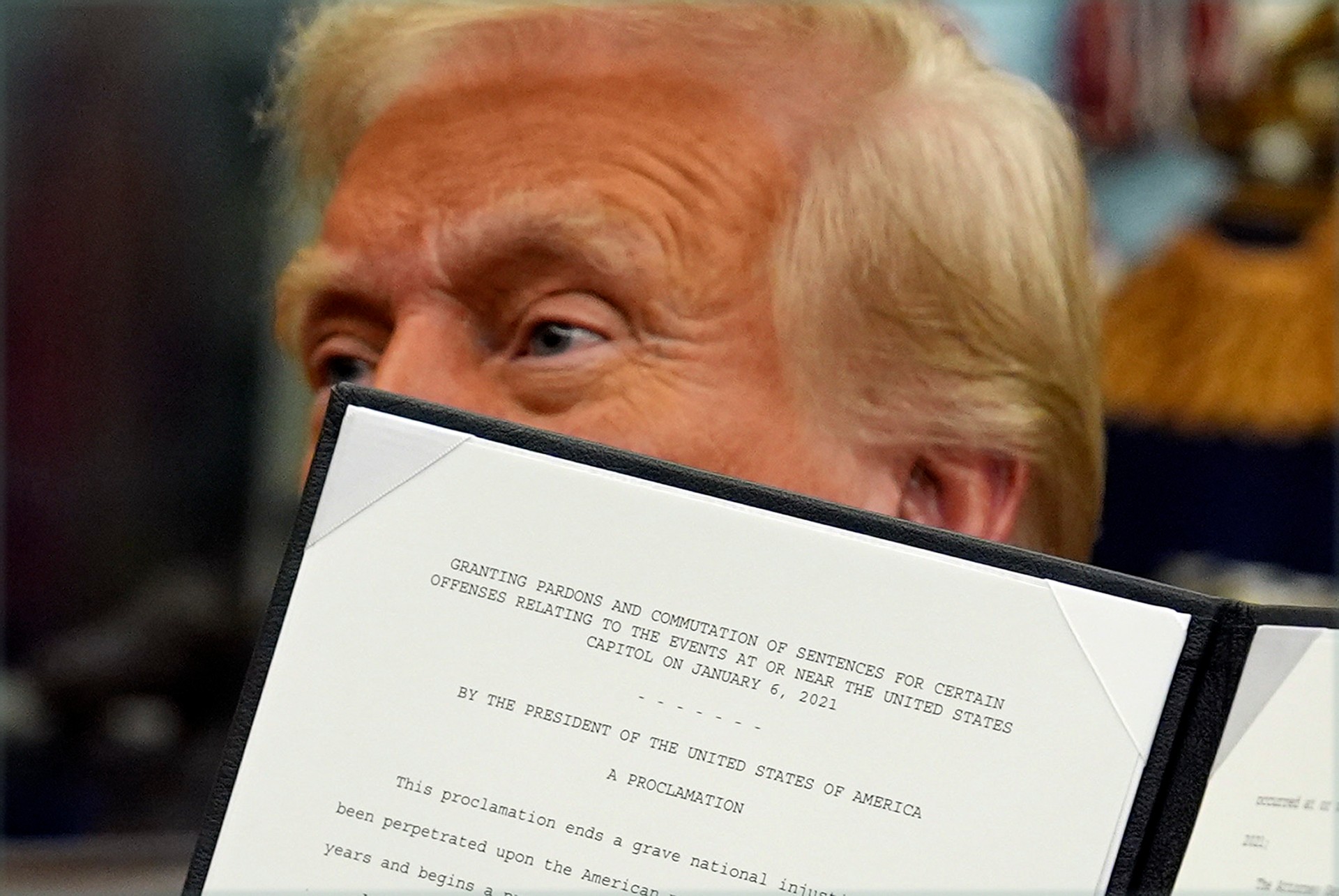
Strong oversight is essential to preventing fraud, but the Trump Administration has weakened the safeguards designed to catch it. Trump has fired at least 21 inspector generals and undermined the Government Accountability Office, leaving federal programs more vulnerable to abuse. He has also pardoned more than 70 people convicted of roughly 100 fraud offenses. If his current pace of pardons continues, President Trump will have pardoned more than 250 fraud offenses this term and nearly 450 across all his time in office.
Democrats should draw voters’ attention to the deep contradiction between Trump’s anti-fraud rhetoric and his actual record of weakening watchdogs and excusing convicted fraudsters.
Talking Points
- A Congress genuinely committed to fighting fraud would be strengthening those watchdogs, not sitting by while the President dismantles them. Trump and Republicans in Congress have also attempted to defund the GAO, an effort championed by the very official in charge of our nation’s budget. While it didn’t ultimately make it into law, House Republicans proposed a 50% cut for the agency’s budget and proposed ending its ability to sue the government to force the release of frozen funds.
- Don’t fight fraud by weakening the IRS and letting tax cheats off the hook. Our tax gap is hundreds of billions of dollars a year and DOGE-driven disruptions to IRS staffing and modernization are going to make it worse.
- Contrary to what this Administration claims, the prosecutions in Minnesota are not an indication that Trump has prioritized eliminating fraud. The case against Feeding Our Futures was launched in 2022 by the Biden Administration, after years of investigations by Minnesota’s Department of Education. By the time Trump assumed office in 2025, 70 individuals connected with the scheme had been indicted. The Trump Administration simply picked up the baton in the final leg of the race and expects sole credit for crossing the finish line.
- The same President who claims to be leading a national war on fraud has repeatedly pardoned or commuted the sentences of people convicted of securities fraud, wire fraud, bank fraud, tax fraud, health care fraud, money laundering, insider trading, and theft from the government. These pardons don’t just erase prison time; they can erase accountability—and often restitution—for victims. That is corruption in plain sight.
- Trump’s clemency for convicted fraud perpetrators in his second term has so far wiped away $1,092,081,095 in restitution owed to victims, as well as $335,191,404 in forfeitures and $192,970,308 in fines owed to the government.
- Trump’s pardon record makes clear that under this Administration, accountability is optional for the powerful and well-connected. At his current pace, Trump is on track to pardon people convicted of more than 250 fraud offenses this term—and nearly 450 across his two presidencies.
Fraud Occurs When Politicians Put Themselves Above the Law
Trump’s anti-fraud rhetoric rings hollow when he repeatedly puts his own interests first. Since returning to office, his family has reportedly accumulated nearly $3 billion in new assets, including $2.4 billion through crypto ventures, even as his Administration weakened oversight of the industry. Democrats should make the contrast clear: public office should serve the public, not the President’s bottom line.
Talking Points
- The Republican Party’s concern about fraud appear to depend heavily on who benefits from it and who commits it. When poor families or immigrants are accused of wrongdoing, they demand investigations, funding freezes, and sweeping changes to public programs. But when the President and his own family profit from businesses directly affected by federal policy, the GOP suddenly loses its appetite for oversight.
- Even more troubling, the President’s own policies seem to be benefiting his business dealings. While the Trump family was building its crypto empire, the Administration was weakening federal enforcement against cryptocurrency companies and adopting policies welcomed by the industry. President Trump was therefore setting policy for an industry that had become the largest source of his personal income.
- The American people can see right through the Administration’s dog and pony show anti-fraud campaign that ignores the real fraud occurring at 1600 Pennsylvania Avenue. If this Congress does not want to go down in the history books as complicit in the corrupt Trump enterprise, they must use every tool at their disposal to restore government oversight and hold nefarious criminals to account.
- This is corruption in plain sight: a President using public power to enrich himself and his family, rewarding wealthy investors with access and influence, and weakening the very safeguards meant to protect ordinary Americans—all while his party looks the other way.