The Cracks in Sanders' Turnout Theory
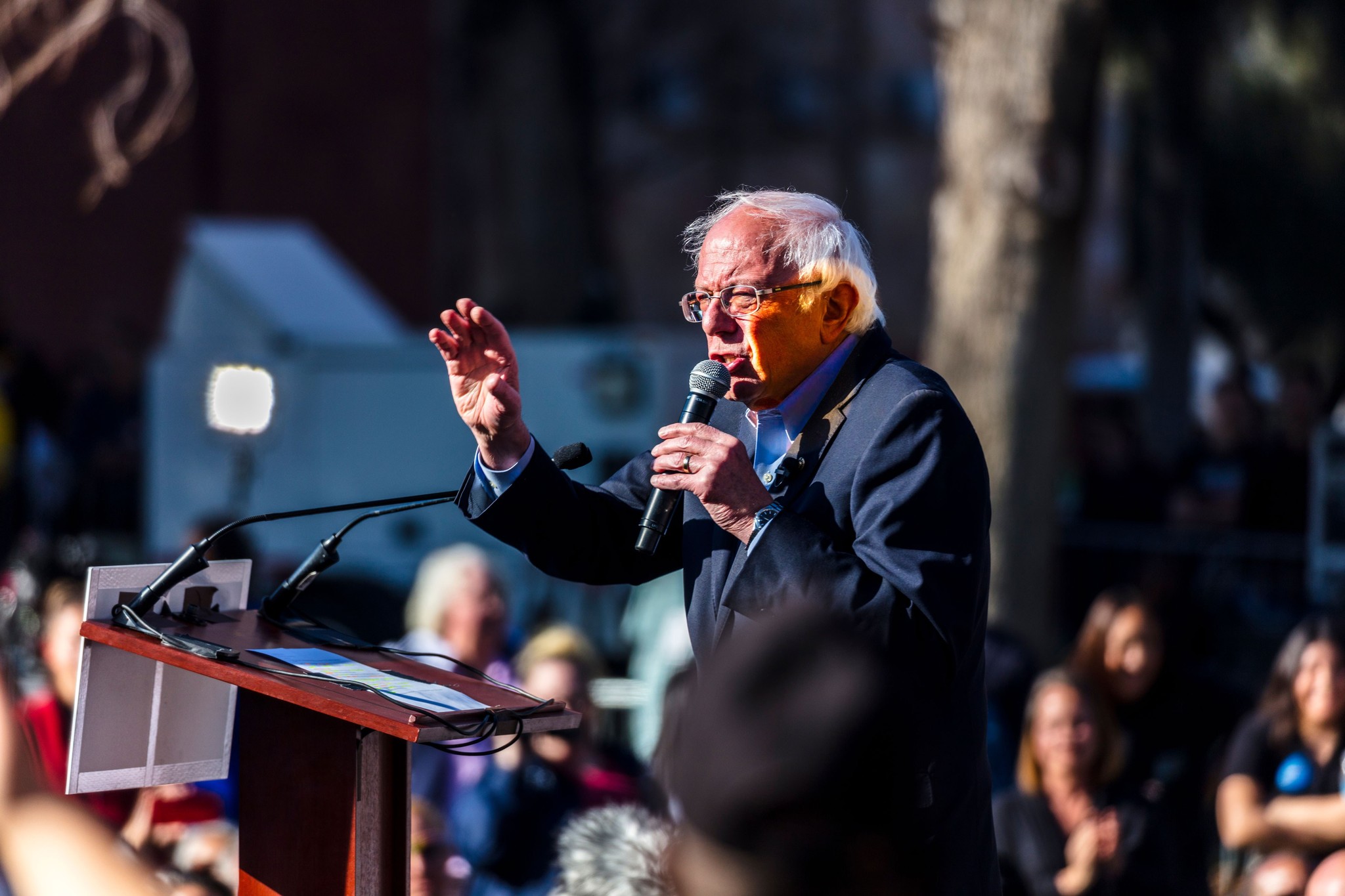
Bernie Sanders has a theory for winning in 2020, a theory he laid out in the South Carolina debate: “The way we are going to beat Trump . . . is we need a campaign of energy and excitement. We need to have the largest voter turnout in the history of the United States.”
But we should be skeptical of Sanders’ theory of winning the general election. Put aside that Sanders has been described as Trump’s “ideal Democratic opponent” by none other than the Trump campaign. Even ignore the intense scrutiny that would be leveled at Sanders’ past record and current plans to double the size of government. But you cannot disregard that his theory of how to win is not grounded in reality; it is defied by past precedent, present experiences, and data on future behavior. Specifically:
- In the past, turnout alone is not how Democrats have won; Democrats win with turnout and In the 2018 midterm wave, vote switching was credited with more impact than new turnout.
- Right now, Sanders is not inspiring the groundswell in turnout in primaries and caucuses that he has promised. Democrats are nearly 40% through the primary process, but turnout among Sanders' proclaimed base of young and first-time voters is down relative to past primaries. States like South Carolina and Virginia have had record-breaking turnout—but it was to defeat Sanders, not elect him.
- And this November, it is not clear that a Sanders-style turnout surge will materialize or that it would mean that he would win. The surge in youth voting necessary to win would be unprecedented.
1. Past precedent: Turnout alone is not how Democrats won in 2018 or before; Democrats win with turnout and persuasion.
Sanders’ turnout-first, turnout-only strategy is an explicit rejection of Democrats’ winning playbook from 2018. Democrats flipped 41 House seats and seven governorships by persuading voters with a kitchen-table agenda that prioritized health care costs, economic opportunity, and cleaning up corruption in Washington.
According to the progressive data firm Catalist, 89% of Democrats’ improved performance from 2016 to 2018 came from people switching their vote from Republican to Democratic, a product of persuasion, rather than the result of turnout. Catalist’s definitive analysis concludes, “If turnout was the only factor, then Democrats would not have seen nearly the gains that they ended up seeing . . . a big piece of Democratic victory was due to 2016 Trump voters turning around and voting for Democrats in 2018.”
2. Present experiences: Sanders is not inspiring a groundswell in turnout in 2020 primaries and caucuses.
Sanders has not inspired more people to turn out and vote—which is precisely how he claims he can beat Trump. He has held to this theory despite increasing evidence of its failure: As unfavorable early returns came in on Super Tuesday, Sanders' spokesperson claimed, "if you turn off your television at 10 p.m. tonight, you will wake up tomorrow to a different race." That next morning, Sanders had lost 11 of 15 Super Tuesday primaries and caucuses and the overall delegate lead.
In the four early primary and caucus states, turnout was uninspiring in Iowa, New Hampshire, and Nevada where Sanders did well, but South Carolina voters turned out in record numbers to support Biden. This trend extended to Super Tuesday. Turnout exploded in Biden states, like Virginia and Texas, where it was up 69% and 45% respectively compared to 2016. Even more troubling for Sanders, he has failed to mobilize the voters that he says would power him to victory in a general election.
Young voters
Young voters show up in droves at Sanders’ rallies, but the youth vote was flat or down this year compared to 2016 in the four early states. Looking more broadly across the primary map, Harvard's Institute of Politics estimates that while raw turnout was up across all 12 states with comparable primaries or caucuses from 2016 to 2020, turnout among young voters was up in only four of 12 states. Even in Sanders' home state of Vermont, the youth vote share dropped from 15% in 2016 to 11% on Super Tuesday.
First-time voters
Key to Sanders’ case is the assertion that he alone can turn out first-time voters who would otherwise skip Election Day. But in the early states, the share of first-time voters was down in the Sanders states of Iowa, New Hampshire, and Nevada, and instead, it was Biden in South Carolina who mobilized an increase in first-time voters from 13% in 2016 to 19% in 2020. The share of first-time voters was flat or down in every state that held their primaries or caucuses on Super Tuesday in both 2016 and 2020.
Voters of color
Sanders says he’s the one who can mobilize voters of color, but it is Biden who has created a real turnout surge in diverse states. In Nevada, which Sanders won, turnout was up 25% over 2016, but this was attributable to the introduction of early voting this year. It was Biden who won a 30-point victory with Virginia's diverse electorate powered by a record-breaking turnout of 1.3 million voters. In Texas, the Biden surge helped increase turnout by 45%. And the same trend played out across diverse southern states that Biden won on Super Tuesday like Alabama, North Carolina, and Tennessee.
3. Future behavior: Data looking ahead to the general election show that it is not clear that a turnout surge will happen or that it would help Sanders win.
According to Sanders’ theory, a turnout surge among nonvoters and low-propensity voters, like young people, would power him to victory because they align with his brand of progressive politics. But data on these groups indicate it is not a foregone conclusion that he could turn them out at a necessary level or that they would vote for him.
Academics David Broockman and Joshua Kalla showed that Sanders would require a double-digit turnout increase with young people for his turnout theory to be successful. Based on a survey and analysis, Broockman and Kalla showed that Sanders would require an 11-point turnout increase with young voters to offset the moderate voters who will flip to voting for Trump over the democratic socialist. By comparison, this hypothetical youth turnout surge would require an effect “much larger than the turnout boost Barack Obama’s presence on the ballot stimulated among black voters in 2008.”
A Knight Foundation survey of nonvoters showed that these people are evenly split in their partisan preference between Trump and the eventual Democratic nominee. Contrary to Sanders’ theory that nonvoters would support him en masse if they voted, just 33% said they would back the Democratic nominee if they voted this November. Thirty percent would back Trump, while the remaining 37% were unsure or would vote third party.
Conclusion
If Sanders leads the party as the nominee this November, his broken theory of how to win will likely cost Democrats the presidency and put the House majority at risk. His turnout-first, turnout-only strategy is defied by past precedent, present experiences, and data on voters’ (and nonvoters’) future behavior in this November’s election.
Democrats win by turning out base voters and persuading those in the middle. That was Democrats’ winning playbook in 2018 and before. But throughout his decades in public office, Sanders has not shown the interest or ability to persuade those voters in the middle necessary to win a national election, nor has he proven that he can mobilize needed levels of turnout. What this means is that Sanders’ theory for how to win will set up Democrats for a landslide loss.
