Memo Published August 11, 2026 · 10 minute read
No Free Ride: Demanding a Better Deal from Data Centers
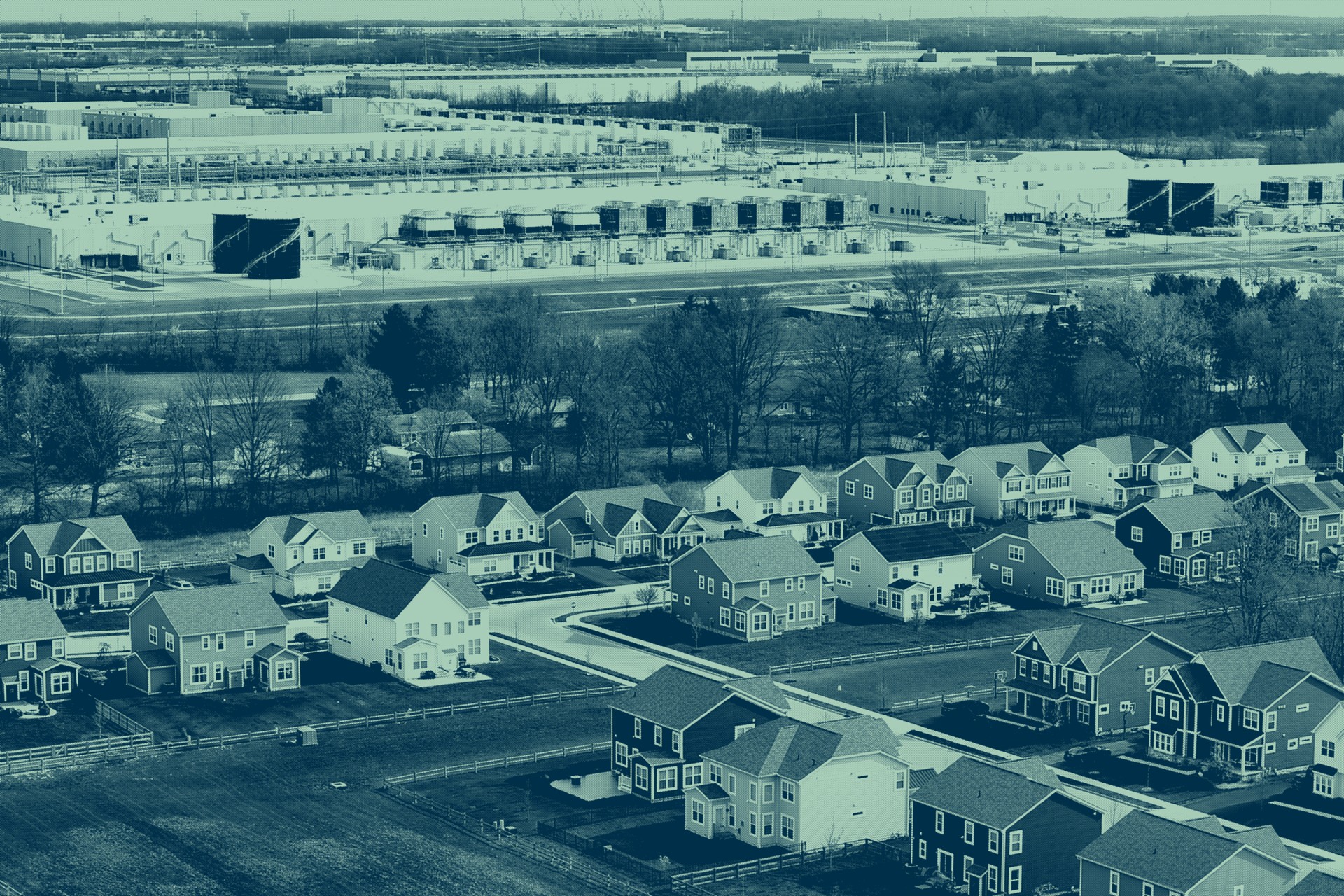
Communities should not have to choose between saying “no” to economic growth and saying “yes” to development at any cost. There is a better way forward—one that makes data centers work for communities and their residents, not the other way around.
Data centers are the backbone of the modern digital economy, underpinning everything from email to e-commerce to cloud computing. They are also essential infrastructure for America’s long-term economic growth. But as the demand for computing power grows and the physical infrastructure becomes more complex, data centers also place new and significant demands on land, water, electricity, roads, and public services. Residents have legitimate concerns that historical patterns will repeat themselves and their communities will bear the costs while others capture the benefits. Those concerns deserve real solutions. But rather than facing a binary choice of blanket moratoriums or unchecked development, what if there were a different approach that ensured communities get a fair deal?
The town of Jay, Maine, shows what a different approach can look like. After the closure of its largest paper mill erased one-fifth of the town’s tax base, Jay secured a $550 million data center investment expected to create hundreds of construction jobs, more than 100 permanent jobs, and substantial new tax revenue—all while remaining subject to Maine’s environmental and permitting standards. For a town of about 4,600 people, that investment represents a real opportunity for growth.1 Governor Janet Mills vetoed a statewide moratorium in part to preserve that opportunity. Without that project, the tax revenue that could support lower property taxes, schools, libraries, hospitals, and other local priorities might have gone elsewhere—leaving Jay behind again.
The question should not be whether data centers should be built, but how they should be built. Policymakers can ensure they cover their own costs, generate tangible community benefits, create lasting economic opportunity, and give local residents a meaningful seat at the table.
The reality is that data centers are going to be a big part of America's future. The question isn't whether they will be built, but rather: Can Michigan benefit from these jobs and build data centers in a smarter way while upholding our strong environmental laws to protect our precious natural resources?2 – Michigan Governor Gretchen Whitmer
Ensure Families Don't Pay the Cost
Data centers can require significant investments in new electric infrastructure. Families and small businesses should not be left paying for those costs through higher utility bills. Some companies have acknowledged this concern. Amazon, Microsoft, Google, OpenAI, and Meta have all pledged to protect ratepayers and invest in the communities in which they build.3 Voluntary commitments are useful, but they are no substitute for clear rules. Policymakers can ensure companies work with local utilities to pay the costs created by their own demand—not shift them onto households.
Data Centers Can Help Upgrade the Grid
Data centers can help pay for long-needed grid upgrades. The combination of aging infrastructure and insufficient power generation has left America’s grid unable to keep pace with projected demand growth.4 Data centers can help address both. Many AI companies have invested in sustainable energy sources, including nuclear, solar, wind, and battery storage, to add new capacity to the grid.5 Data centers also work with regulators and grid operators to cover the costs associated with connecting large new projects to the grid.6
Policymakers and regulators can also ensure data centers cover their fair share of the system-wide upgrades their projects need. Pennsylvania's GRID Standards, for example, require data centers that want faster permitting to pay the full transmission upgrade costs needed to serve their demand.7 In Virginia, taxes on data centers’ electricity use are expected to raise $600 million per year, which could be used to upgrade aging infrastructure.8
Policymakers should also encourage regional cooperation. Every community and region has unique energy needs and grid conditions, and any new project requires coordination among utilities, transmission providers, grid operators, and customers.
Data Centers Can Shoulder Cost Risks
AI demand is growing rapidly, but no one knows exactly how much electricity future data centers will need. Utilities must plan years in advance, often building generation and grid infrastructure based on the amount of power a developer reserves—not the amount it ultimately uses. If those projections prove too high, households could end up paying for infrastructure that sits underused.
Policymakers can ensure that risk falls on developers, not ratepayers. Large new electricity users should pay for the capacity they reserve, not just the power they ultimately consume. State and local agreements can reinforce that principle through tariffs for large-load users, including upfront grid connection payments, minimum-use requirements, and penalties if a company reserves far more capacity than it ultimately needs or abandons a project altogether.
If companies want the Commonwealth's full support - they must meet strong standards on energy affordability, clean energy generation, transparency, workforce development, community impact, and environmental protection. This is about setting a higher bar for projects and ensuring development happens responsibly and in a way that benefits Pennsylvanians. – Pennsylvania Governor Josh Shapiro
Ensure Communities Share Data Center Benefits
Data centers use local land, water, roads, public services, and electric infrastructure. Communities that host them should receive clear, visible benefits in return. With the right policies, data centers can expand the local tax base, strengthen public services, and invest directly in local priorities.
Data Centers Can Strengthen Local Budgets
Data centers can become major sources of local tax revenue, helping communities to lower tax burdens and invest in public services. For example, in Joliet, Illinois, officials estimate the proposed Joliet Technology Center will generate about $310 million in property taxes over 30 years plus about $40 million in utility taxes.9 This revenue could support police, fire protection, and infrastructure, thereby reducing the tax burden on homeowners. Quincy, Washington, used data center tax revenue to help lower property taxes for residents while also replacing a hospital, upgrading the high school, and building a new public market.10
Policymakers can ensure local communities share directly in the tax benefits generated by data center development.
Data Centers Can Invest Directly in Communities
Taxes are important, but they are not the only way communities can benefit. Some communities require community benefit agreements before projects move forward. These agreements allow developers and local leaders to negotiate investments tailored to local needs, such as parks, infrastructure, open space, workforce programs, and public facilities. For example, the Lancaster AI Hub agreed to pay $20 million to fund economic development and sustainability initiatives under a Community Benefits Agreement with the city of Lancaster, PA.11 Cedar Rapids, IA, similarly negotiated a commitment for data center operators to contribute to the Community Betterment Fund on a per-year, per-center basis.12
Policymakers can encourage these agreements for large projects while ensuring local officials and residents—not just developers—help decide how those investments are used.
Ensure Workers Share in the Opportunity
Data centers create a surge of construction jobs and a smaller number of long-term operations jobs. There’s a way to use permitting, tax incentives, and other public approvals to ensure those jobs are high-quality, create opportunities for local workers, and leave communities with a stronger workforce long after construction ends.
Data Centers Can Create Good Jobs
Public incentives should come with public expectations. States can require developers to pay competitive wages, hire local workers where possible, and create meaningful employment opportunities. For example, Pennsylvania's GRID Standards require qualifying projects to create at least 200 construction jobs, create at least 50 new jobs after four years, pay at least 125% of the Pennsylvania statewide wage, provide at least $1.5 million in annual employee compensation, and submit a local hiring plan. Governor Mikie Sherrill’s four-part data center plan would require developers to use local trade workers and pay prevailing wages.13
Policymakers can tie public approvals and incentives to job quality, local hiring, and strong labor standards.
Data Centers Can Partner With Unions
Rapid data center construction will require thousands of electricians, pipefitters, operating engineers, and other skilled trades workers. Project labor agreements set wages, benefits, and working conditions before construction begins. They can reduce labor disputes, improve safety and training, and help ensure that rapid buildout does not come at the expense of workers. Massachusetts Governor Maura Healey issued an executive order requiring state agencies to review whether a project labor agreement would benefit large construction projects before issuing a bid request.14 Washington state has adopted a similar policy.15
The private sector is already showing that strong labor standards and fast construction can go together. North America’s Building Trades Unions announced a data center agreement with OpenAI and Oracle, as well as a $2.5 billion annual training investment.16
Policymakers can encourage project labor agreements and expand apprenticeship programs to build the skilled workforce needed for continued growth.
Data Centers Can Build Tomorrow’s Workforce
Construction jobs matter, but communities should also benefit after the construction phase ends. Partnerships with community colleges, vocational schools, universities, and local employers can prepare workers for careers in data center operations, electrical work, AI infrastructure, and related industries.
California has announced a collaboration between California State University and leading technology companies to develop accessible degree programs. These programs are intended to help students prepare for jobs in an economy shaped by AI while helping employers find skilled local workers. Companies are also building their own training programs. Microsoft's Datacenter Academy works with community colleges and vocational schools to train data center workers.17 Meta is piloting a no-cost skilled trades program with a job guarantee after graduation.18
Policymakers can encourage developers to invest in local education and workforce partnerships so communities continue benefiting long after construction is complete.
Ensure Communities Have a Seat at the Table
Communities should not learn about major data center projects only after the important decisions have already been made. Residents deserve meaningful opportunities to understand proposed developments, raise concerns, and shape outcomes. Strong community engagement builds trust, improves projects, and helps ensure data centers reflect local priorities.
Data Centers Can Be More Transparent
Communities should have clear information about projects before construction begins. States can require developers to disclose expected impacts on energy use, water consumption, traffic, and other community resources while providing opportunities for meaningful public input. Pennsylvania's GRID Standards require developers to notify affected local governments, publish project timelines, and hold public meetings before receiving expedited permitting and other benefits.
Community engagement should not end once permits are approved. Community advisory boards and community benefit agreements can provide ongoing opportunities for residents, local businesses, and civic organizations to work with developers throughout the life of a project. These partnerships create a regular forum to address concerns, monitor commitments, and identify new opportunities for investment. The NAACP has released a toolkit for communities negotiating for transparency and community investment.19
Policymakers can require greater transparency and public engagement as part of the entire process for large data center projects.
Conclusion
Data centers are coming. Blanket moratoriums will not stop AI infrastructure from being built—they will simply send investment elsewhere. But communities don’t have to accept development without meaningful protections. In fact, with the right policies in place, data centers can deliver tangible benefits to communities that need them.
Policymakers have a rare opportunity to shape the next generation of infrastructure. With the right policies in place, we can build data centers while protecting ratepayers, sharing economic gains, creating quality jobs, and giving residents a meaningful voice. That is the path to making data centers assets—not burdens—for the communities that host them.