Interview Published February 25, 2026 · 8 minute read
Interviews with Influencers: Lodriguez Murray

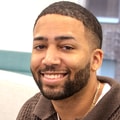
In this special Black History Month episode of Interviews with Influencers, Romelo Wilson (Education Communications Advisor) sat down with Lodriguez Murray, Senior Vice President of Public Policy and Government Affairs at the United Negro College Fund, to explore the role of HBCUs in advancing Black student success. Lodriguez draws on both personal and professional experience to discuss how HBCUs support socioeconomic mobility and the federal policies that help students thrive. He also reflects on the broader challenges and opportunities for Black students in higher education today.

Video Transcript
Romelo: Welcome back to Interviews with Influencers! I’m your host, Romelo Wilson, Education Communication Advisor at Third Way, and we’re joined by Lodriguez Murray, Senior Vice President of Public Policy and Government Affairs at the United Negro College Fund.
Lodriguez has led UNCF’s federal advocacy efforts since 2017, driving strategies that have secured historic investments for HBCUs and the 50,000 students the org serves. A first-generation college graduate and UNCF scholarship recipient, he brings both lived experience and policy expertise to advancing access and economic mobility for Black students.
So welcome, Lodriguez. It’s a pleasure having you here.
Lodriguez: Great to be with you today.
Romelo: Before we dive into the hot topics, I like to kick things off with a bit of an icebreaker. Given the month we’re in, how are you celebrating Black History Month this year?
Lodriguez: Every year during Black History Month, I try to learn about people in our history who haven’t gotten their due. I take a deep dive into books and YouTube and learn about inventors and change-makers.
It’s been especially meaningful with the recent passing of Jesse Jackson, a civil rights icon and two-time presidential candidate. His passing has allowed us to revisit some of the pain, but also the triumph and resiliency of our people. I appreciate that he led a life that allows us to reflect on how far we’ve come and how much further we still have to go.
Romelo: Absolutely. Similar to you, I like to deep dive into history and historical figures. I watch movies like Selma and Till, the Emmett Till film that came out a few years ago. I also attend Black history-themed events. Next week, I’m going to a Black history-themed Pilates class.
Lodriguez: How do you have Black history-themed Pilates?
Romelo: It’s the music. The music creates the culture while you’re doing Pilates. Songs from iconic Black artists and historical figures.
Lodriguez: That’s great. You’re doing a real deep dive.
Romelo: Health and wellness are part of Black history too.
But diving into policy—since joining UNCF, you’ve helped secure major federal investments for HBCUs, including permanent funding and additional targeted support. From your perspective, how have these policy wins changed the landscape for HBCUs and the students they serve?
Lodriguez: First, I thank God that I’ve been able to make the kind of impact we’ve made at UNCF. But I’m also realistic. Most students and colleges don’t care where the money comes from. They just want to know the support is there.
While we’ve been successful working with the federal government to secure targeted outcomes, most students will never read about it. But I’m glad it happened.
I look back to 2018 when we helped Bennett College for Women in Greensboro, North Carolina. That institution is still thriving. We helped shift a federal program to ensure their success.
Paine College in my hometown of Augusta, Georgia is still growing. And then there’s debt relief for 45 HBCUs. We helped eliminate $1.6 billion in debt. That looked like $56 million off Morehouse College’s books, $100 million off Tuskegee’s books, and millions more for others.
I’m grateful and humbled. But I’m also motivated by what still needs to be done. HBCUs are beautiful and necessary institutions.
And over the last five years, something has changed. I no longer get asked whether HBCUs are necessary. I used to get that question all the time. Now funders and members of Congress see their value. That shift means more to me than words can express.
Romelo: I definitely agree. At Third Way, we have this tool called the Economic Mobility Index, and several HBCUs rank top tier, proving their value in driving upward mobility.
Lodriguez: HBCUs have been driving mobility since their inception. Collectively, they impact the American economy by nearly $17 billion annually. They hire and fire like a Fortune 500 company. They’re creating Black entrepreneurs and strengthening the middle class.
They’re finally getting recognition, but I wish all of them received the credit they deserve.
Romelo: Exactly. And as HBCUs consistently outperform expectations in producing Black professionals and leaders, what should policymakers understand about their value?
Lodriguez: HBCUs do one thing better than any other institution: they take students from underserved backgrounds—Pell Grant-eligible students—and help them succeed at higher rates than institutions with far greater resources.
That doesn’t get enough attention. I wish policymakers and philanthropists understood that.
HBCUs are not just Black excellence. They are excellent.
Romelo: As national conversations shift around value and return on investment, how should Black families think about postsecondary options?
Lodriguez: All families should look at HBCUs, not just the well-known ones like Morehouse, Spelman, or Howard, but also Talladega, Texas College, Xavier University of Louisiana, and others.
Many HBCUs are not 100% African American. In fact, they’ve never been exclusionary institutions. They’ve practiced the American dream since their founding.
Look at how diverse the medical and dental schools at Howard and Meharry are. Look at pharmacy programs at FAMU and veterinary medicine at Tuskegee. Americans from all backgrounds are recognizing the value of HBCUs.
Romelo: I love that. It breaks through the stigma that HBCUs are only for Black people, because it’s not. They provide quality education for any American that has interest in attending.
Lodriguez: Exactly. HBCUs are excellent at the graduate level too. We have to break the stigma that you can go to an HBCU for undergrad, but you have to go to a PWI for graduate programs. Again, they are not just Black excellence. They are excellent.
Romelo: Looking ahead, are there policy initiatives you’re excited about?
Lodriguez: I only get excited when something reaches the President’s desk for signature. Until then, I’m anxious. It’s hard to get anything across the finish line in Washington.
We’re focused on everything impacting underserved students and HBCUs. We’re watching Pell daily. We’re also looking very strongly at making sure that a particular program that funds HBCUs at the Department of Education continues to be well funded. We were able to work with the Administration to get that program more than doubled last year, and we’re hopeful to do the same thing in the coming year.
We’re looking at all kinds of changes that happened in the One Big Beautiful Bill Act put forward by the President to make sure that they have the best impact for underserved students and for HBCUs.
And I hate to bring this up because this has been such an upbeat conversation, but HBCUs have faced dozens of terroristic threats in recent years. Ending that and securing funding for campus safety is a top priority.
Romelo: I appreciate you bringing that up. The conversation around HBCUs as a whole is important–whether it’s about their value or just the students themselves because you shouldn’t receive threats no matter where you got to school.
But looking at setting the stage for the future, if you could wave a magic wand and create one policy change for Black students, what would it be?
Lodriguez: If I had a magic wand, I wouldn’t stop at one.
I’d make Pell cover the full cost of higher education so underserved students wouldn’t need loans. I’d fully fund HBCUs and address their infrastructure needs. And I’d keep going.
Romelo: I definitely understand that. The Pell Grant is a hot topic right now, with the recent expansion in eligibility and the lack of funding to support it. It creates dilemmas, particularly for HBCU students and other Pell recipients, because about 1 in 3 undergraduate students receive Pell to some extent.
Lodriguez: For Black students, about 70% are Pell Grant eligible, no matter where they go to college. On average, 70% of students at HBCUs are Pell Grant recipients, though some HBCUs have over 90% of their students eligible.
The Pell Grant is the most effective way to support the students who need a hand up the most, helping them achieve their higher education goals. When we address Pell Grant shortfalls and make awards more comparable to the actual cost of college, we can liberate many students from the cycles of debt that have befallen them.
Romelo: I totally agree. Well, that’s it for this episode of Interviews with Influencers. Lodriguez, thank you for this insightful conversation, especially during Black History Month.
Lodriguez: Thank you for having me. I hope your listeners will support UNCF. As our motto says, “A mind is a terrible thing to waste.”