E-Binder Published May 21, 2025 · 2 minute read
Electoral Asymmetry: Why Republicans Can Win With Their Base—But Democrats Can’t
Third Way

Republicans Can Win with Their Base—but Democrats Can’t
Conservatives make up a 38% plurality of the national electorate, while liberals make up the smallest ideological bloc at 29%. Because conservatives make up a larger portion of the electorate than liberals, Trump doesn’t have to look far beyond his base to win. Meanwhile, Democrats have a tougher path to victory that requires winning a supermajority of voters who lie directly in the center of the ideological electorate—moderate voters. – Third Way

There Is an Ideological Asymmetry in the Presidential Coalitions, Giving Republicans a Distinct Advantage in Winning
7 in 10 Trump voters were self-described conservatives in 2024. Meanwhile, liberals made up only half of Harris’s voters, with moderate and conservative voters combined comprising half of Harris’s coalition. Given the asymmetry of our electoral coalitions, and the ideological advantage that Trump has with conservative voters in the battleground states, the burden is significantly greater for Democrats to build a winning presidential coalition.
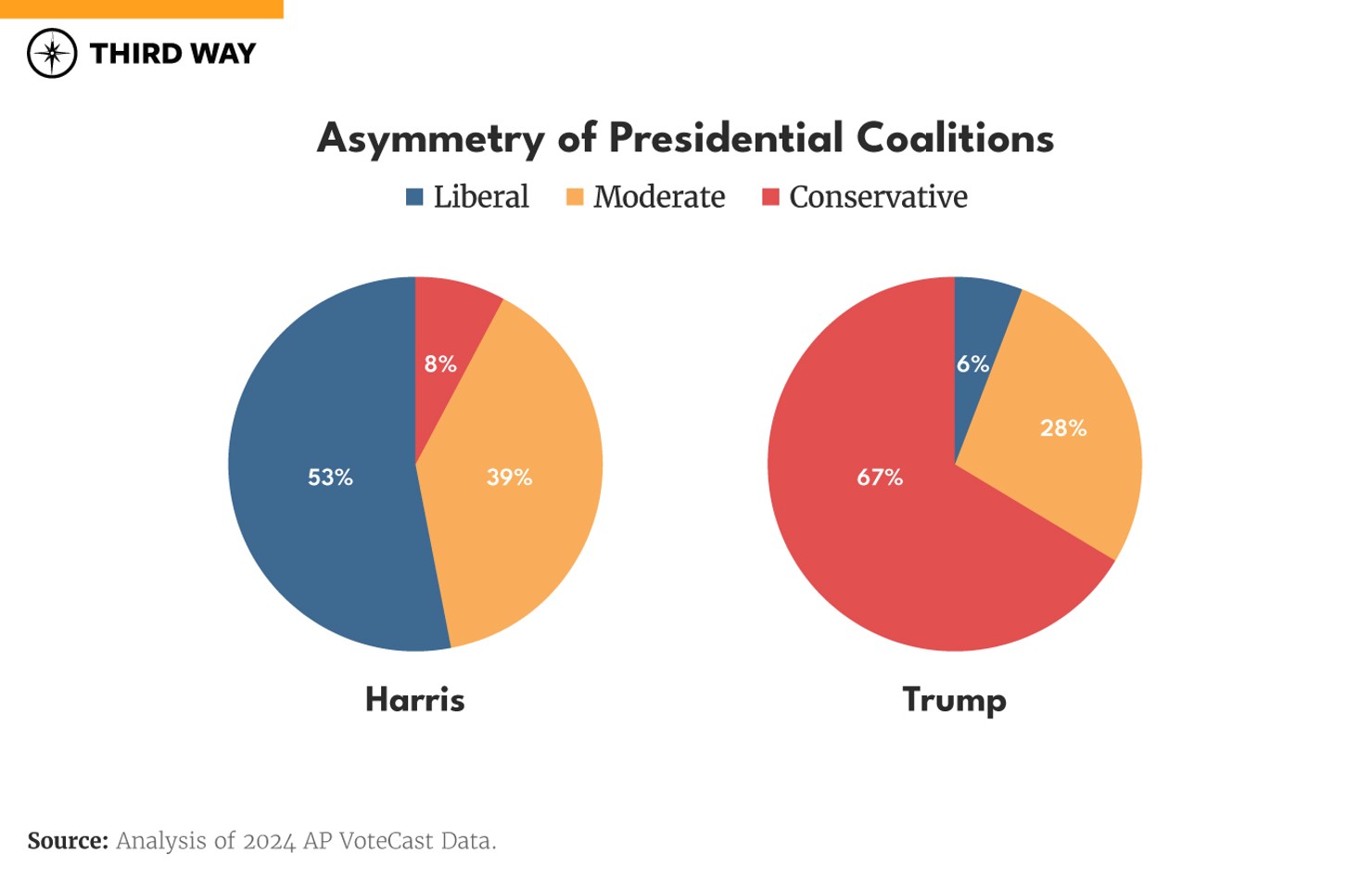
Conservatives Comprised Larger Portions of Trump’s Coalition in the Battlegrounds (65% to 72%) than Liberals Did of Harris’s Coalition (47% to 55%)
Conservatives, particularly far-right MAGA conservatives, dominate the Republican coalition and have an incredible amount of electoral vote leverage compared to the liberal progressive bloc’s leverage in the Democratic coalition.