Blog Published February 27, 2026 · 2 minute read
The Great Class Inversion of the Democratic Party
Third Way


The Democratic Party’s Coalition Has Hemorrhaged Non-College Voters
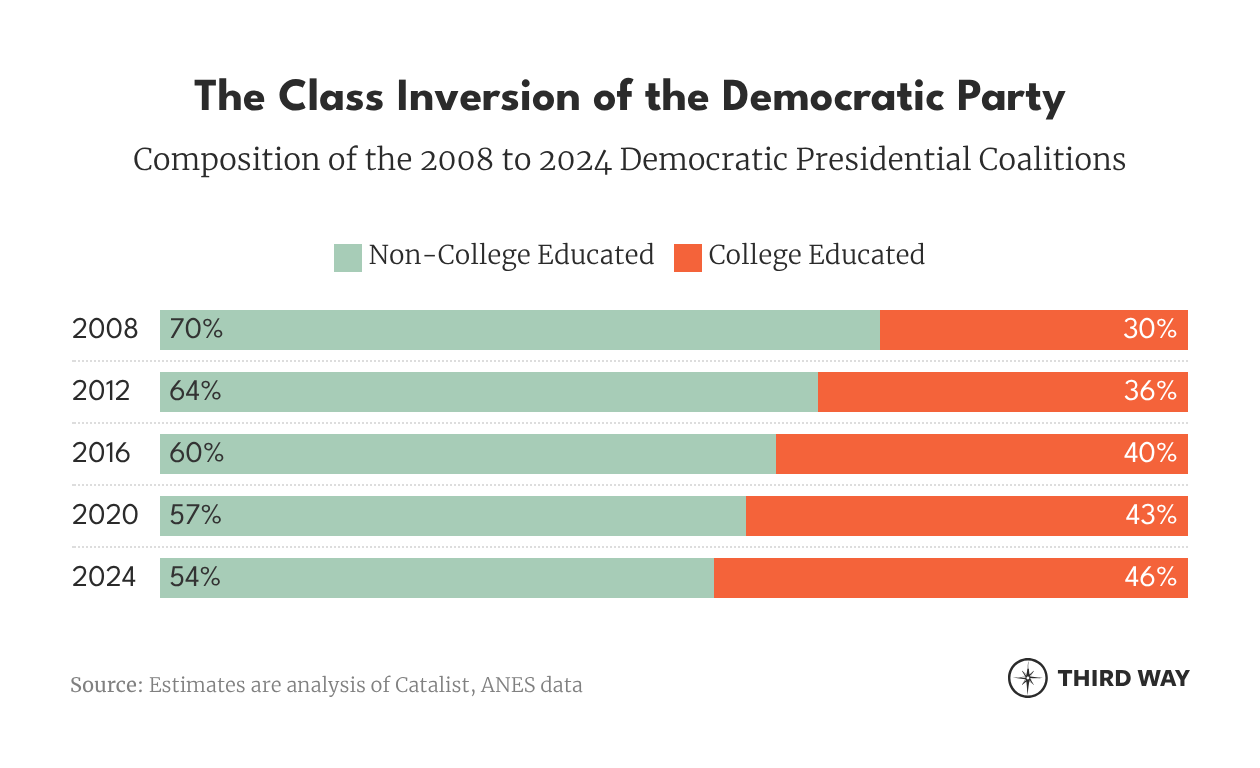
Democrats risk being locked out of power for a generation as they run up against the limits of the great class inversion in American politics. In 2008, Democrats were a working-class party—7 in 10 of the voters in our coalition didn’t have a college degree. By 2024, that share fell by 16 points, while college-educated voters grew in our ranks point for point. That’s not a shift at the margins—it’s a class inversion of the party.
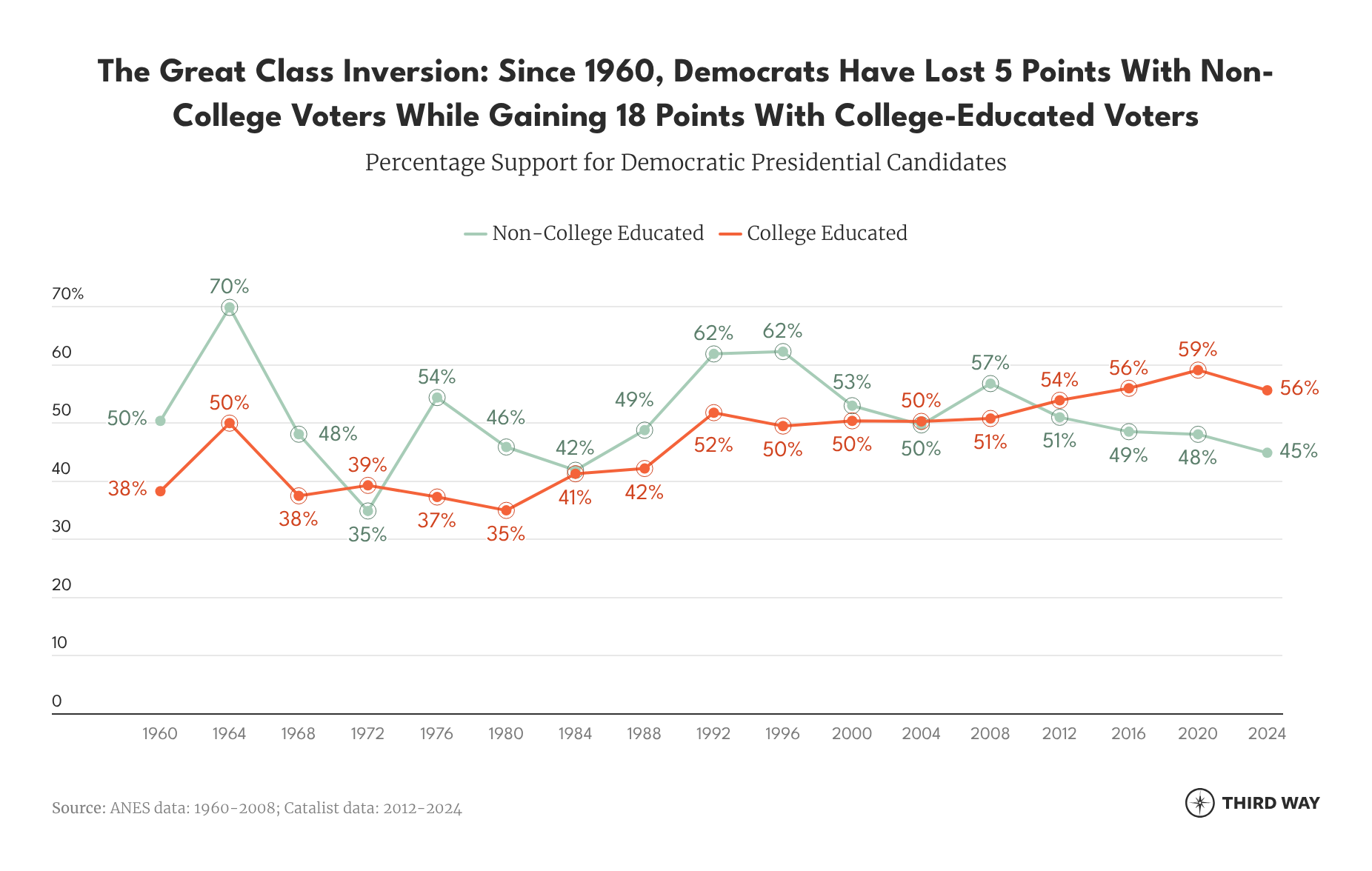
As Democrats have won greater shares of college-educated voters, they have hemorrhaged with non-college voters. From 1960 to 2024, Democrats lost 5 points with non-college voters and gained 18 points with college-educated voters. This amounts to a serious structural disadvantage in the electoral college and the Senate, as Democrats have become embarrassingly uncompetitive outside of the most college-educated states in the country.
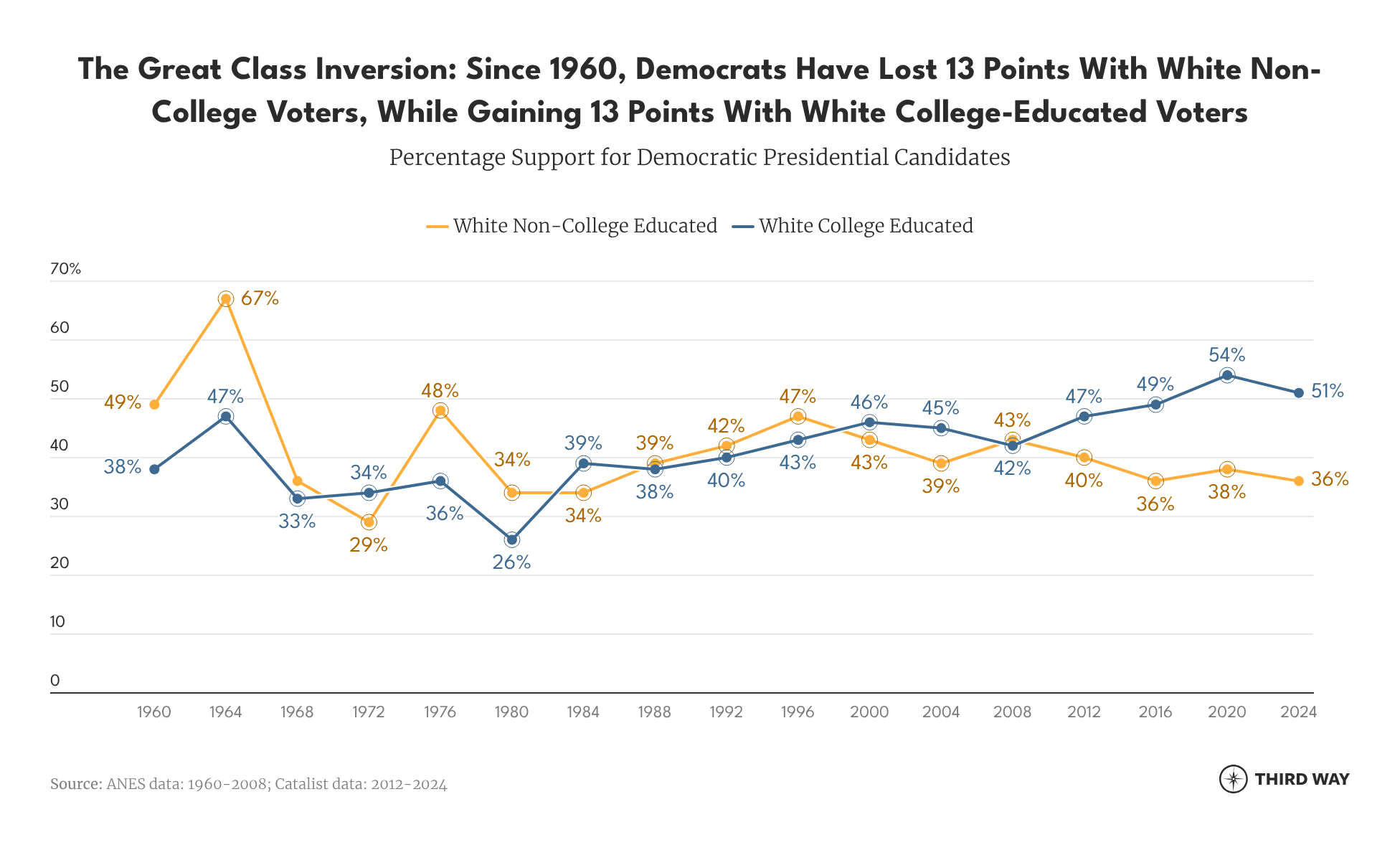
This great class inversion has been even more severe with white working-class voters. From JFK to Kamala Harris, Democratic support with white non-college voters has dropped from 49% to 36%, while Democratic support with white college-educated voters inversely grew from 38% to 51%. While there have been minor resurgences in Democratic support with white working-class voters in recent decades—namely the elections of Bill Clinton and Barack Obama—the trend line is clear: Democrats have a deep structural problem that could be catastrophic if they do not become a party of the working-class again.