Building More While Paying Less: The State-by-State Savings from Permitting Reform
Takeaways
- The Bipartisan American Affordability and Jobs Act (BAAJA) will result in a huge buildout of infrastructure that delivers more reliable power to homes and businesses. While major grid investments would normally mean higher costs for consumers, BAAJA would actually save Americans $36–$56 billion by 2035.
- New modeling from the Rhodium Group finds that, in less than a decade, BAAJA could reduce residential electricity prices and bills nationally by 3–4%. Other provisions of the legislation not captured in this modeling are expected to lower electricity prices and bills even further, suggesting that these findings represent a conservative estimate of the bill’s potential savings.
- Transmission reform alone would only reduce bills by 1–2% and leave many of the challenges facing America’s energy infrastructure unresolved. Policymakers need to seize this opportunity to deliver lower costs and modernize the energy system by passing BAAJA this Congress.
BAAJA Means More Energy Buildout with Lower Energy Bills
Americans made it clear in the 2026 Midterms that affordability is one of their top concerns, and rising energy costs are a big part of the problem. Third Way polling finds that 78% of Americans say their energy bills have increased in the past year, and 63% are concerned about their ability to afford their utility bills moving forward.
New modeling from the Rhodium Group commissioned by Third Way demonstrates how comprehensive permitting reform could help address voters’ affordability concerns. By making it easier to expand transmission infrastructure, connect lower-cost energy resources to the grid, and accommodate rising electricity demand, the Bipartisan American Affordability and Jobs Act (BAAJA) is an essential step to building a more affordable and reliable electricity system. And remarkably, we can make these upgrades while reining in rising electricity bills.
The analysis finds that BAAJA’s new rules for transmission, permitting certainty, ratepayer protections, and streamlined environmental reviews could reduce average annual residential electricity bills nationally by $41–$66 per household in 2035.
These provisions mean that, in less than a decade, we can build out the grid we need to meet electricity demand while saving residential customers $36–$56 billion in cumulative electricity bills.
This analysis demonstrates why comprehensive reform matters. On their own, the transmission provisions in BAAJA–expanding access to lower-cost electricity generation and allowing regions to share affordable power–reduce national residential electricity bills by only 1–2% in 2035. To bring down prices further and double savings, we need to combine transmission reforms with protections for ratepayers from data center costs, permitting certainty for wind projects, and natural gas infrastructure expansion.
States across the US would see these savings. Of the lower 48 states, 46 see reductions in both electricity prices and household bills across the modeled scenarios. With that level of national impact, this bill can turn political promises on affordability into tangible benefits for American households.
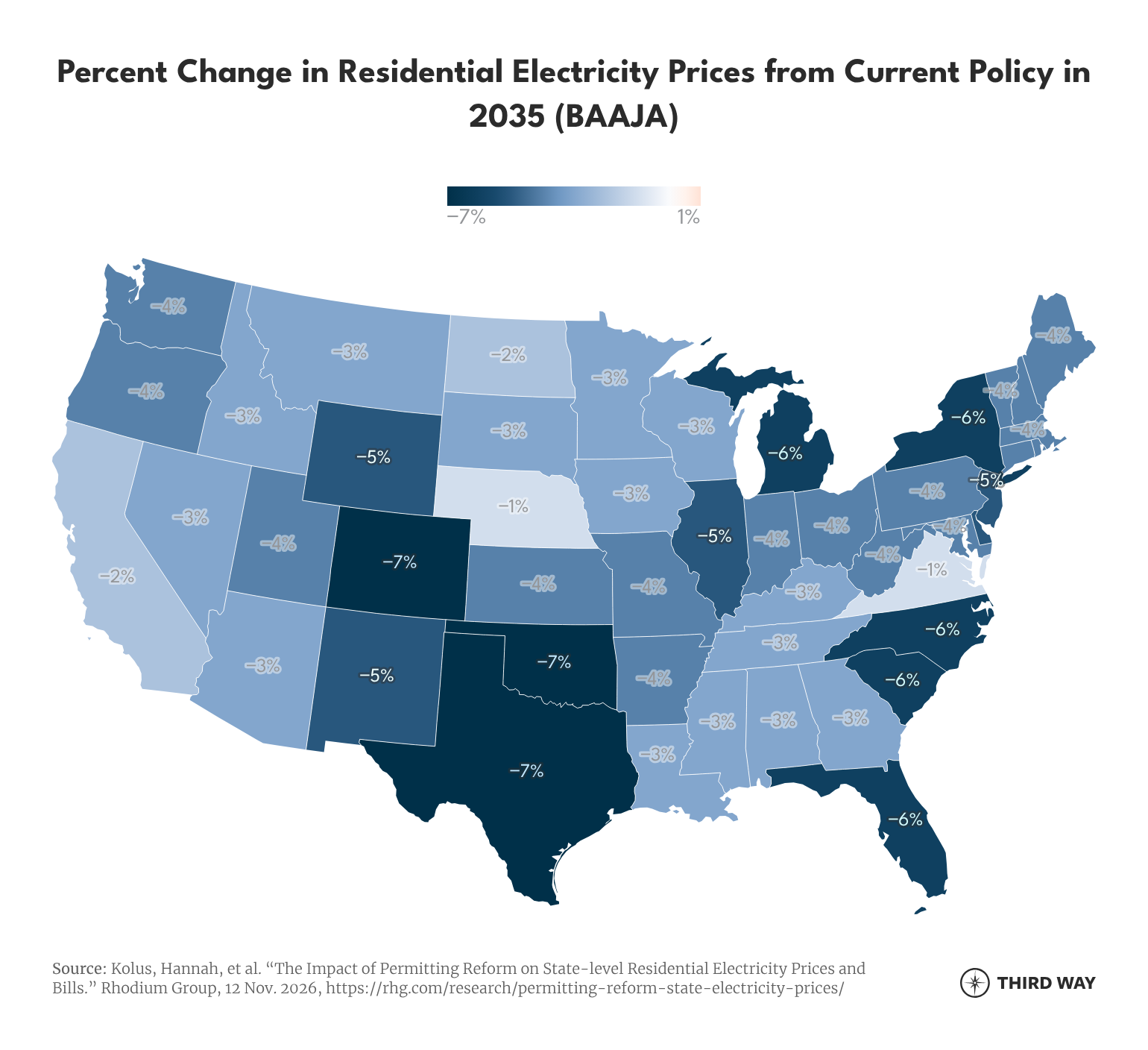
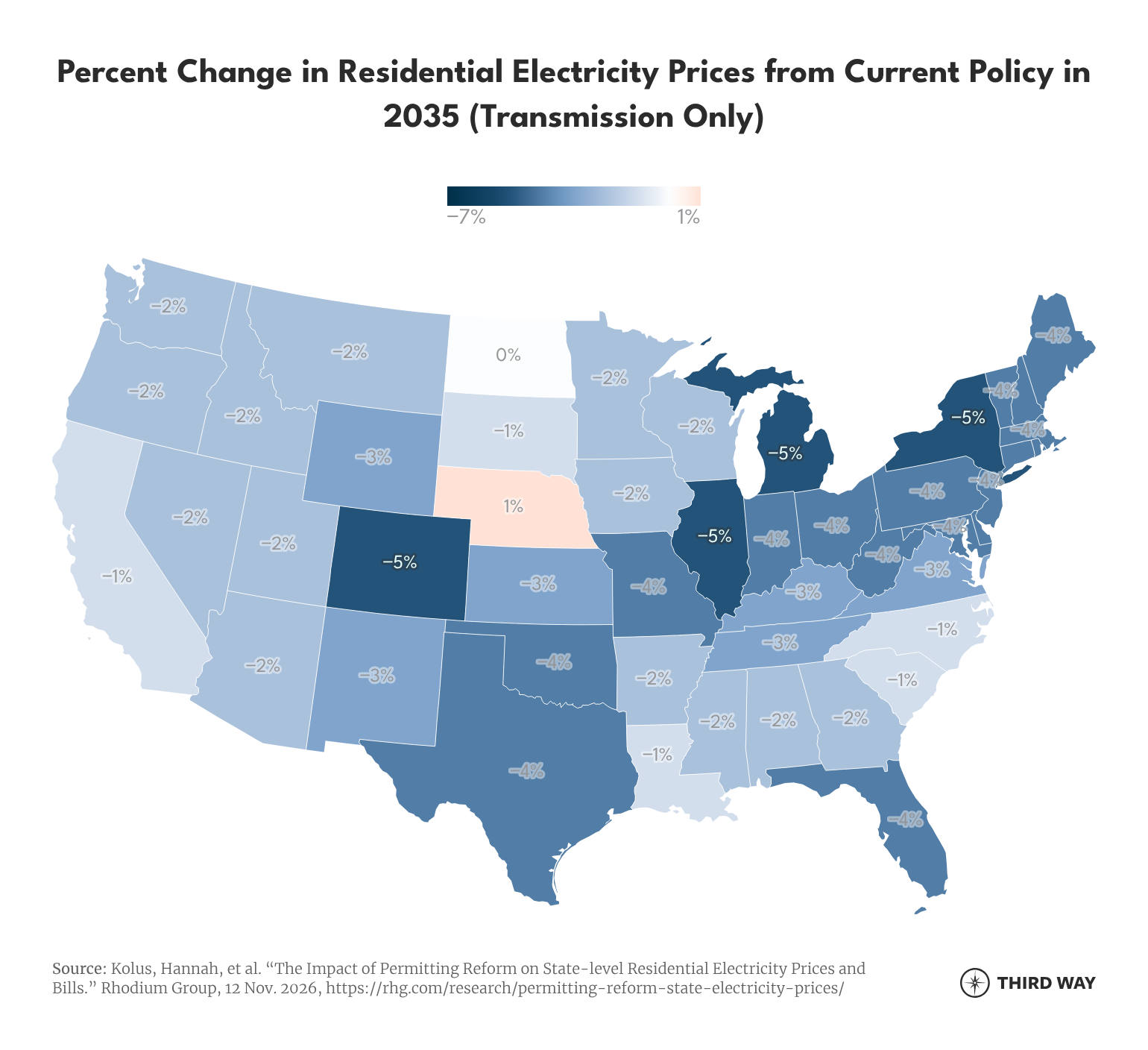
While all scenarios produce widespread cost savings across the country, the low-emissions pathway (depicted above) demonstrates how permitting reform, coupled with low-cost wind, solar, and storage, can save Americans money on their energy bills. For more details on the full findings and the emissions scenarios, see Rhodium’s report.
BAAJA Would Lower Electricity Bills in Almost Every State
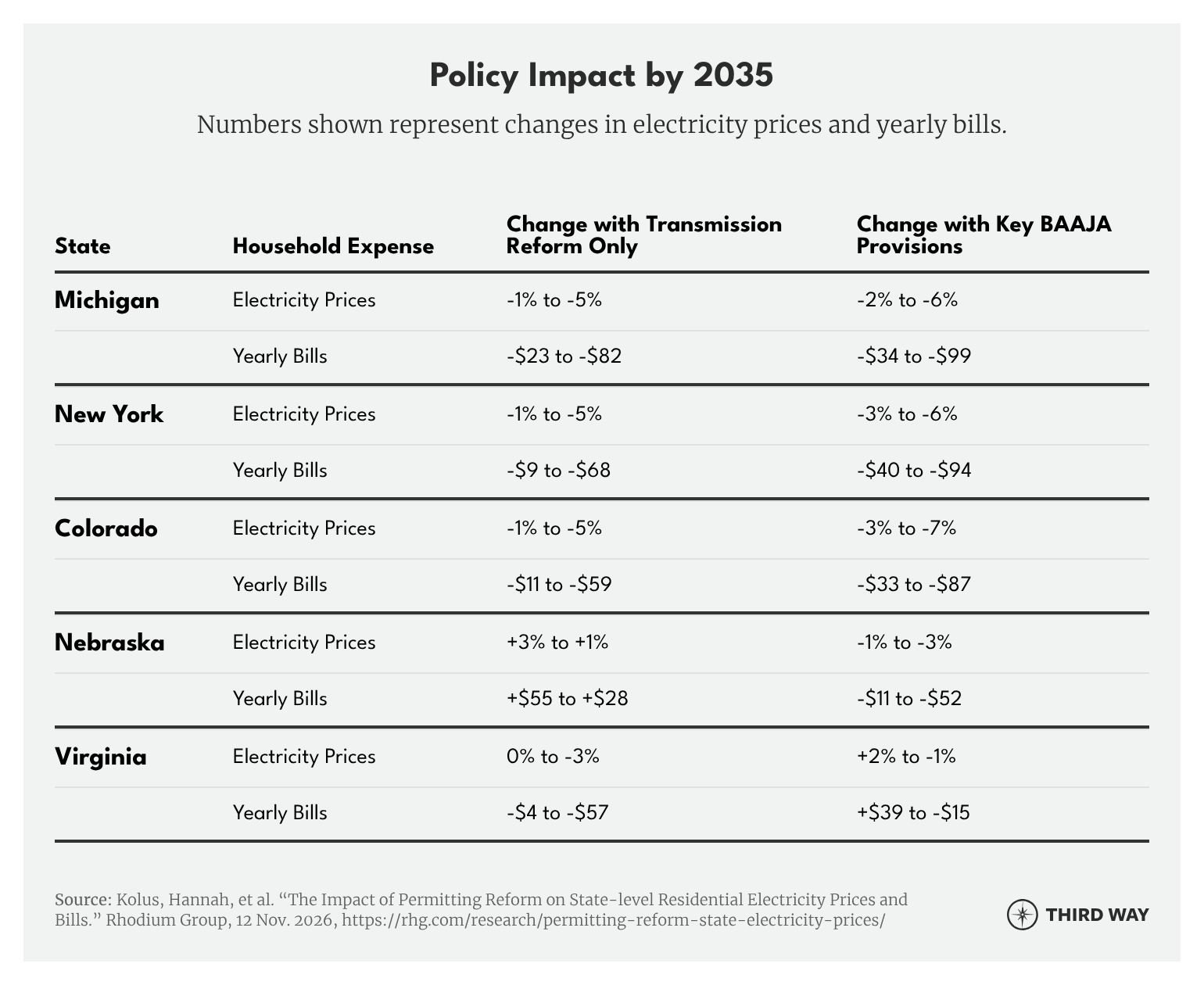
As seen in the table above, transmission alone can only bring down costs to a certain degree. We need the full suite of BAAJA provisions to achieve the greatest savings for residents across the US. Colorado and New York residents will see significant cost savings from project certainty after dealing with the Trump administration’s attempts to block wind projects. As Michigan looks to reindustrialize, BAAJA will enable new power supply to come online while lowering costs for Michiganders. Even in Nebraska, which has one of the lowest average energy bills in the country, residents could see money back in their pockets, largely due to the data center ratepayer protections. With BAAJA's passage and a low-emissions strategy, like what Governor Spanberger has proposed, Virginia can address its uniquely high power demand and deliver savings to customers.
To Deliver on Affordability for Americans, Pass BAAJA
There’s a growing body of independent research that underscores the potential affordability benefits of BAAJA. From Rhodium’s national findings to modeling from Resources for the Future, Grid Strategies, and the Center for Climate and Energy Solutions, these analyses demonstrate the substantial nationwide benefits from modernizing America’s energy future.
From the Great Lakes of Michigan to the Rocky Mountains of Colorado, federal action can lower electricity costs for consumers all across the country. By making it easier to both build energy infrastructure and protect ratepayers from unnecessary costs, BAAJA offers a path toward a more affordable and reliable electricity system.
Americans have voted for action, not endless waiting for a hypothetical “better deal.” Congress should seize this opportunity to pass BAAJA, build the energy system America needs, and lower Americans’ electricity bills in the process.


Never Miss an Update
Sign up for updates on the pragmatic, center-left ideas shaping the future of American policy.