Climate & Energy Communications Cheat Sheet 11/15/18

We can’t begin this email without mentioning the devastating wildfires that have raged over the last week in Southern California. Our hearts go out to those affected and their loved ones. The White House is spewing dangerous rhetoric and misplacing blame. That’s not going to help. Addressing this problem means looking at all of the root causes--and that includes climate change.
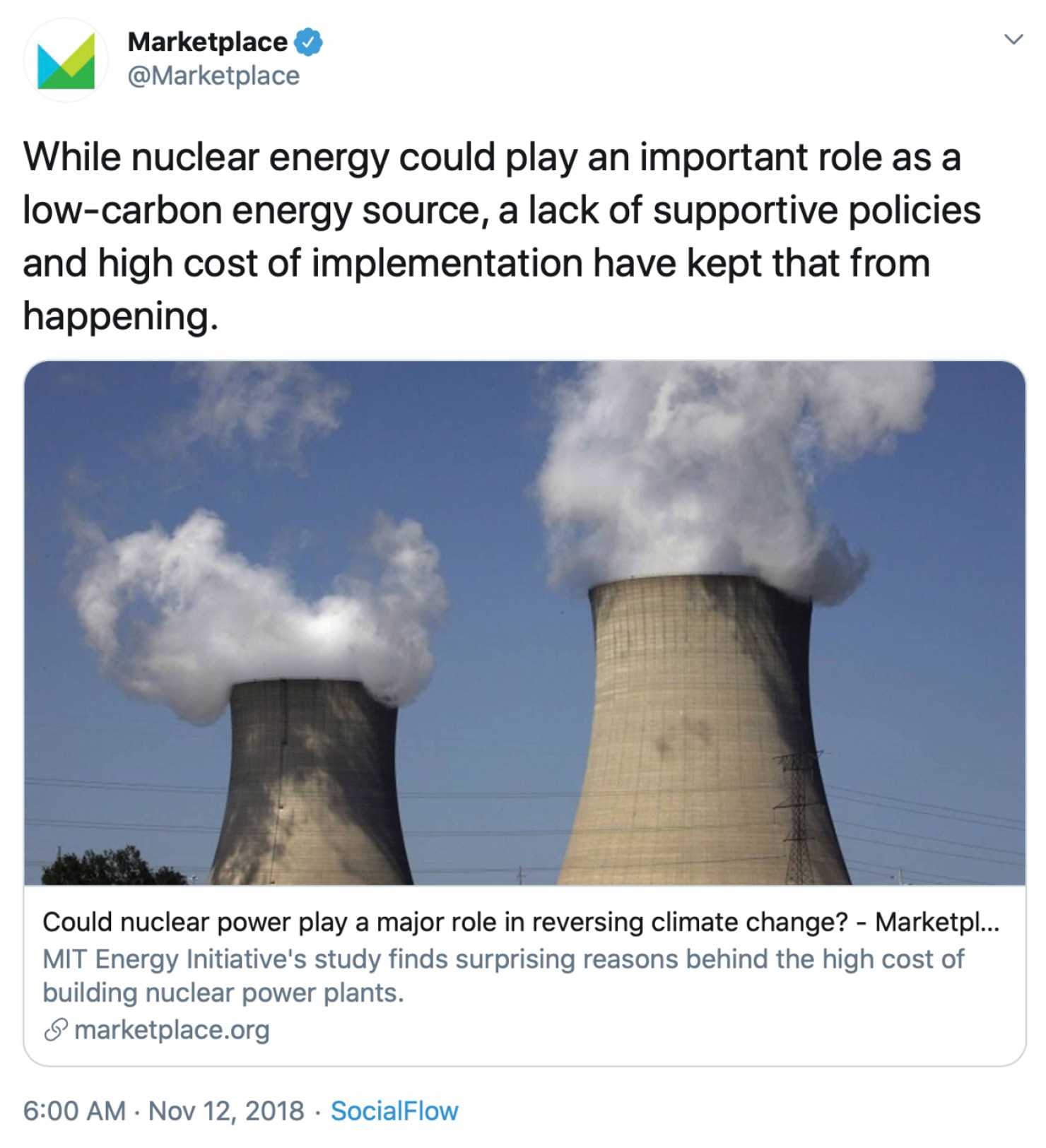
In today’s edition, we wanted to focus on a pretty major event in the climate world that you might have missed during the chaos of the election. Last Wednesday, the Union of Concerned Scientists (UCS) released a report called The Nuclear Dilemma, which confirms that in order to aggressively address climate and reach zero carbon emissions by 2050, we must protect existing nuclear plants, and leave the door open for a variety of new carbon-free resources to help solve this problem. UCS has always been cautious and skeptical about nuclear energy, which is why their new report is such a big deal. UCS is an extremely well-respected voice in the climate community, so it makes a big difference that they’ve joined a growing chorus of environmentalists, academics, philanthropists, energy experts, and business leaders acknowledging nuclear’s vital role in the climate fight.
Just within the last several months Google, Bill Gates, and the MacArthur Foundation have all either launched clean energy initiatives that include nuclear as a part of a tech-inclusive climate strategy or have begun advocating for it to be a larger part of the climate conversation. And just last week, the Nature Conservancy released a report that called for “increasing nuclear energy to one-third of total energy output” in order to ween the world off its dangerous diet of fossil fuels and drastically reduce emissions.
Check this out
Third Way’s Lindsey Walter and Ryan Fitzpatrick, analyzed the UCS report, giving a few highlights and some context to explain why it’s such a big deal.
Talking Points
- UCS has decided to put climate over orthodoxy. Despite its long-held concerns about nuclear power, this reputable environmental organization took a look at the numbers and decided that we need all the carbon-free resources we can get our hands on in order to solve the climate problem.
- This is a sober, quantitative analysis of what is at stake if we lose a significant portion of the US nuclear fleet--our largest source of carbon-free power.
- Between the plants already scheduled to close and a number of others at risk of retiring due to lack of profitability, the report estimates that 22% of US nuclear capacity could go offline in the near future and that this power would primarily be replaced by fossil fuels like natural gas and coal.
- The UCS analysis showed that nuclear retirements could cause a 4 to 6 percent increase in US power sector carbon emissions by 2035, at a time when we need to be rapidly cutting emissions. (That is equivalent to an additional 15 million cars on the road each year, btw).
- The release of the IPCC report has only reinforced the need for swift action to cut carbon pollution. We share UCS’s conclusion that the United States should act now to keep our endangered nuclear plants online and accelerate the build-out of a variety of new clean energy resources to eliminate carbon from the power sector as quickly as possible.
- While UCS’s report advocates for broad policy solutions like a carbon tax, it also throws support behind the less-discussed (but highly effective) option of a clean energy standard (CES) at the federal or state level.
- This kind of policy would harness renewables, nuclear, carbon capture, and other low-carbon technologies to put us on the fastest path to zero emissions in the power sector.

Downloads
Latest Publications
On Permitting Reform: How To Talk About BAAJA
Past the Pump: How Americans are Footing the Costs of Trump’s War of Choice
EIA is Under Attack. That’s Dangerous for the Entire Energy Sector.
On the Grid: PERMIT Me to Celebrate
Never Miss an Update
Sign up for updates on the pragmatic, center-left ideas shaping the future of American policy.