Memo Published June 16, 2026 · 17 minute read
Trump Has Quietly Dismantled Protections for Dreamers
Marla L. Guerra & Sudria Twyman
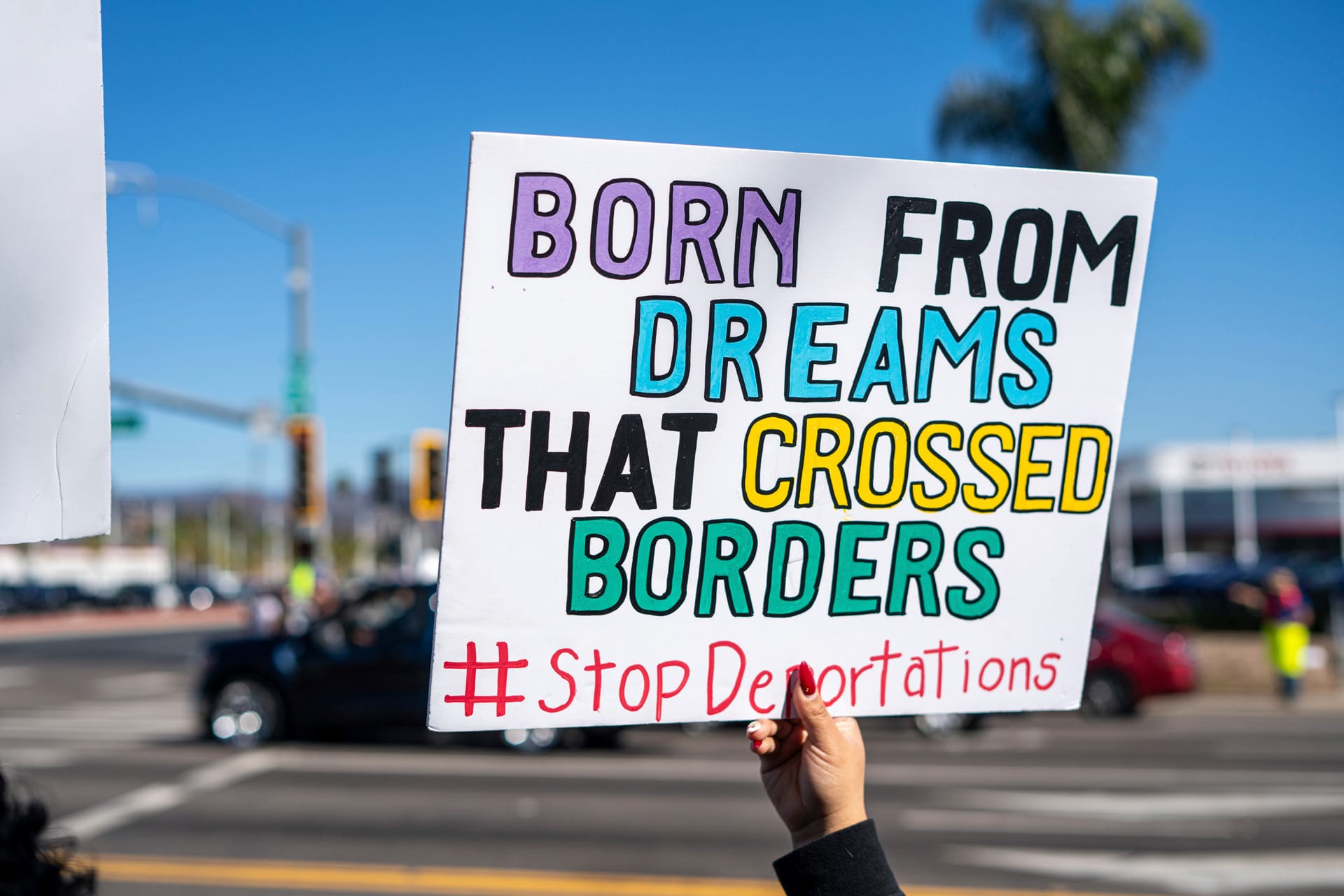
President Trump has never given up on ending DACA, the program created under President Obama to protect Dreamers. In his first term, Trump tried to terminate the program outright and ran into the courts, public backlash, and political resistance. This time, the Administration has changed tactics. Rather than announce another formal termination, it is trying to hollow the program out from the inside—using immigration enforcement, agency rulemaking, adjudication delays, and a politically-aligned Board of Immigration Appeals to make DACA weaker, less reliable, and less protective.
Last summer, Homeland Security Assistant Secretary Tricia McLaughlin relayed to news outlets that “DACA does not confer any form of legal status in this country,” and that “a DACA recipient may be subject to arrest and deportation.” Since then, the Trump Administration has stopped at nothing to prove that point. It has detained and deported DACA recipients, stripped away health care and other benefits, pressured states and universities to roll back support for Dreamers, and turned the immigration bureaucracy against a population that has complied with federal requirements for more than a decade.
These moves have essentially added up to the backdoor termination of DACA. The Administration does not need to formally end the program if it can make the protections it was meant to provide meaningless. It does not need to revoke DACA on paper if it can make recipients easier to arrest, unable to renew their status, and more vulnerable in immigration court. The method is more surgical than Trump’s first-term attack, but the objective is the same: dismantle DACA and expose Dreamers to the Administration’s mass deportation campaign.
Dreamers Caught in Trump’s Deportation Dragnet
Created in 2012, the Deferred Action for Childhood Arrivals (DACA) program was designed to protect young undocumented immigrants who were brought to the United States as children from deportation and to grant them temporary, renewable work authorization. To qualify, recipients had to meet strict requirements, pass background checks, and regularly provide personal information to the federal government.
Now, the Trump Administration is exploiting that vulnerability. Since Trump took office again, the aggressive and indiscriminate nature of interior immigration enforcement has put DACA recipients at growing risk of arrest, detention, and deportation. Below is a compiled list of a few DACA recipients who have been swept up in Trump’s second-term enforcement campaign. However, these cases are only a snapshot and do not capture the full scale of the harm or number of DACA recipients caught in Trump’s immigration crackdown.
- In Texas, Juan Chavez Velasco, a DACA recipient who was brought to the US at the age of 8, was detained by ICE agents on February 18, 2026, while on his way to the hospital NICU to deliver breast milk to his premature infant daughter, who was born 12 days prior to his arrest.
- In California, Javier Diaz Santana, a deaf and mute DACA recipient who was brought to the US at the age of 5, was detained on June 12, 2025 during a raid at his worksite. When trying to identify himself, agents confiscated the tools he relies on to communicate.
- In Arizona, Karla Toledo, a DACA recipient, was detained on May 18, 2026 after federal agents forced themselves into her home. Toledo has been in the United States since she was a 1-year-old, has no criminal record and no warrant was presented during her arrest. Toledo was released after posting bond.
- In Florida, Gilberto Garcia Cruz, a 26-year-old DACA recipient with autism, was detained by federal agents on April 10, 2026. ICE agents forcibly pinned Cruz against their vehicle as he called for his mother, who informed agents that he was autistic. Federal agents also pointed a taser at family members during the encounter. Authorities did not disclose the reason for his arrest and he has since been released from ICE custody.
- In Nebraska, Joel Angel-Becerril, a DACA recipient who has been in the United States since the age of 5, was arrested in early December 2025 after ICE placed a detainer on him during what agents described as a "routine jail review." Although Angel-Becerril pleaded not guilty to an assault charge from the previous summer, ICE maintained that he was subject to mandatory detention. He has remained in ICE custody for months without receiving a bond hearing. In February 2026, after nearly three months in detention, he was released pursuant to a federal court order.
- In California, Maria de Jesus Estrada Juarez, a DACA recipient, was at an appointment to obtain her green card when she was detained by federal agents. Within 24 hours, Juarez was deported to Mexico.
DHS has not provided updated figures on the total number of DACA recipients who have been detained or deported since Trump took office. According to a letter DHS sent Representative Sylvia Garcia (D-TX) in January 2026, from January to November 2025, at least 270 Dreamers were detained, and 174 of them were deported. In May 2026, the New York Times reported that 650 DACA recipients had been taken into ICE custody. Members of Congress continue to question the contradictory information coming out of DHS and discrepancies in previously reported figures. But it is obvious we don’t truly know how many Dreamers have been harmed.
Attacks against DACA recipients have gone beyond immigration enforcement. Trump has reversed a Biden-era rule that had allowed DACA recipients to enroll in Affordable Care Act marketplace coverage. The Department of Transportation also introduced a rule restricting certain immigrants, including DACA recipients, from obtaining or renewing commercial driver’s licenses. The rule followed an Executive Order designating English as the official language requirement for truck drivers. The Administration also expanded its attacks into education with Department of Education investigations being launched into five universities for offering scholarships to DACA students. And legal pressure from the Trump Administration has reached beyond the federal government, prompting Nebraska, Texas, Oklahoma, and Kentucky to roll back in-state, lower tuition rates for DACA students. Taken together, these actions amount to a broad, multi-pronged effort to make life harder, less secure, and less stable for DACA recipients in the only country many of them have ever known.
Board of Immigration Appeals Bends to Trump
Despite the egregious, yet ostensibly isolated, incidents of immigration enforcement against DACA recipients, those with protected status had largely been able to rely on the courts to uphold their legal protection against removal. However, that safe harbor began to fade following an April 2026 Board of Immigration Appeals (BIA) decision.
The BIA is a nonpartisan administrative review board, specifically housed within the Department of Justice to grant the body autonomy over immigration matters, independent from DHS influence. Akin to the manner in which the Supreme Court determines “the law of the land” within the scope of constitutional protections, the BIA is the highest administrative body from which the nation’s roughly 70 immigration courts receive their jurisprudential marching orders. The bipartisan makeup of the board has survived Republican and Democratic presidential administrations, until January 2025, when Trump reduced the number of judges from 28 to only 15, all but two of whom were appointed during his administrations.
Given the current composition of the BIA, it should be no surprise that the board has sided with the Trump Administration in 97% of its decisions—compared to an average of 64% during Biden’s presidency. This includes the decision in Matter of Santiago Santiago, in which the BIA ruled that immigration judges may no longer terminate an order for removal solely based on an individual’s receipt of DACA, and they instead must weigh that as a factor against the Administration’s argument to proceed with the removal. The case stems from the August 2025 arrest and subsequent detention of Catalina “Xóchitl” Santiago, a community organizer and DACA recipient, who was apprehended at the El Paso airport when traveling to a work conference. Santiago, who has lived in the United States since she was eight years old and has maintained uninterrupted protection from DACA since 2012, filed a petition to terminate the DHS removal order against her, which was granted by an Immigration Judge (IJ). A subsequent DHS motion to reconsider and a request for the judge to recuse themselves were also denied.
DHS appealed the IJ’s decision to the BIA, opposing the judge’s stated rationale for terminating the removal order—solely Santiago’s status as a DACA recipient—arguing that federal statute does not grant DACA recipients any inherent right or entitlement against deportation. The resulting BIA decision obligates IJs to consider the government’s reason for seeking removal of an individual and factor that argument into their decision. Consequently, Dreamers seeking termination of removal orders will no longer be able to rely solely on DACA as a basis for their opposition and will be required to present a more elaborate—and oftentimes costly—legal argument to stay in their home country. This undermines the entire purpose of the DACA program, which was intended to protect those who were eligible from deportation.
Weaponization of US Citizenship & Immigration Services
Within US Citizenship and Immigration Services (USCIS), the Administration has turned adjudications into enforcement—purposely slowing the legal process designed to ensure law-abiding DACA recipients maintain their status, making those individuals vulnerable to arrest, detention, and the threat of deportation. Just two weeks after the BIA’s Santiago-Santiago decision, USCIS issued a policy alert noting changes to its operating protocol regarding DACA protection. Criticizing past agency standards of granting DACA status to a wide range of cases and individuals, the update emphasizes the unique circumstances of such protection and commands adjudicators to consider DACA “an extraordinary use of prosecutorial discretion.”
While the effects of this policy change will take time to be realized, the Administration’s intent for the DACA program is clear and present—it wants fewer DACA recipients with fewer protections against immigration enforcement. The update requires officials reviewing DACA applications to review each request for protection on a case-by-case basis, considering all relevant factors in an applicant’s history when determining whether to extend DACA protections. This additional scrutiny will undoubtedly cause delays in an already severely backlogged queue of adjudications. DACA recipients are already experiencing massive processing delays, in some cases up to 1000%, for their renewals. Some DACA recipients have waited as long as five months for their renewal to be approved, a process that previously took about 15 days just a year ago. During that intense period of uncertainty, the lives of Dreamers are being put on hold, jeopardizing work opportunities, family obligations, and educational pursuits.
Trump’s History of Attacking DACA
The Administration’s current attacks on DACA are now indirect because during the President’s first time in office, his direct attack on the program ran into steep legal and political obstacles. Beginning in the early months of Trump’s first presidency, DOJ and DHS officials launched concerted efforts to eradicate DACA protections. In September 2017, Trump’s first Attorney General, Jeff Sessions, issued a letter to Acting DHS Secretary Elaine Duke calling for the rescission of DACA, describing the program as an “unconstitutional exercise of authority” by the Obama Administration that has “denied jobs to hundreds of thousands of Americans by allowing those jobs to go to illegal aliens.” Despite the absurdity of those claims, Sessions’ letter was the opening salvo of a direct attack on Dreamers.
Citing the arguments in Sessions’ letter, Secretary Duke announced that DHS would be ending the DACA program, inviting Congress to reinstate its protections through proper legislation. The move was quickly challenged in court, and the Administration’s argument failed at each stage. The US District Court for the District of Columbia found the Administration’s rescission was unlawfully “arbitrary and capricious” and the US District Court for the Eastern District of New York issued a nationwide injunction blocking the rescission. The Ninth Circuit Court of Appeals upheld the injunction, finding that the Administration’s actions likely violated the due process clause of the Constitution. Following years of litigation, a consolidated docket of cases challenging the rescission made its way to the Supreme Court. In June 2020, in DHS v. Regents of the University of California, the Supreme Court found the Administration’s termination of DACA unlawful, effectively striking down the rescission.
Although the Supreme Court decision was briefly celebrated as a win for Dreamers, the Court’s decision not to strike down the Administration’s core argument that President Obama lacked the constitutional authority to create DACA, coupled with the reluctance to acknowledge that the rescission constituted an equal-protection violation, left the future of the program uncertain.
Secretary Duke’s announcement had placed enormous political pressure on Congress and instigated multiple bipartisan efforts to shore up the program before its termination. In September 2017, Trump even revealed he was working with Democrats on a deal to protect Dreamers. In February 2018, the Senate voted in succession on three negotiated packages to protect Dreamers, but shortly before the vote, both the White House and DHS attacked the leading bipartisan compromise. It fell six votes short of the 60 it needed to advance in the Senate.
While legal challenges opposing DACA persisted during the Biden administration and kept DACA paused for new recipients, Dreamers enjoyed some reprieve from living in constant fear of government hostility. Unfortunately, those anxieties were renewed almost immediately upon the onset of Trump’s second term. This time, however, acknowledging the political and legal obstacles that previously stood in the way of Trump’s plans for DACA, the Administration has opted for more covert means to the same end, igniting the devastating flames that will put an end to DACA’s protections without the nuisance of judicial opinions, political liability, and public opinion.
Conclusion
The Trump Administration has made it clear: DACA no longer serves as protection from immigration enforcement, and its relentless push for mass deportations will not yield to those who came to this country as defenseless children and only know this country as their home.
Every action taken against DACA and Dreamers has been part of a deliberate effort to dismantle a program that has benefitted both immigrants and Americans. The public continues to sour on Trump’s immigration policies and enforcement tactics, and attacks on DACA are yet another unpopular approach. Dreamers are not the “worst of the worst” that Trump promised he would go after, and they shouldn’t be treated as such. By covertly engineering an end to DACA, the Trump Administration is reversing years of progress and intentionally leaving a group of immigrants—many who did everything right by the book—now vulnerable to removal proceedings in a calculated move to pad their deportation numbers.
Dreamers have not been living in the shadows; rather, they are part of a population of immigrants who have regularly complied with DHS requirements like providing personal information and maintaining up-to-date records, including their physical address. The Trump Administration is now exploiting this transparency in a profound breach of trust. By taking advantage of information that Dreamers provided in good faith, the Administration is creating a direct route to target otherwise law-abiding immigrants to advance its mass deportation agenda by any means necessary. The Administration’s actions targeting DACA should be understood for what they are: a deliberate strategy that relies on information provided by Dreamers, strips them of legal protections, and intentionally exposes DACA recipients to removal as new targets in Trump’s mass deportation campaign.
Talking Points
- The Trump Administration is engaged in a deliberate, detailed effort to bring the full weight of the administrative state down on DACA recipients. The goal is clear: make more people available for detention and deportation so the Administration can pad its numbers.
- Trump tried to end DACA outright in his first term and ran into legal and political limits. In his second term, the Administration is taking a more surgical, backdoor approach. Without explicitly ending the program, they are using a wider range of adjudicatory and enforcement tools to systematically make DACA recipients more vulnerable to removal.
- The Administration is using the machinery of government—including a more politically aligned Board of Immigration Appeals—to put thousands of DACA recipients at renewed risk of deportation.
- Many Dreamers were brought to the US without their knowledge or consent. Punishing them for a decision they did not make, especially by deporting them to countries where they have no ties, is punitive, cruel, and a waste of taxpayer dollars.
- DACA has had a profoundly positive impact on the United States. It has kept families together and has enabled young people to build stable, productive lives and contribute meaningfully to their communities. Attacks on DACA are devastating to this progress. And because DACA recipients contribute an estimated $76 billion to the annual economy and pay nearly $24 billion in combined yearly taxes, the Trump Administration is setting the country up to lose out on their benefit.
- DACA has enabled recipients to make large strides and contributions. Since 2012, DACA recipients have earned better lives with access to education and work permits, with many becoming teachers, health care providers, and frontline workers—roles that strengthen our communities. Nearly 1.7 million Dreamers are already working in these critical industries, with an estimated 240,000 in construction, 290,000 in hospitality, and 150,000 in healthcare. The Trump Administration is snatching these opportunities out of their hands and making Americans worse off by bleeding these industries of workers.
- The benefit of DACA extends beyond its recipients. In only the past decade, Dreamers have contributed a whopping $108 billion in wages and an additional $33 billion in local, state, and federal taxes.
- The absence of Dreamers wouldn’t just be detrimental to the economy, but also to the US labor force. If DACA were ended, an estimated 22,000 jobs would be lost every month for two years, or about 1,000 jobs each business day. This would significantly disrupt local economies, and America cannot afford it. The Trump Administration is already failing to address the affordability crisis, is wasting billions in an overseas war, and through this effort is attempting to take even more workers and jobs off the market. This will be detrimental to every single person in the US.
- Research also shows how DACA has positive spillover effects for US-born students. For example, at the average high school, where 3.4% of students were estimated to be undocumented, the presence of DACA students has been associated with a 4% increase in the probability of high school graduation for US-born students.
- DHS maintains that DACA does not protect recipients from deportation and continues to back Dreamers into a corner. According to USCIS, processing a renewal application currently takes 4 months. Many have been awaiting renewal of their DACA status since last year. These backlogs mean the Administration has failed to act on their case, deliberately leaving them in limbo and now increasingly vulnerable to deportation.
- DACA recipients also undergo extensive background checks. DACA is not made up of the “worst of the worst” that Trump promised he would go after, and attacks on DACA instead prove this is part of a broader effort to make more people vulnerable to removal.
- DACA wasn’t meant to be a permanent fix, but its benefits are undeniable. Its promise of opportunity is an ideal of the American Dream, and public opinion shows strong support for protecting Dreamers. Rather than fix the broken immigration system, the Trump Administration prefers to dismantle one functioning aspect of it and threaten the daily lives of even more immigrants.
- Congress cannot keep leaving Dreamers at the mercy of whichever administration is in power. The Trump Administration’s relentless attacks have made clear that temporary protections are not enough. Congress should act to provide Dreamers with a durable path to legal status so this population is no longer forced to live from court ruling to court ruling, renewal to renewal, and administration to administration.