Memo Published June 17, 2026 · 8 minute read
Reimagining H-1B Skills Training Grants for Workforce Gaps
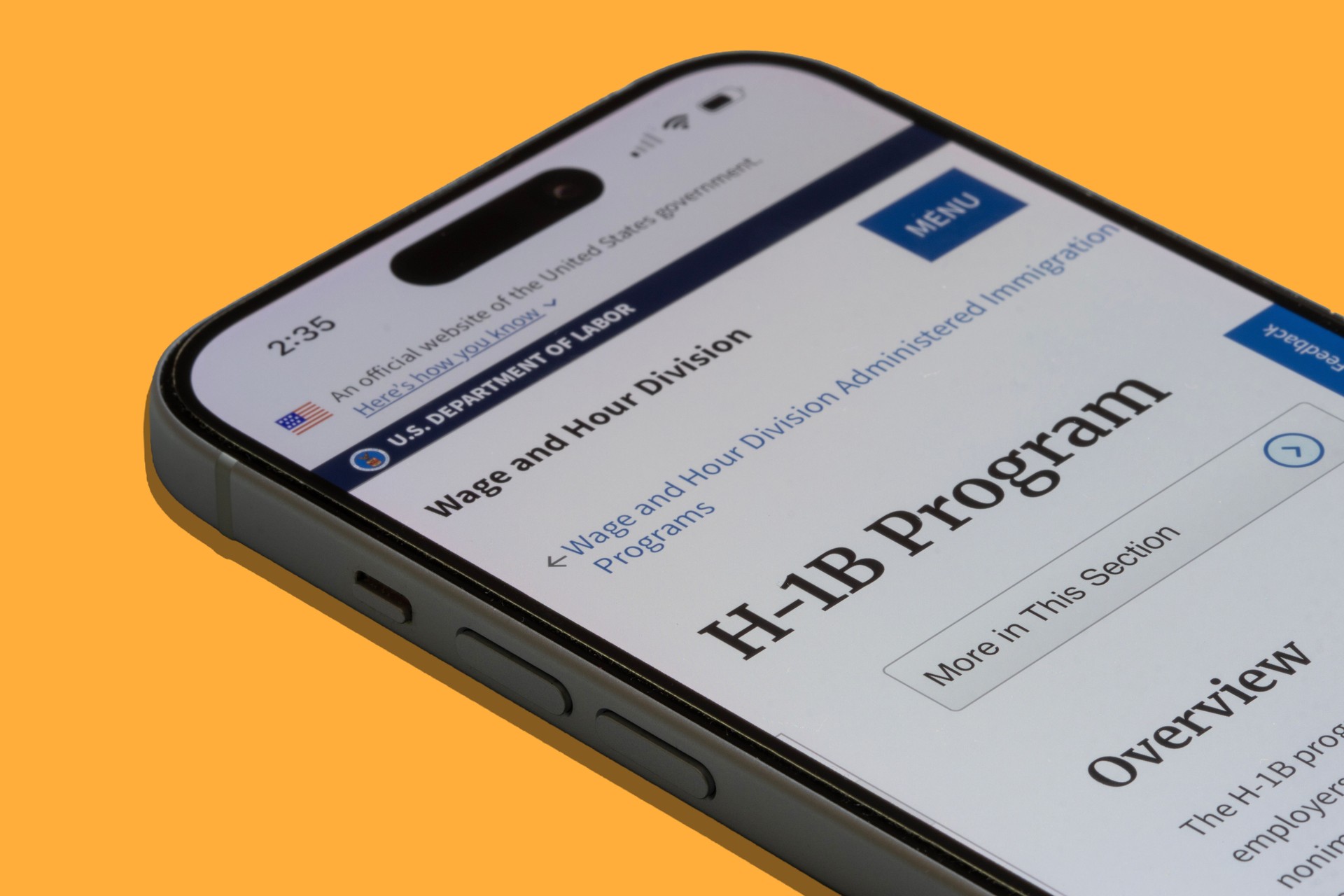

The American workforce is dynamic, drawing on workers with diverse skill levels, credentials, and experiences. While largely driven by American workers, our economy also relies on highly skilled workers from other countries who work in the United States temporarily through the H-1B visa program. These workers support employers in health care, technology, education, and other fields, helping address critical shortages across the country and fill roles that require technical training beyond what local labor markets can support. Despite their contributions to the US economy, they have not escaped the Trump Administration’s restrictive approach to legal immigration. The Trump Administration temporarily imposed an outlandish $100,000 fee on any petitions for new H-1B workers coming from abroad, changed the approach to selecting applicants, and has other reforms pending.
At the same time, these workforce shortages often require employees with graduate-level training, which may be cost-prohibitive for many Americans. And in the post-Grad PLUS lending environment, there are increasing concerns that fields facing workforce shortages—nursing, medicine, education, and social work, to name a few—may be impacted by new federal student loan borrowing limits. By further linking the skilled immigration system to workforce needs, there’s an opportunity to address both concerns about the H-1B program’s investment in American workers and the need for graduate-level training for Americans in high-skill, in-demand jobs.
The Problem
Current programs linking skilled immigration fees to workforce development fall short in addressing labor shortages.
The US immigration system includes several types of temporary visas that allow a foreign national to enter the country and, in certain cases, be employed. The H-1B program allows employers to hire foreign workers in specific occupations or fields that require a body of highly specialized knowledge at the bachelor’s degree level or beyond. Since 1998, US Citizenship and Immigration Services (USCIS) has allocated a certain portion of H-1B petition fees to education and training for US workers. In its current form, each H-1B specialty occupation visa is charged a $1,500 American Competitiveness and Workforce Improvement Act fee, half of which goes to the US Department of Labor’s (DOL) Employment and Training Administration for H-1B Skills Training Grants. These grants are designed to reduce the country’s dependence on foreign labor. To do this, they fund projects that provide training or other continuing education for American workers, helping them develop skills that lead to employment in high-growth industries or sectors and preparing them to fill jobs currently held by H-1B visa holders.
Yet as currently structured, the Skills Training Grants program falls short of addressing labor shortages. The grant program is largely application-based, leaving states and organizations to apply for specific programs that may not be occupationally or geographically relevant to their workforce needs. In addition, there is plenty of evidence that the use of H-1B visas is not a reliable, standalone indicator of true labor shortages, meaning the very purpose of the grant program is off base. And even if the H-1B visa program were a helpful indicator of labor needs, government research shows that DOL has failed to design the program to ensure that training under it results in beneficiaries obtaining and retaining jobs in H-1B occupations.
There’s a missed opportunity to tailor current workforce training grant programs to local occupational and educational needs.
In the post-pandemic economy, there’s an increasing mismatch between the skills employers are looking for and the skills workers bring to the table. The shortages in primary care, mental health, and dental care in predominantly rural areas are a prime example. Recent research indicates that of the nearly 92 million Americans in a health professional shortage area, 72% are in rural communities. Yet the current labor market structure relies disproportionately on H-1B-holding doctors and healthcare workers to fill the gap.
That’s not to say that there aren’t American workers in these areas who could fill these roles, but many require additional skills or training that may not be offered in their area or be cost-prohibitive. To help address this challenge, H-1B Skills Training Grants should be better tailored to meet current workforce development needs and address local occupational shortages. By targeting funding structures for reskilling and upskilling American workers to where the need is greatest, there’s an opportunity to refine and further localize investment in graduate-level skills training. Reframing this investment addresses multiple problems simultaneously: it provides a new way to finance graduate education while also meeting the demand for jobs requiring advanced training among Americans.
The Solution
To address these problems, the federal government can reimagine the H-1B Skills Training Grants program to better support localized workforce development and skills training for American workers seeking high-skill, in-demand, graduate-level jobs.
The H-1B Skills Training Grants provide a starting point for using immigration-based visa funding to support American workers’ technical skills. To reap the greatest benefit for Americans, these funds should be tied more concretely to where they will be most effective. Doing so not only addresses workforce shortages but also provides Americans with financial support to pursue graduate-level training that meets local workforce needs.
The new Workforce Pell program serves as an example of how a federal-state partnership to administer financial support for increased training could work. This starts with states identifying skills gaps across geographic regions and understanding how funds can support graduate-level training aligned with workforce needs. Additionally, funds should be further targeted to specific occupational shortages, be regionally driven, and recognize employer-identified needs. States could also consider pursuing performance-based funding in higher education, in which colleges and universities receive additional funding for offering low-cost programs that directly align with workforce development needs in their specific geographic regions. By bringing together federal and state governments and employers, there’s a real opportunity to reimagine how graduate-level training is funded to meet the needs of communities and employers.
Critiques and Responses
Programs like this already exist.
While DOL has run the H-1B Skills Training Grants program for more than two decades, there is little evidence that it has achieved its stated goal: reducing employers’ reliance on H-1B workers. While there do not appear to be any audits of the program’s overall impact, analyses of specific grant rounds show limited success at helping grantees obtain or retain jobs in H-1B occupations, and little evidence of positive impacts on earnings or employment.
What would this do to address workforce shortages?
Across the country, many regions—including rural areas—need additional skilled health care workers, nurses, and doctors. Recent research shows that over one-fifth (22.4%) of rural healthcare workers are foreign-born. Although many related programs will fall under new federal loan limits in a post-Grad PLUS environment, there’s a concern that, coupled with the political dynamics on immigration, some health care fields and geographic areas will be disproportionately impacted. Using fees from the immigration system to support student access to critical fields bolsters the current American workforce while also offering a new way to consider how we invest in graduate education.
This is an additional tax on employers.
Employers certainly pay taxes and fees already to train their workers. Yet, unlike paying taxes, participating in the H-1B program is entirely optional. Many employers who hire foreign workers clearly see the value in skilled international labor and are willing to pay the necessary costs to remain in compliance with federal regulations. Using some of the funds employers already pay to the government for hiring skilled immigrant workers to subsidize the cost of graduate education and workforce development is an investment in America and American workers, not a tax on employers. For small businesses hiring H-1B workers, they should pay based on a tiered scale, allowing participation in the H-1B program to help fill workforce gaps while contributing to the training of Americans and localized workforce development.
There’s a timing mismatch that makes such a proposal unworkable.
There’s an immediate need for workforce development and graduate-level trainees, but that doesn’t mean that the pace of training should be a barrier to investment. We’ve not yet fully seen the potential effects of immigration and education policy challenges under the Trump Administration. An investment now in localized graduate-level study helps ensure a pathway for students interested in pursuing in-demand careers, correctly calibrating government subsidization with targeted workforce development.
Conclusion
The connections between skilled professional training for Americans, regional workforce development, and the immigration system have long been vague. Rather than vilifying the skilled immigration pathway for workers who contribute to the American economy, there’s an opportunity to redirect and reimagine how visa-related fees can be better purposed to directly benefit American workers while offsetting the costs of graduate-level professional training. Fortunately, doing so need not require developing a new framework. Applying lessons learned and further targeting the H-1B Skills Grants program makes strides in meeting the challenges of workforce shortages and educational training needs across the country.