Memo Published February 19, 2026 · 5 minute read
Perfect Storm of Ugly? Rural and Farm Economies Suffer Under Trump
Third Way
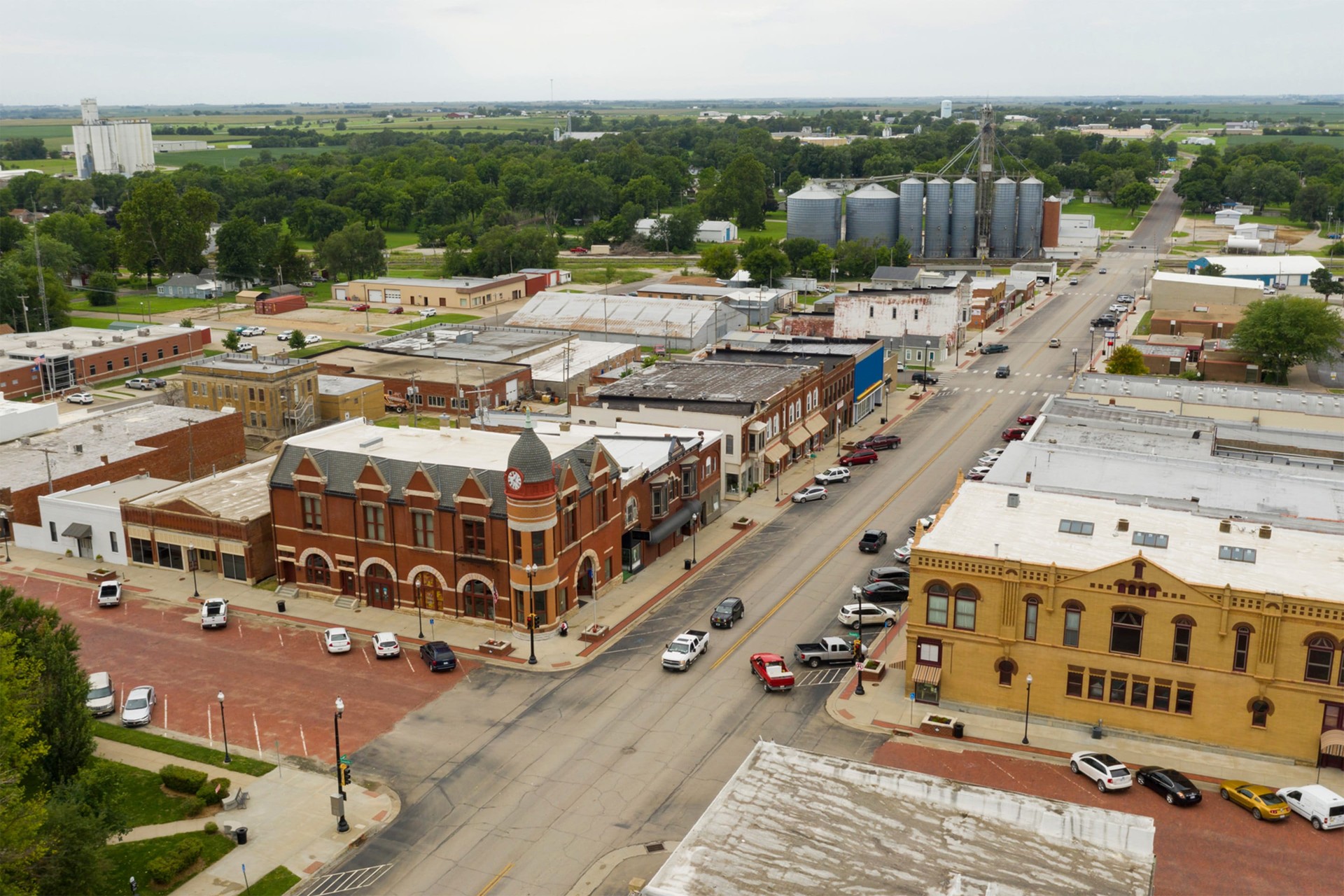
One year after Donald Trump’s election, rural America is saddled with unwanted tariffs, high input costs, and economic hardship. In our Rural Dashboard, we find a consensus that 2026 will be a “perfect storm of ugly” for major sectors of the rural economy.
Crop Sector Recession: Tariffs and High Input Costs
American farmers face the widest gap in at least a decade between the cost of producing and the price they earn in the marketplace. Why? Tariffs.
- In January, 2025, the gap between costs-to-produce and prices-to-earn was zero. By April, the cost/price spread jumped to 12 points. By October, it exploded to 34 points.
- Input costs for farmers have shot up because of tariffs and sales prices have dropped consequentially.
Farmer optimism over tariffs has weakened from a 70% peak immediately after “Liberation day” in April to 54% in December, according to the Purdue/CME Group Ag Economy Barometer.
Eighty-four percent of soybean and corn farmers remain concerned or very concerned about the competitiveness of US soybeans with Brazil soybeans. “Soybean farmers don’t need another trade fight; we need certainty,” testified North Dakota soybean farmer James Gackle before the US Trade Representative in December.
More than 90% of agricultural economists surveyed in December by the Farm Journal believe that low prices and high input costs are driving consolidation in the crop sector.
- “Consolidation happens because producers have to exit, not because they want to.”
- “Margins remain below full costs of production for many producers.”
- “We have too much supply and not enough demand for row crops.”
Crop Sector Saw More than $12 Billion in Losses
“High input costs, weak commodity prices, labor shortages and lingering trade disruptions” are creating "a perfect storm of ugly" for the 2026 farm economy.
The President of the Farm Bureau said that USDA’s $12 billion relief program is not enough to meet the needs of row crop or specialty crop farmer losses in 2025. “We have faced some tough times across agriculture this year, and there’s no sugarcoating that.”
A new survey found that 78% of farmers plan to use [government aid] payments to pay down debt or strengthen working capital rather than invest in machinery. The survey’s authors warned that it was a time for “caution” for farmers: “The share of farmers planning to sell mid- and long-term assets is climbing toward levels last seen during the 2017–2019 downturn.”
Six-in-ten agricultural economists surveyed expect another bad year in the farm sector with conditions to be unchanged or worsened one year from now.
Both the American Soybean Association and National Corn Growers Association said that farmers need long-term solutions.
- “While the assistance provides some relief, farmers need strong, reliable markets to guarantee the long-term success of the US soybean industry.”
- “While this financial assistance is helpful and welcomed, we urgently need the administration and Congress to develop markets in the United States and abroad that will provide growers with more long-term economic certainty.”
Agricultural economists surveyed mirrored those producer organizations.
- “There’s cautious optimism, but very little belief that 2026 will bring a meaningful rebound without cost relief or stronger demand.”
Pessimism Across Rural Economies
“On a scale of 1 to 10, executives on average gave industrials’ current condition a rating of 5.7, down from 8 last year (2024). Sentiment was especially low in agriculture, which is experiencing meaningful revenue declines.” That was a key finding in a private sector survey of leaders across the industrial goods sectors. Other highlights:
- “68% of companies said tariffs impacted their strategy.”
- “High interest rates, inflation, and other economic factors threaten their bottom lines.”
- “Labor shortages and skills gaps are becoming a bottleneck.”
- “Time spent on tariffs has left companies essentially stuck in first gear, with severely limited ability to focus on medium- and long-term planning.”
- 63% of ag executives surveyed expect revenue to decrease.
- “The middle is dying” – said an ag sector executive, noting that mid-size operations are being squeezed out of business.
- Agricultural equipment sales decreased because of the crop sector economy: total sales of tractors were nearly 20% lower and combine sales were down by 35% compared to 2024.
- The forest product sector continues to be impacted by tariffs and changes in international trade, with some calling for financial relief as they have seen prices drop at least 25%.
- Rural bankers in 10 states (CO, IA, IL, KS, MN, MO, ND, NE, SD, WY) think it unlikely that their area would see economic growth over the next six months.
- “Weak grain prices and negative farm cash flows, combined with tariff retaliation concerns, continue to weigh on banker confidence.”
- Rural communities also face a deepening housing affordability gap, with rural home price increases outpacing wage growth.
Persistent Rural Health Gap
- Hospitals supplemented state funding levels through the new Rural Health Transformation Fund but continue to underscore that this funding will not offset Medicaid cuts. Already, nearly half of rural hospitals operate at a financial loss, risking either closure or transition to an operating model that does not provide inpatient care.
- “A loss of federal health funding can threaten the stability of a local hospital.”
- Rural communities continue to face health care workforce challenges. While roughly 20% of Americans live in rural areas, only 9-10% of physicians practice in those areas; urban areas have seven times as many cardiologists as rural areas, though rural areas have a heart disease death rate 21% higher than urban areas.
- Closures of labor and delivery units in rural hospitals increased in 2025, and in nine states, at least 25% of the rural hospitals that do provide maternity care have lost money the past two years. Maternal mortality was found to be nearly two times higher in rural areas than urban areas, even before these closures.
- An estimated four million rural Americans saw higher health insurance premiums in the marketplace, with ~27% of farmers, ranchers, and other ag managers relying on the marketplace for health insurance coverage—a significantly higher proportion than the 6% of US adults that have non-group health insurance coverage.
- “This isn't just a farmer problem. It's a problem for millions of Americans who don't have employer-based insurance. But farmers are right in the middle of it—and the cost is very real."